Optimizing BYD electric forklift Battery Lifespan Through Proper Operational And Charging Practices
News 13/10/2026
Core Factors Impacting BYD Electric Forklift Battery Lifespan
Most BYD electric forklifts rely on lithium iron phosphate (LFP) batteries, which offer higher chemical stability than older lead acid alternatives. Battery lifespan depends on three key areas: depth of discharge, charging habits, operating environment and mechanical stress. Each area connects directly to daily team actions, so small consistent changes can deliver big long-term improvements to usable battery life.
Depth of Discharge
Deep discharges, meaning draining more than 80% of total battery capacity, put extra stress on LFP battery cells. Regular deep discharges reduce overall capacity retention over time, cutting total usable lifespan before replacement becomes necessary.
Operating Environment
Extreme temperatures, exposure to excess moisture or corrosive materials can damage battery casing and cell connections. Uncontrolled temperatures accelerate internal degradation that shortens overall battery life much faster than normal operation.
Charging Habits
Incorrect charging routines, including overcharging or using incompatible chargers, break down cell chemistry faster than expected normal use. Bad charging habits are the most common cause of premature battery failure in electric forklifts.
Daily Operational Practices That Extend Battery Life
Your team’s daily operating habits directly impact long-term battery lifespan. Follow these actionable steps to reduce unnecessary cell stress:
Avoid Unnecessary Deep Discharges
Train operators to stop operation and move the forklift to the charging station once the battery reaches 20% remaining capacity. Do not continue operation until the system shuts down automatically. This simple step eliminates most deep discharge stress on cells.
Operate Within Published Load Limits
Every BYD electric forklift has a published maximum load rating. Do not exceed this rating during regular use. Extra weight forces the battery to deliver more current than it is engineered to handle, increasing cell degradation over time.
Keep Batteries Clean and Dry
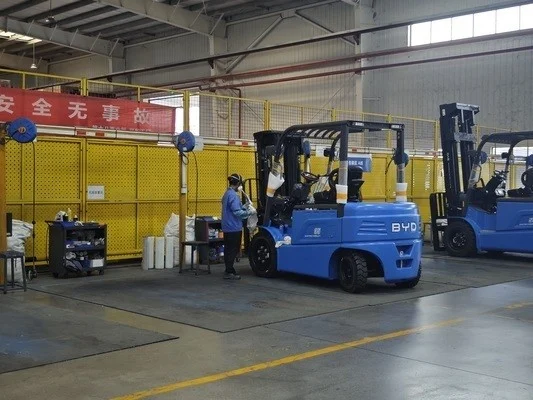
Wipe down the top of the battery casing regularly to remove dust, debris and spilled liquids. Check connections to catch corrosion or damage during routine inspections. Clean connections maintain consistent power flow and avoid unexpected voltage drops that stress cells.
Store Equipment Properly During Extended Downtime
If your forklift sits unused more than seven days, charge the battery to approximately 50% capacity and store it in a cool, dry area. Disconnect any auxiliary loads that draw small amounts of power over extended periods. Check the charge level every 30 days and top up as needed to avoid deep discharge during storage.
Correct Charging Protocols To Preserve Battery Capacity
Charging practices are the single biggest contributor to long BYD electric forklift battery lifespan. Follow these protocols aligned with LFP battery characteristics:
Use Only Manufacturer Approved Chargers
BYD engineers chargers specifically matched to their forklift battery voltage and chemistry. Third party chargers may deliver incorrect voltage or current levels that damage cells over time. Always use the charger supplied with your BYD unit or an approved replacement from an authorized distributor.
Charge After Partial Discharges
Unlike older lead acid batteries, LFP batteries handle partial charges well. You can top up the battery during shift breaks or between tasks without harming long term capacity. This practice keeps battery levels above the 20% threshold and avoids avoidable deep discharge stress.
Avoid Overcharging
Modern BYD chargers include automatic shutoff features that stop charging once the battery reaches full capacity. Do not leave the battery connected to the charger days on end after it reaches full capacity. Continuous low level overcharging accelerates cell degradation.
Allow Cool Down Periods After Charging
Let the battery cool to ambient temperature after charging before you put the forklift back into operation. Charging generates small amounts of heat, and operating a hot battery adds extra stress to cells that adds up over time.
Common Mistakes That Shorten Battery Lifespan
Many operations make avoidable mistakes that cut battery life short. Watch for these common issues and correct them when found:
First, skipping routine inspections: Small connection issues or minor damage can grow into larger problems that reduce capacity if left unaddressed. Add battery checks to your weekly maintenance routine to catch issues early before they impact lifespan.
Second, operating outside recommended temperature ranges: If you work in areas with extreme heat or cold, consider climate controlled storage or battery temperature management systems to keep cells within safe operating ranges.
Third, using incorrect cleaning methods: Never use high pressure water to clean battery compartments, as water can seep into connections and cause corrosion or short circuits. Use a soft, dry cloth or approved low moisture cleaning product instead.
These mistakes are easy to correct once your team recognizes them. Adjusting routines to avoid these issues adds many months of usable life to your battery, reducing long term replacement costs.
Frequently Asked Questions
What average lifespan can you expect from a properly maintained BYD electric forklift battery?
BYD’s lithium iron phosphate batteries used in their electric forklifts typically last between 3,000 and 5,000 charge cycles when maintained correctly. Exact lifespan depends on operating environment and consistent adherence to recommended practices. Annual capacity testing helps you track remaining capacity and plan replacements ahead of failure.
Can extreme temperatures reduce BYD electric forklift battery lifespan?
Yes, extreme hot and cold conditions affect lithium iron phosphate battery performance and capacity retention. Store and operate equipment within manufacturer recommended temperature ranges whenever possible to preserve long term life. If operation in extreme conditions is unavoidable, add more frequent capacity checks to your maintenance schedule.
Do I need to fully discharge a BYD electric forklift battery before charging?
No, BYD LFP batteries do not require full discharge before charging. Partial charges do not harm long term capacity, so you can top up the battery during break periods to avoid deep discharges that shorten lifespan. Full discharge cycles are not needed to calibrate battery management systems on modern BYD units.
Should I equalize charge my BYD electric forklift battery regularly?
No, equalization charging is a practice required for older lead acid batteries, not LFP batteries used by BYD electric forklifts. Regular equalization charging will damage LFP cells and shorten overall lifespan. Only follow charging instructions provided by BYD for your specific model.