How Three-Wheel And Four-Wheel Configurations Affect Electric Counterbalance Forklift Performance In Confined Warehouse Spaces
News 06/10/2026
Confined warehouse spaces create unique challenges when operating electric counterbalance forklifts. Narrow aisles, tight loading docks, and congested storage zones require careful balance of maneuverability, stability and productivity. Your choice between three-wheel and four-wheel configurations directly impacts how well your forklift performs in these constrained environments. This comparison breaks down key design and performance differences to help you make an informed decision.
Core Design Differences Between Three-Wheel And Four-Wheel Configurations
Three-Wheel Design Basics
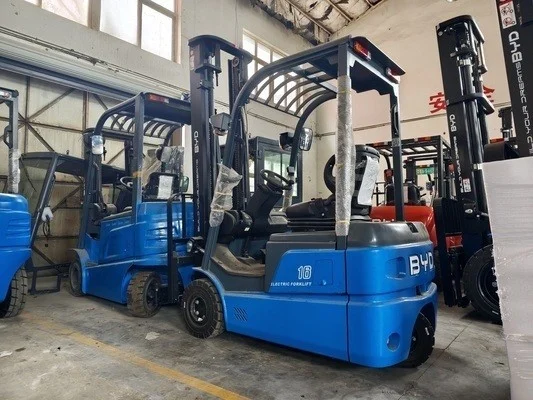
Three-wheel electric counterbalance forklifts use a single front drive wheel paired with two rear steer wheels. The single front wheel eliminates mechanical interference between dual front wheels and the truck frame, enabling a much tighter turning radius. All weight distribution shifts to leverage traction from the single drive wheel. This design keeps the overall truck footprint smaller, ideal for operations with limited open space.
Four-Wheel Design Basics
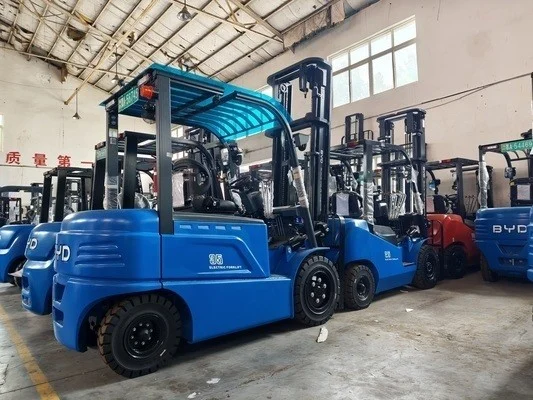
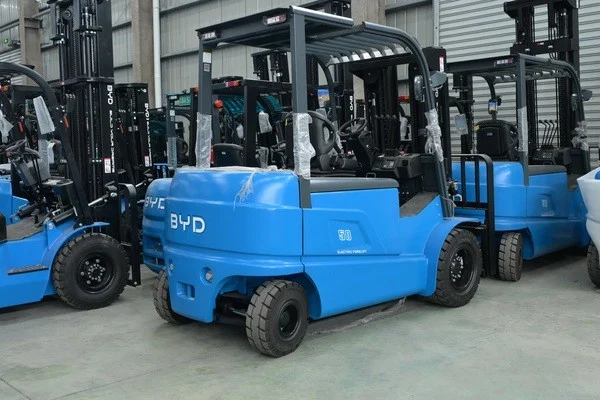
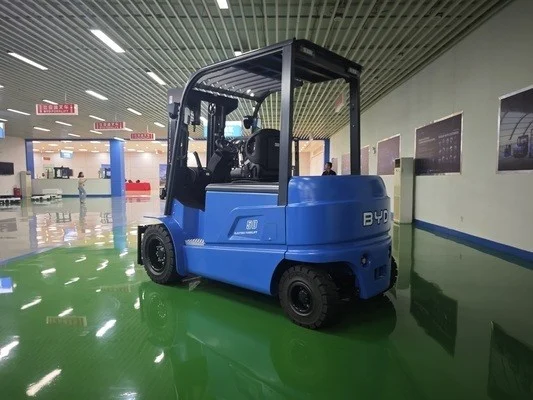
Four-wheel configurations include two front drive wheels and two rear steer wheels. Dual front wheels spread the forklift’s weight evenly across the contact surface, boosting overall stability. The wider front axle adds structural rigidity, which supports higher load capacities compared to three-wheel units. The larger footprint creates more consistent contact with the warehouse floor, even when carrying heavy loads at full lift height.
Maneuverability In Confined Spaces: Key Performance Differences
Maneuverability is the most impactful performance metric within these environments. Even small differences in turning radius change how well a forklift navigates between storage racks and around obstacles.
Turning Radius Comparison
Three-wheel units deliver turning radii between 10% and 30% smaller than equivalent capacity four-wheel models. This difference lets three-wheel forklifts complete U-turns within standard 10-foot to 12-foot aisles, where four-wheel units often require extra space to reposition. Warehouse teams save time navigating between storage racks, because they do not need to make multiple adjustment moves to position loads.
Maneuvering In Congested Zones
Small loading docks and temporary storage areas create constant constraints. Three-wheel forklifts navigate around pallets, worker stations and equipment with fewer adjustments. Four-wheel units require more clear space to turn, leading to longer cycle times and higher risk of accidental impacts with stored goods or facility structures.
Stability And Load Capacity Limits
Maneuverability gains from three-wheel design come with tradeoffs in stability and maximum load capacity.
How Configuration Impacts Load Stability
Four-wheel configurations deliver greater inherent lateral stability, because weight spreads across two front contact points instead of one. This stability makes four-wheel units safer when handling heavy loads at maximum lift heights, or when traveling across uneven warehouse floors. Three-wheel units have a narrower front profile, which can increase risk of tip when lateral force pushes the truck off balance, especially during sudden sharp turns.
Load Capacity Tradeoffs
Most four-wheel electric counterbalance forklifts support higher load capacities than three-wheel units of similar overall size. The wider front axle and dual wheels distribute heavy load weight more effectively, reducing stress on drive components. Three-wheel units typically top out at 3,000 to 5,000 pound capacities, while four-wheel models can handle loads up to 10,000 pounds or more, depending on model design.
Productivity And Operational Cost Impacts
Beyond technical performance, configuration choices affect long-term productivity and operating costs within confined warehouse operations.
Cycle Time Differences
In consistently narrow aisles, three-wheel configurations cut average cycle times by reducing the number of turns and adjustments needed per trip. Fewer maneuvers per load translate to more loads moved per shift. Four-wheel configurations deliver similar cycle times only in wider aisles where their extra stability allows faster travel speeds.
Maintenance Considerations
Three-wheel configurations have fewer front drive components, which can lower routine maintenance needs. The single drive wheel also means one set of tires and brake components to service, reducing parts costs. Four-wheel configurations have more wear items, but their lower stress on individual components often extends overall service life of the drive train under heavy use.
Selecting The Right Configuration Your Operation Needs
Match your configuration choice to your warehouse’s specific space constraints and load requirements. Use this simple guidance:
- If your warehouse uses aisles 12 feet wide or narrower, and most loads fall under 5,000 pounds, a three-wheel electric counterbalance forklift will deliver better overall performance.
- If your warehouse has mixed aisle widths, regularly handles loads over 5,000 pounds, or operates on uneven floor surfaces, a four-wheel configuration will offer better stability and capacity.
- If you need to handle maximum loads in narrow aisles, consider purpose-built narrow aisle forklifts as an alternative, but three-wheel counterbalance models offer lower acquisition cost to smaller operations.
Frequently Asked Questions
Can A Four-Wheel Electric Counterbalance Forklift Work In Narrow Aisles?
Many four-wheel models can operate in narrow aisles, but they require extra space to turn and reposition. This leads to slower cycle times and higher risk of product or truck damage compared to three-wheel units working the same space.
Do Three-Wheel Electric Counterbalance Forklifts Deliver Enough Stability During Daily Operation?
Three-wheel units offer sufficient stability for loads within their rated capacity, on flat, even warehouse floors. Operators must avoid sudden sharp turns or overloading to keep the truck balanced, as the narrower front profile reduces tolerance for lateral imbalance.
Which Configuration Has Lower Upfront Cost?
In most cases, three-wheel electric counterbalance forklifts have lower upfront acquisition cost than equivalent capacity four-wheel units. Their simpler design requires fewer components, which reduces manufacturing and end user purchase prices.
Can I Convert A Four-Wheel Forklift To A Three-Wheel Configuration?
No, the configuration is built into the truck’s frame, axle and drive train design. Conversion requires extensive structural modification that is not cost-effective or safe during regular operation.
Your electric counterbalance forklift configuration directly impacts productivity, safety and operating cost within confined warehouse spaces. Three-wheel models deliver superior maneuverability and smaller turning radii, ideal for narrow aisles and lower capacity loads. Four-wheel models offer greater stability and higher load capacity, better suited for mixed spaces and heavy duty use. Evaluate your average aisle width, typical load weight and floor conditions to make the best choice your operation.