1.5 ton electric forklift: Key Maneuverability and Load Specifications Warehouse Managers and Engineers Assess During Procurement
News 05/10/2026
1.5 ton electric forklifts rank among the most popular material handling units in mid-sized warehouses, distribution centers, and manufacturing facilities. Their balance of power, footprint, and zero tailpipe emissions make them suited to indoor operations, but procurement teams must evaluate specific metrics beyond base capacity to match units to their facility needs. Below we break down key maneuverability and load specifications, compare common design types, outline application limits, and share actionable selection guidance.
Core Maneuverability Specifications Evaluation
Turning Radius
Turning radius directly impacts how a 1.5 ton electric forklift navigates narrow aisles. Standard counterbalance 1.5 ton electric forklifts typically have turning radii between 1.8 meters and 2.2 meters, which is suited to aisles 3 meters or wider. In contrast, narrow-aisle stand-up models cut turning radius to 1.4 meters to 1.7 meters, fitting aisles as narrow as 2.4 meters. Smaller turning radius increases storage capacity within a given facility footprint, but units with tighter turning often have lower top travel speed and reduced stability at full lift height.
Overall Footprint and Lift Height
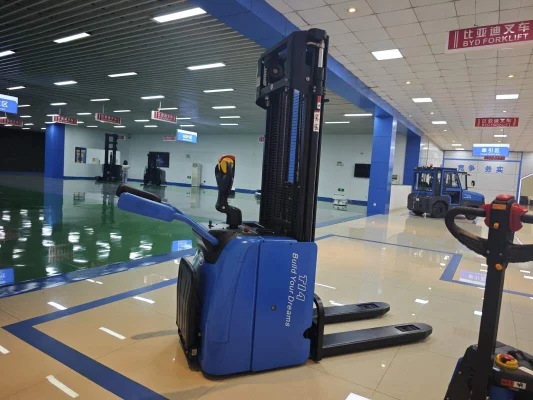
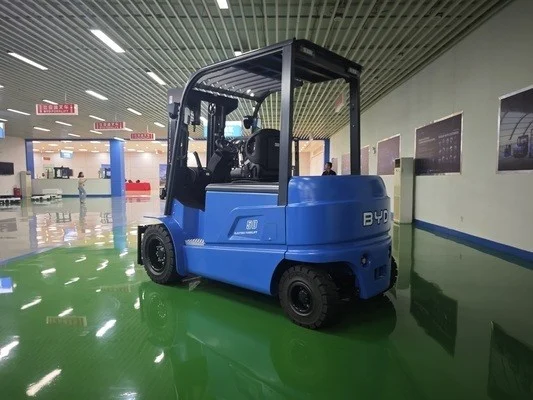
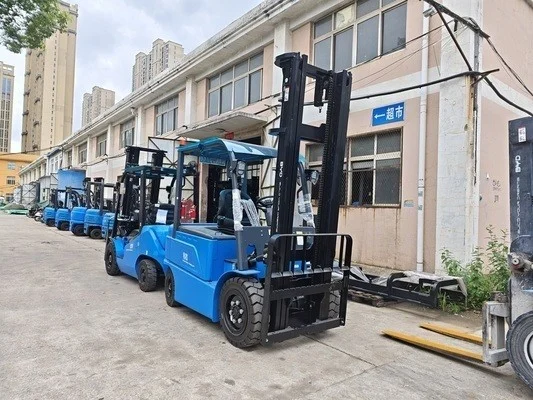
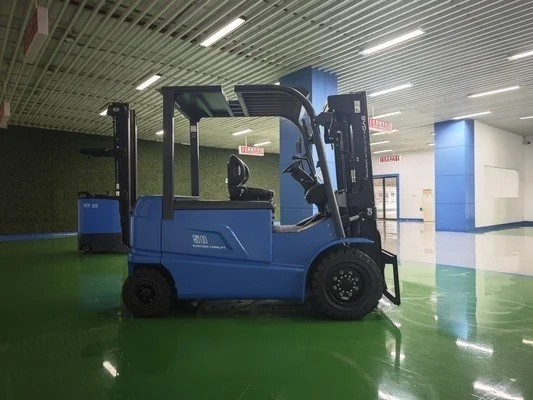
Overall length from fork tip to back of counterweight determines how much space a unit needs to maneuver inside loading docks and around work cells. Three-wheel 1.5 ton electric forklifts have shorter overall lengths than four-wheel models, making them more agile in tight spaces. Four-wheel units deliver better stability across uneven outdoor surfaces used for temporary storage or yard transfer. Lift height requirements vary by storage rack configuration. Most standard 1.5 ton electric forklifts support maximum lift heights between 3 meters and 5 meters, while high-mast models reach 6 meters or more. Higher lift height reduces maximum load capacity at top lift, so teams must document their maximum expected load weight at full lift height before final selection.
Travel and Lift Speed
Travel speed impacts order picking throughput across large warehouse floors. Most entry-level 1.5 ton electric forklifts hit top travel speeds between 12 km/h and 16 km/h, while premium high-throughput models reach 18 km/h. Faster lift speed reduces wait time during stacking operations, but higher speeds can increase operator fatigue and accident risk in crowded facilities. Many models include adjustable speed settings to match operation needs.
Key Load Specifications to Compare
Nominal Load Capacity vs. Actual Load Center
All 1.5 ton electric forklifts list 1500 kg nominal capacity, but this rating applies only to a standard 500 mm load center. A load center is the horizontal distance from the fork heel to the center of gravity of the carried load. If your operation regularly carries longer loads (such as 2.4 meter lumber or piping), the load center shifts forward, which reduces the actual safe carrying capacity. As one example, a 1.5 ton unit rated at 500 mm load center will only safely carry 1100 kg with a 600 mm load center. Always adjust your capacity requirement based on your average load center, not just the nominal rating.
Battery Capacity and Run Time
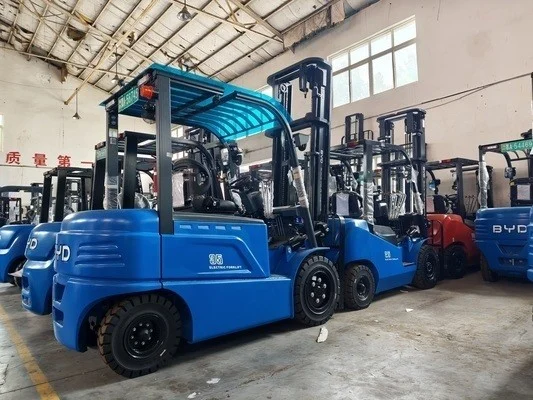
1.5 ton electric forklifts rely on lead-acid or lithium-ion batteries. Lead-acid batteries are lower cost upfront, but require 8 hours charging plus 8 hours cooling time before next use. Lithium-ion batteries support opportunity charging during breaks, deliver full power until complete discharge, and last two to three times longer than lead-acid units. Lithium-ion options add 20% to 30% upfront cost, so teams must calculate annual operation hours to evaluate long-term cost balance. Facilities running two or three shifts daily benefit most from lithium-ion battery configurations.
Fork Size and Mast Clearance
Fork length must match the average size of carried loads. Most 1.5 ton electric forklifts come standard with 1070 mm forks, which works matching standard 48 inch pallets. Longer forks (1220 mm or 1520 mm) support larger or irregularly shaped loads, but add extra weight to the front of the unit that reduces available capacity with cargo. Mast clearance affects entry into low-clearance areas, such as shipping containers or low-ceiling storage areas. Retracted mast height ranges from 2 meters to 2.2 meters for standard units, with low-clearance models available at under 2 meters supporting container loading work.
Common Design Type Comparison
Three main 1.5 ton electric forklift design types dominate the market, each suited to specific facility needs:
- Three-wheel counterbalance: Suited to small to mid-sized warehouses with narrow aisles. Lower upfront cost, good maneuverability, limited stability on uneven ground.
- Four-wheel counterbalance: Suited to mixed indoor-outdoor use, higher stability, larger turning radius, higher weight capacity with uneven loads.
- Stand-up narrow-aisle reach: Suited to high-density storage facilities with aisles under 2.7 meters. Higher lift capability, lower footprint, requires trained operators, higher upfront cost.
Application Scenarios and Selection Limits
We outline common application scenarios and matching specifications to guide selection:
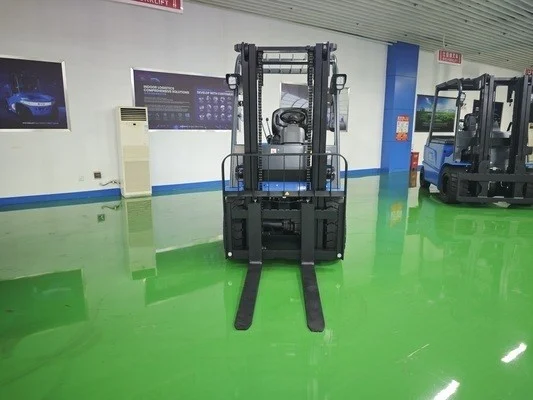
- General indoor warehouse storage with 3 meter+ aisles: Three-wheel 1.5 ton electric forklift with 4.5 meter maximum lift, lead-acid battery fits single-shift operations well.
- High-density storage with 2.4-3 meter aisles: Stand-up reach model with 1.5 meter turning radius, lithium-ion battery supports multi-shift use.
- Mixed indoor-outdoor yard transfer: Four-wheel 1.5 ton electric forklift with solid pneumatic tires, higher ground clearance handles uneven pavement.
Key limits to remember: 1.5 ton electric forklifts do not work well lifting loads over 1500 kg regardless of configuration, and most units are not designed for continuous operation in fully outdoor wet or harsh environments without added weather protection. Operating on slopes over 10-15% reduces load capacity and increases tipping risk, so teams must document any sloped surfaces within their operation area.
Actionable Selection Checklist
Before you finalize procurement of a 1.5 ton electric forklift, confirm these details:
- Measure your narrowest aisle width and confirm unit turning radius fits with 30 cm minimum clearance on each side.
- Calculate maximum expected load weight at your maximum lift height and largest load center, confirm unit rating meets or exceeds this number.
- Match battery type to your daily operation hours and shift schedule.
- Verify retracted mast clearance fits any low-clearance areas your team needs to access.
- Test operator visibility from the cabin to confirm it meets your facility safety requirements.
Frequently Asked Questions
Can a 1.5 ton electric forklift lift more than 1500 kg?
Nominal capacity ratings reflect the maximum safe load under standard test conditions. Carrying loads over 1500 kg increases tipping risk, reduces component service life, and violates most manufacturer safety guidelines. Teams should select a higher capacity unit if they regularly carry loads over 1500 kg.
Do 1.5 ton electric forklifts work well in outdoor operations?
Most standard 1.5 ton electric forklifts handle occasional outdoor use across paved, even surfaces. Units with pneumatic tires and weather-sealed electrical components support more frequent outdoor operation, but they do not match the performance or durability of internal combustion forklifts built for full-time outdoor work.
What maintenance does a 1.5 ton electric forklift need?
Regular maintenance includes monthly brake and tire inspection, quarterly hydraulic system check, and annual battery service. Lead-acid batteries require weekly watering, while lithium-ion batteries need little routine maintenance beyond annual capacity testing. Scheduled maintenance follows manufacturer guidelines, based on operation hours.
What is the average price range of a 1.5 ton electric forklift?
New entry-level 1.5 ton electric forklifts start between $15,000 and $20,000, while premium lithium-ion models range from $25,000 to $35,000. Used units cost 30% to 60% less than new units, depending on age, battery condition, and hour count. Actual pricing varies by manufacturer, features, and regional market conditions.
Selecting the right 1.5 ton electric forklift requires aligning core specifications with your unique facility layout, operation patterns, and load requirements. Focusing on maneuverability and load metrics early in procurement helps avoid costly mismatches that reduce throughput or increase safety risk over the unit’s service life.