Navigating Narrow Aisle Operations: 2.5 Ton Electric Forklift Dimension and Turning Radius Requirements
News 15/10/2026
Manufacturing in-plant logistics relies on tight space utilization to maximize storage capacity and keep production workflows moving. Many facilities design narrow aisles between work cells, raw material storage racks and finished goods staging areas, creating a common challenge when sourcing material handling equipment. A 2.5 ton electric forklift fits many manufacturing load requirements, but its overall dimensions and turning radius directly impact daily operation efficiency and worker safety. This guide breaks down critical checks, trade offs and verification steps aligned with manufacturing operational needs.
Key Operational Constraints in Manufacturing Narrow Aisles
Manufacturing facilities differ from other storage sites due to mixed space use: aisles often double as access routes work cells, emergency egress paths and temporary material staging. Fixed obstacles like protruding machinery, utility pipes and work benches can reduce effective aisle width beyond what initial drawings indicate. Any mismatch between forklift dimensions and available clearance creates recurring issues: rack collisions, damaged work-in-progress materials, slow cycle times and increased risk of workplace accidents. Operations teams need to prioritize dimension and turning radius checks early in the selection process to avoid costly post-purchase modifications.
Critical Specifications: Dimensions and Turning Radius
Overall Body Dimensions
Manufacturing teams focus on overall width first. Narrow aisles created to save space leave little margin to accommodate size variation. Wider forklifts require wider clearance, so even a 100mm difference can make a unit unusable at your site.
How to check and verify: Always measure actual aisle clearance from the face of the closest fixed obstacle on each side, do not rely on architectural drawings alone. Compare your measured value against the forklift’s overall width, plus additional clearance required safe turning. Shorter overall length improves maneuverability in tight spaces but often reduces available space to hold larger batteries, which can shorten runtime between charges. This creates a clear trade off: operations running multiple shifts need larger battery capacity, which may require slightly larger overall dimensions.
Turning Radius
Turning radius determines the minimum aisle width a forklift needs to complete a full turn. In manufacturing facilities where aisles often end at loading docks or production line entrances, drivers need to turn around within the aisle rather than backing into a dedicated turn area. Incorrect turning radius leads to repeated collisions with racking and stored materials, increasing maintenance costs and downtime.
How to check and verify: Ask suppliers to provide turning radius values tested with your expected rated load and fork length. Unloaded turning radius does not reflect real world operation, so always request values based on your intended use. Counterbalance 2.5 ton electric forklift models typically have larger turning radii than reach or narrow aisle-specific models, so consider alternative configurations if your facility has extremely tight aisles.
Specification Comparison and Confirmation Guide
| Parameter | Core Manufacturing Concern | Required Confirmation Item | Configuration Type |
|---|---|---|---|
| Overall body width | Aisle clearance between racks and work cells | Match against on-site measured aisle width | Standard |
| Overall body length | Maneuverability at aisle ends and dock staging areas | Check against available turn around space | Standard |
| Minimum turning radius | Collision risk with racks and work-in-progress | Confirm value with full 2.5 ton load and selected fork length | Depends on configuration |
| Mast width | Driver visibility and front clearance when turning | Check against rack opening width | Standard |
| Battery size | Runtime matching shift length vs overall body size | Confirm capacity meets your operational needs | Optional |
This table highlights core items manufacturing teams must confirm, as generic base model specifications rarely match the specific configuration your operation requires.
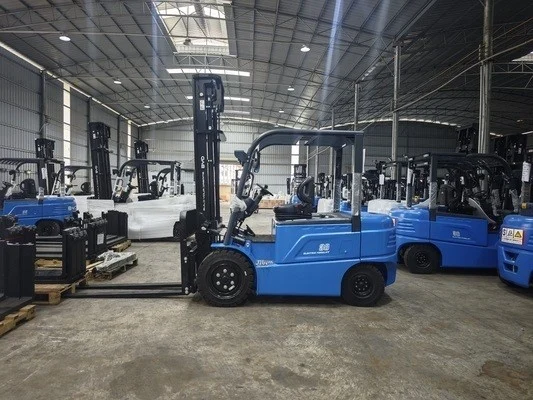
Pre-Purchase Verification Steps
- Conduct an on-site measurement of all working aisles, noting any fixed obstacles that reduce effective clearance. Mark the tightest aisle your forklift must access.
- Document your intended load characteristics, including maximum load size, standard fork length and maximum lift height, as all these change effective turning radius and dimension requirements.
- Share your site measurements and operational requirements with your supplier, and request specification values specific to your requested configuration.
- If your aisle width falls within 10% of the manufacturer’s minimum requirement, request an on-site test maneuver with the exact configured unit before finalizing your order.
- Confirm all agreed dimension and turning radius values appear on your final purchase agreement to avoid miscommunication during delivery.
Frequently Asked Questions
Can a standard counterbalance 2.5 ton electric forklift operate in manufacturing narrow aisles?
This depends entirely on your measured aisle width and the specific unit’s turning radius. Standard counterbalance models generally require wider aisles than purpose-built narrow aisle reach models. Always test maneuverability with your expected load before committing to purchase.
Do dimension requirements change when using different attachments?
Yes. Some attachments like side shifters or fork positioners add overall width to the front of the forklift, which increases required turning clearance. Always include your intended attachment when requesting dimension and turning radius specifications from your supplier.
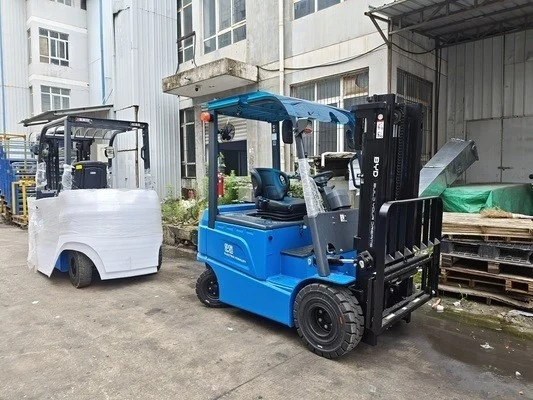
What happens if my forklift has a larger turning radius than my aisle width?
Common issues include repeated minor collisions with racking, damage to stored materials or machinery, slower material handling cycle times, and increased safety risks drivers. You may need to widen your aisles or exchange the unit to a smaller model, both of which add unplanned cost to your project.
Getting dimension and turning radius requirements right delivers long term value to manufacturing in-plant logistics, supporting consistent production flow and maximizing your existing space investment. Always prioritize site-specific measurements and configuration-specific specifications over generic industry guidelines.