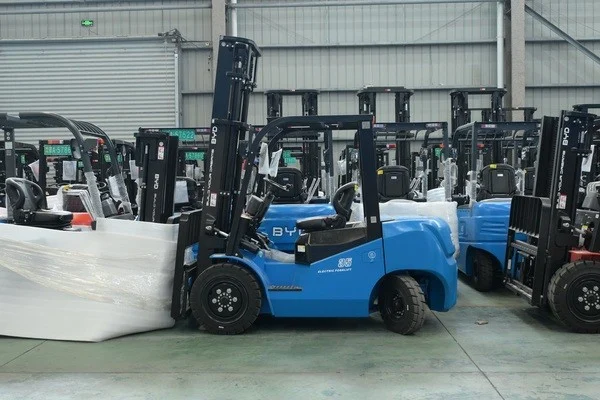
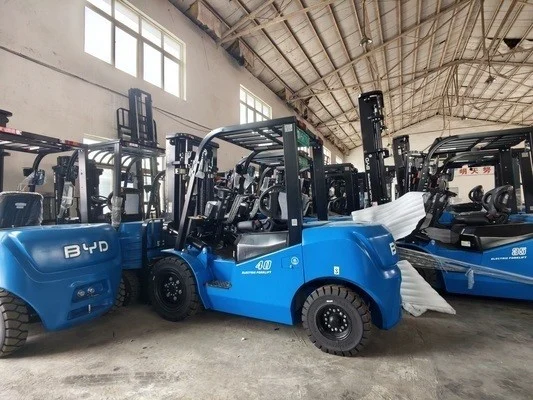
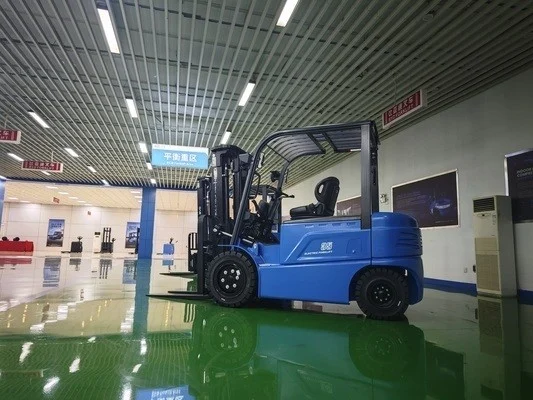
Comparing Charging Strategies: Opportunity Charging vs. Battery Swapping on a 2.5 Ton Electric Forklift
News 31/10/2026
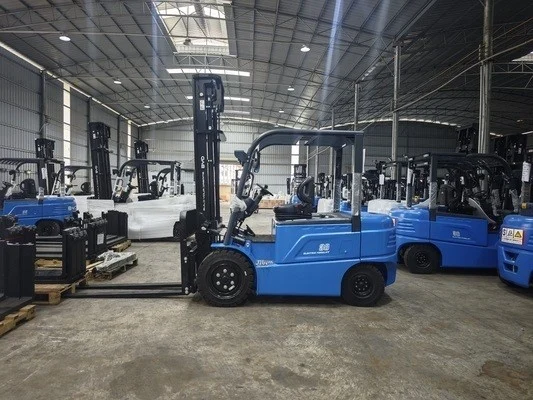
A 2.5 ton electric forklift can only earn its keep when energy replenishment fits the shift pattern. Two common approaches are opportunity charging, where the truck plugs in during breaks and idle windows, and battery swapping, where a depleted pack is exchanged for a charged one. Neither is universally better. The right choice depends on duty cycle, available charging power, battery chemistry, floor space, labor routines, and how much uptime you actually need. This comparison sets both strategies against the same decision criteria so you can judge which fits your operation, and it stays within the scope of four-wheel counterbalance electric forklifts such as the BYD models this site supplies.
Same Yardstick: How the Two Strategies Differ
Opportunity charging uses the same battery that stays on the truck. The operator connects the truck to a charger whenever the schedule allows, typically during lunch, shift handover, or short gaps between jobs. Battery swapping removes the pack and replaces it with a fully charged unit, usually with a hoist, trolley, or a dedicated exchange station.
The practical differences appear in four places: how much capital goes into batteries and chargers, how much floor space the energy infrastructure consumes, how much operator time the routine absorbs, and how the battery is treated over its service life. The table below compares the two approaches across those dimensions without assuming a winner.
| Decision factor | Opportunity charging | Battery swapping |
|---|---|---|
| Batteries needed per truck | Usually one pack per truck | At least two packs per truck, plus spares |
| Charger count | One charger can serve several trucks if schedules are staggered | Charging capacity must cover all packs, including those in reserve |
| Floor space | Charger and cable management near parking bays | Exchange station, pack storage, and charging area |
| Operator involvement | Plug in during breaks; short and frequent | Exchange procedure, pack handling, and safety routine |
| Battery wear pattern | Frequent partial cycles; depth depends on discipline | Deeper discharge before exchange; packs rest while off the truck |
| Best fit | Single- or two-shift work with predictable breaks | Continuous or multi-shift work with little idle time |
These are general tendencies, not guarantees. Actual results depend on the battery, charger, and truck specifications your supplier documents.
Opportunity Charging on a 2.5 Ton Truck: Where It Works
Opportunity charging suits operations where the truck returns to a fixed area several times per shift. A 2.5 ton electric forklift handling mixed pallet work in a warehouse often has natural gaps: waiting at a dock, a lunch break, or a shift change. Plugging in during those windows keeps the state of charge in a comfortable band without a second battery.
The approach depends on three conditions:
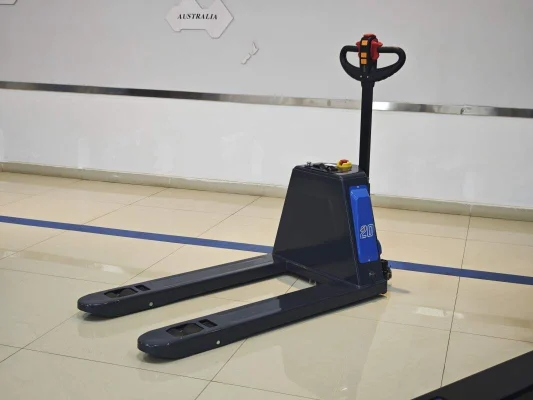
- Charger access. The charger must sit close to where the truck parks, or operators will skip the habit.
- Charging power matched to the break length. A short break delivers limited energy. Confirm with the supplier how much charge the specified battery and charger can add in the time actually available.
- Battery chemistry and charge management. Lithium-ion packs generally tolerate frequent partial charging better than older lead-acid designs, but the manufacturer’s charging instructions still govern. Do not assume any pack can be plugged in at will.
The main risks are human and electrical. Operators forget to plug in, chargers are shared without a schedule, or cables become trip hazards. A simple charging log and clearly marked parking bays reduce these problems more than any hardware upgrade.
Battery Swapping: When a Spare Pack Pays Off
Battery swapping makes sense when the truck cannot afford long charging pauses. In a hypothetical three-shift operation with high utilization, a depleted pack can be exchanged in minutes and the truck returns to work while the removed pack charges. That pattern keeps the truck productive but requires more batteries, more charging capacity, and a safe exchange area.
Consider swapping only if several of these apply:
- The truck runs near-continuously and idle windows are too short to add meaningful charge.
- You can dedicate floor space to pack storage and an exchange station.
- You have staff trained in pack handling and the safety procedures your supplier specifies.
- You can justify the extra battery capital against the value of additional uptime.
Swapping also introduces handling risks. Packs are heavy, and incorrect lifting or connection can damage terminals or injure staff. The exchange method, lifting points, and connector design must come from the truck and battery documentation, not from improvisation. Where a supplier does not support a swapping configuration, do not treat it as an available option.
Choosing Between Them: A Practical Checklist
Work through the following questions in order. The answers usually point to one strategy without needing a formal study.
- How many hours does the truck actually work per day? Count real working hours, not shift length. Long shifts with frequent idle time may still suit opportunity charging.
- How long are the breaks? If breaks are long enough to add useful charge, opportunity charging is simpler. If not, swapping deserves a look.
- What charging power is available? Check the site’s electrical capacity and the charger specifications. High-power charging may shorten stops but can require infrastructure work.
- How much space can you give to energy infrastructure? Swapping needs more room than a charger and cable.
- What does the battery supplier permit? Confirm the allowed charging pattern, depth of discharge, and any swapping support in writing.
- What is the cost of downtime? If a stopped truck blocks a dock or a production line, the case for a spare pack strengthens.
A common mistake is buying a second battery before checking whether a charging schedule would have solved the problem. Another is committing to opportunity charging without confirming that the chosen charger can deliver enough energy during real breaks. Both errors come from skipping the duty-cycle review.
When you request a quote, share your load weights, lift heights, shift pattern, break times, floor surface, ramp grades, and available charging power. Those details let the supplier match a four-wheel counterbalance electric forklift and charging configuration to your site instead of guessing.
FAQ
Can a 2.5 ton electric forklift use opportunity charging and battery swapping together?
In principle a site can do both, but mixing routines adds complexity. Decide which method is primary, then treat the other as a backup. Confirm with the truck and battery supplier that both patterns are acceptable before relying on them.
Does frequent partial charging shorten battery life?
It depends on chemistry and charge management. Lithium-ion packs are generally more tolerant of partial charging than lead-acid packs, but the manufacturer’s instructions define what is acceptable. Ask the supplier to state the permitted charging pattern and expected service conditions rather than assuming a fixed lifespan.
How much floor space does a battery exchange station need?
There is no universal figure. It depends on pack dimensions, the lifting method, clearance around the truck, and any local safety requirements. Obtain the pack weight and dimensions from the supplier, then plan the station around safe handling clearances.
Is battery swapping suitable when only one forklift is in use?
Usually not, because a spare pack and exchange equipment add cost that a single truck may not justify. A single-truck operation with predictable breaks often fits opportunity charging better. Review actual utilization before deciding.