5 Ton Electric Forklift: Questions to Ask Before Sizing a Four-Wheel Counterbalance Unit for Heavy Pallet Handling
News 05/11/2026
A 5 ton electric forklift is a substantial capital purchase, and the sizing decisions you make early determine whether the truck handles your heaviest pallets safely or struggles at the edge of its capacity. The most common mistake buyers make is treating the rated load as the only number that matters. A four-wheel counterbalance electric forklift rated at 5,000 kg can lift that load only under specific conditions defined by load center, lift height, attachment, and surface. Before committing to a configuration, work through the questions below with your actual operating data rather than a generic duty description.
What Does the 5 Ton Rating Actually Mean on Your Pallets?
Forklift capacity ratings are tied to a load center, usually stated in the manufacturer’s technical data. A truck rated at 5,000 kg at a 500 mm load center will not safely handle the same weight if the load center moves to 600 mm or 700 mm, which happens with double-deep pallets, oversize loads, or attachments that push the load further from the carriage. The capacity curve, not the headline number, tells you what the truck can do at each lift height and load center.
Ask yourself these questions about the load itself:
- What is the heaviest pallet weight, including packaging, and how often does it occur?
- Where is the center of gravity of the load, and does any pallet overhang the fork tips or sit unevenly?
- Do you need a side-shifter, fork positioner, or other attachment that adds weight and shifts the load center forward?
- What is the maximum lift height at which the heaviest load must be handled, not just the maximum height the mast can reach?
If your heaviest pallets sit near the rated capacity at a short load center, you have little margin once an attachment or a taller lift is added. In that situation, a nominally 5 ton truck may be undersized. The honest answer is to compare your load data against the published capacity curve and confirm the configuration with the supplier’s technical documentation.
Which Operating Conditions Change the Sizing Decision?
Sizing is not only about weight. The four-wheel counterbalance layout is a common general choice in factories, loading docks, and warehouse transfer work because it combines a stable chassis with the ability to lift and stack. Whether it suits your site depends on several conditions that you should document before requesting a quote.
Aisle width and turning space
A larger counterbalance truck needs more room to turn and maneuver than a smaller one. Measure your narrowest aisle, the clearance at doorways and rack ends, and the turning radius available at each end of the travel path. If the aisle is tight, a longer or wider chassis may not fit even if the capacity is right. Do not assume a bigger truck will simply work because the load is heavy.
Floor condition and gradients
Rough floors, expansion joints, dock plates, and ramps affect traction, tire choice, and stability. Slopes deserve particular attention: capacity on a gradient is not the same as capacity on level ground, and the manufacturer’s data should be checked for any derating that applies. If your route includes a ramp between levels, state the grade and surface when you request a configuration.
Shift pattern and charging logistics
How many hours the truck runs per shift, and whether it can be charged between shifts, influences battery and charger selection. A lithium battery configuration may allow opportunity charging during breaks, but the suitability depends on your duty cycle and the charger infrastructure available. Confirm the charging plan with the supplier rather than assuming a single battery will cover every shift pattern.
Environment and attachments
Cold storage, dusty areas, outdoor yards, and food-handling zones may require specific options or may fall outside a standard configuration. Attachments such as clamps or rotating devices change both capacity and the load center. List every attachment you expect to use and ask how each one affects the rated capacity.
What Should You Confirm in Writing Before Ordering?
Once you have gathered your load data and site measurements, the next step is to turn them into a written configuration that the supplier can confirm. This is where many buyers lose control of the project: verbal assurances about capacity or delivery are not a specification.
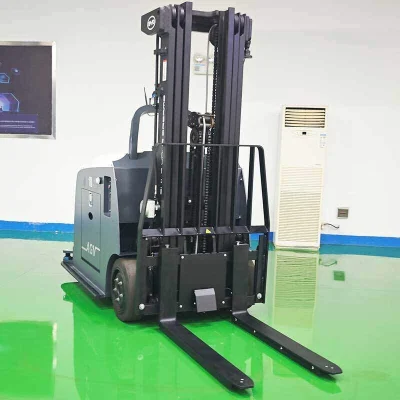
Use a checklist like this when you request a quotation:
- Heaviest load, typical load, and the load center at which each is handled
- Required lift height and whether the heaviest load is lifted to that height
- Any attachment and its effect on capacity and load center
- Narrowest aisle, doorway clearance, and any ramps with their grade and surface
- Shift length, charging windows, and available charging location
- Battery type preference and the charger specification that matches it
- Service access, spare parts availability, and the maintenance plan
Ask the supplier to confirm the capacity at your stated load center and lift height, not just the nominal rating. Request the relevant technical data sheet and check that the model, mast, and attachment combination in the quote matches what you intend to buy. If a figure is missing, treat it as unconfirmed rather than filling the gap with an assumption.
Assumptions to avoid
Two assumptions cause most sizing errors. The first is that a 5 ton rating applies at every height and load center. The second is that a truck which handles the heaviest pallet occasionally will handle it comfortably every day. A configuration that is marginal on paper tends to become a reliability and safety problem in daily use. Build in a margin that reflects your real duty cycle, and ask the supplier to explain how the margin was determined.
If you are evaluating a four-wheel counterbalance electric forklift from our range, send your load weights, load center, lift height, aisle dimensions, floor and ramp details, and shift pattern. That information lets the selection and configuration discussion start from your actual conditions instead of a generic capacity figure.
Frequently Asked Questions
Can a 5 ton electric forklift lift 5,000 kg at any height?
No. The rated capacity applies at a specified load center and is reduced as the load center moves forward or the lift height increases. Always check the capacity curve in the manufacturer’s technical data against your actual load and lift height.
How do I know whether I need a larger truck than 5 tons?
Compare your heaviest load, its load center, and the lift height against the published capacity. If the required capacity at your load center and height is close to or above the rating, or if an attachment shifts the load forward, a larger model or a different configuration may be necessary. Confirm the numbers with the supplier.
Does a four-wheel counterbalance truck suit narrow aisles?
It can work in aisles that accommodate its turning radius and chassis dimensions, but it is not the most compact option. Measure your narrowest aisle and turning points, and share those measurements so the supplier can confirm whether the chassis fits.
What charging information should I provide?
State your shift length, the hours the truck is available between shifts, and where charging can take place. These details determine whether a lithium battery configuration with opportunity charging suits your operation or whether a different charging arrangement is needed.