Different Forklift Types With Pictures: A Practical Reference Industrial Procurement Teams and Engineering Decision Makers Rely On During Equipment Selection
News 04/10/2026
Industrial teams need clear visual references when comparing forklift options across their operations. This guide organizes common forklift types by power source, lift capacity and working environment to help decision makers quickly match options to their needs. Each entry includes core characteristics, common use cases, key limitations and visual identifiers to support informed selection.
Common Forklift Types By Power Source
Internal Combustion (IC) Cushion Tire Forklifts
IC cushion tire forklifts run on gasoline, propane or diesel fuel. Solid cushion tires fit smooth, paved indoor or finished loading yard surfaces. Typical lift capacities range from 3,000 to 15,000 pounds, with custom models available to handle heavier loads.
Common use cases: Indoor warehouse storage, loading docks, manufacturing assembly lines. Key limitations: Exhaust emissions require adequate ventilation, higher noise levels compared to electric models.
Common visual identifiers: Compact frame, low-profile solid tires, visible engine compartment at the front of the unit.
IC Pneumatic Tire Forklifts
Pneumatic tire forklifts use air-filled tires designed to absorb impact on rough, uneven terrain. Most models use IC power sources, though electric options enter the market in recent years.
Common use cases: Construction sites, lumber yards, outdoor storage lots with unpaved ground. Key limitations: Larger turning radius, not ideal for tight indoor aisles.
Visual identifiers: Thick, deep-tread tires, taller frame, reinforced lift mast built to handle heavy loads.
Electric Counterbalance Forklifts
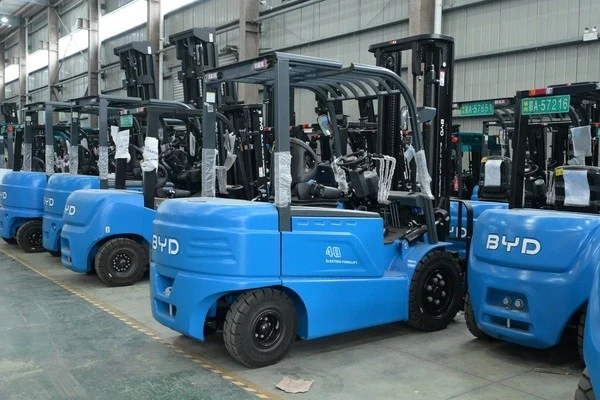
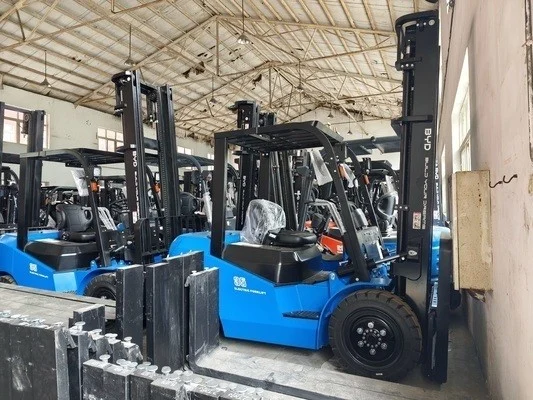
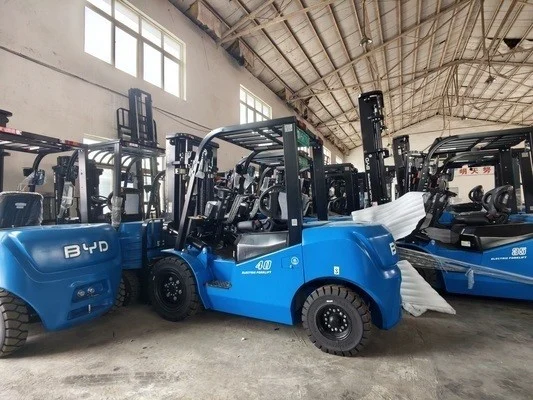
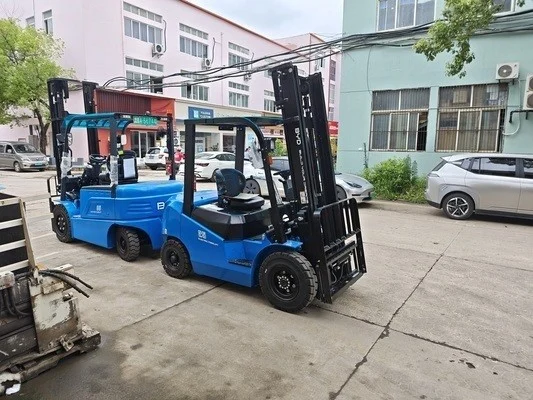
These forklifts rely on rechargeable lead-acid or lithium-ion batteries as power source. They produce zero emissions, making them ideal use within indoor operations with limited ventilation.
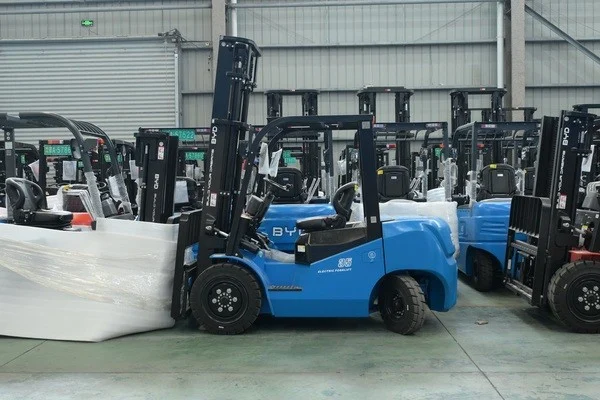
Common use cases: Food processing facilities, pharmaceutical warehouses, retail distribution centers. Key limitations: Battery charge limits shift length, require dedicated charging storage space, higher upfront cost compared to entry-level IC models.
Visual identifiers: No visible exhaust pipe, smaller engine compartment, smooth solid tires most common.
Walkie Stacker Forklifts
Walkie stackers are compact, pedestrian-operated electric units built to handle light lifting tasks. Operators walk behind the unit rather than riding onboard, which reduces overall footprint.
Common use cases: Small retail stock rooms, back-of-store storage, loading small delivery vans. Key limitations: Max lift height typically tops out around 15 feet, lower lift capacity (usually under 3,000 pounds).
Visual identifiers: No operator cabin or standing platform, handle controls at the rear of the unit.
Specialized Forklift Types Niche Applications
Reach Trucks
Reach trucks are specialized electric units built to serve high-bay warehouse storage. The extendable mast lets operators reach loads into racking that sits far deeper than standard counterbalance models can access.
Common use cases: Narrow aisle high-density storage warehouses, third-party logistics (3PL) distribution centers. Key limitations: Not designed to work outdoors, lower overall capacity than standard counterbalance models.
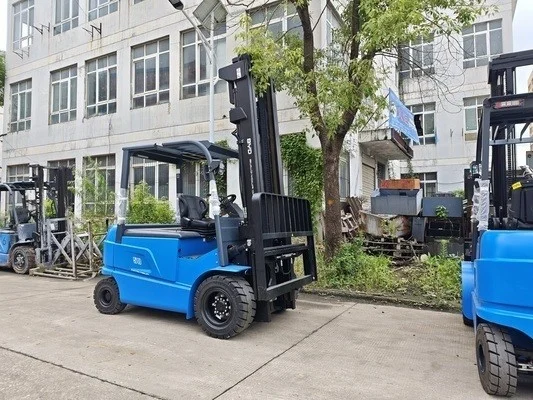
Visual identifiers: Extended mast design, outrigger stabilizers at the front of the frame.
Order Pickers
Order pickers lift both the load and the operator up to storage racking, so workers can pick individual items directly from shelves rather than pulling entire pallets.
Common use cases: E-commerce fulfillment centers, piece-pick distribution operations. Key limitations: Lower overall load capacity, maximum lift height varies widely between models.
Visual identifiers: Raisable operator platform attached to the lift carriage, open mast design.
Rough Terrain Forklifts
These heavy-duty units feature high ground clearance, four-wheel drive and heavy-duty pneumatic tires built to handle unimproved outdoor terrain.
Common use cases: New construction sites, agricultural storage yards, remote lumber operations. Key limitations: Too large for most indoor warehouse operations, higher fuel consumption.
Visual identifiers: High ground clearance, large aggressive-tread tires, often features a telescoping boom rather than a standard mast.
Core Selection Criteria Industrial Decision Makers Use
Narrow your forklift options by answering these key questions before making purchase or rental decisions:
- Working environment: Will the unit operate primarily indoors, outdoors or across both spaces? Indoor operations need zero-emission electric models most often, while rough outdoor terrain needs pneumatic or rough terrain units.
- Maximum lift capacity: What is the heaviest load your team moves regularly? Always add 10% buffer to your calculated maximum to avoid overloading the unit.
- Aisle width: What is the narrowest aisle the unit needs to navigate? Compact reach trucks or walkie stackers work best for aisles under 10 feet wide, while standard counterbalance models need 12 feet or more clearance.
- Shift length: How many consecutive hours does the unit operate each day? Electric models need sufficient battery capacity or fast charging infrastructure to match multi-shift operations.
Outlining these criteria first helps teams eliminate incompatible options early and reduces time spent evaluating unsuitable equipment.
Frequently Asked Questions
What forklift type works best in small warehouses?
Most small warehouses with narrow aisles and light to medium load volumes work best with electric reach trucks or walkie stackers. These compact units fit tight spaces and produce zero emissions suitable use within enclosed indoor areas.
Do I need specialized training to operate any forklift type?
Most global occupational safety regulations require certified training covering all forklift operators, regardless of unit size or type. Pedestrian-operated walkie stackers still fall under these requirements in most regions.
Which forklift type has lowest operating cost?
Electric forklifts generally have lower long-term operating cost compared to IC models, thanks to fewer moving parts and no fuel purchase requirements. Upfront purchase cost often runs higher, but total cost of ownership drops over the unit lifespan.
Can IC forklifts operate indoors?
IC forklifts can work indoors only if the space has adequate ventilation to remove exhaust emissions. Many facilities restrict IC models to outdoor loading areas only, due to carbon monoxide risk within enclosed spaces.
Final Selection Guidance
Every operation has unique requirements, so align your forklift choice with your most frequent tasks rather than prioritizing general-purpose capacity you never use. Visual comparisons of different forklift types help cross-functional teams align on requirements and confirm key physical dimensions fit your facility before committing to purchase or rental. Always test a unit within your actual working environment to confirm maneuverability and capacity match your needs before finalizing any agreement.