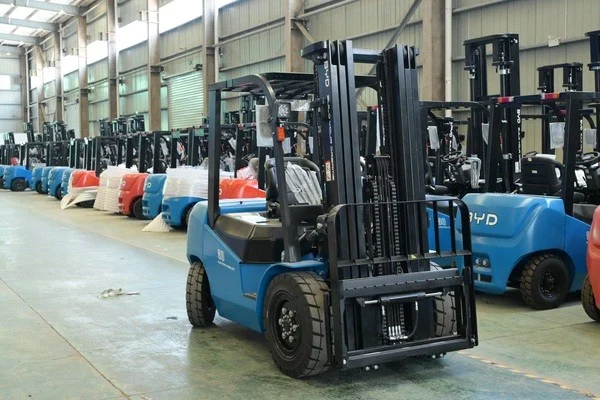
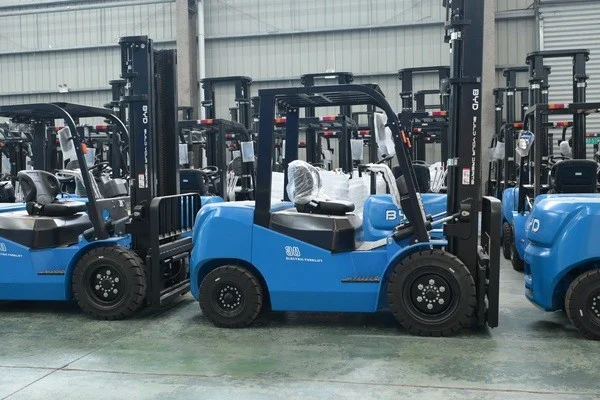
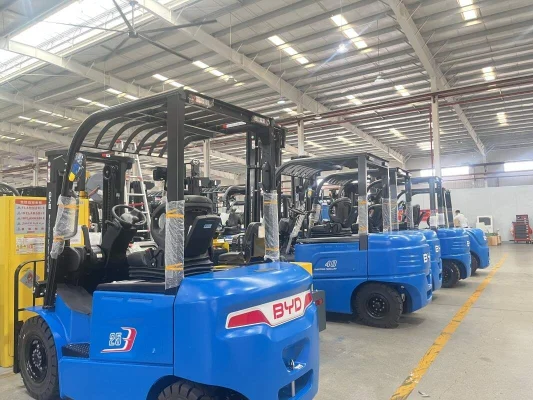
5 Ton Electric Forklift: What to Verify in Load Charts Before Committing to a Four-Wheel Counterbalance Model
News 03/11/2026
A 5 ton electric forklift is a substantial capital purchase, and the load chart is the document that decides whether a four-wheel counterbalance electric forklift can actually do the job you have in mind. The chart links three numbers that buyers often read separately: rated capacity, load center, and lift height. A truck advertised at 5,000 kg is rated at that figure only under specific conditions printed on the plate. Before you commit, confirm that the chart matches your real load, your real attachment, and your real racking height.
Start With the Rated Capacity Statement, Not the Model Name
Model names and marketing pages frequently quote a nominal capacity. The load chart, usually attached to the truck or included in the manufacturer’s technical documentation, states the capacity at a defined load center and lift height, often with a standard fork carriage and no attachment. Treat the nominal figure as a starting point and the chart as the operating limit.
Ask the supplier to send the chart that applies to the exact configuration quoted. A four-wheel counterbalance electric forklift sold with a different fork length, a side-shifting carriage, or a higher mast can carry less than the base rating. If the chart you receive does not identify the configuration, request a version that does.
What a capacity plate typically shows
- Rated capacity at a stated load center, commonly 500 mm or 600 mm depending on the region and model
- Maximum lift height and the mast type it applies to
- Any derating rows or curves that reduce capacity as load center or height increases
- The attachment or carriage assumed in the rating
None of these values should be assumed from a similar model. They must come from the documentation supplied with the truck you intend to buy.
Match Load Center, Height, and Attachment to Your Actual Duty
Most capacity problems on a 5 ton electric forklift come from a mismatch between the chart’s assumptions and the real load. Work through the following checks in order, because each one can change the answer.
1. Measure the real load center
The load center is the horizontal distance from the vertical face of the forks to the center of gravity of the load. A compact, dense load sits close to the fork face. A long crate, a wide pallet, or a load that overhangs the fork tips pushes the center of gravity farther out. When the actual load center exceeds the value on the chart, the safe capacity drops, even if the total weight is below the rated figure.
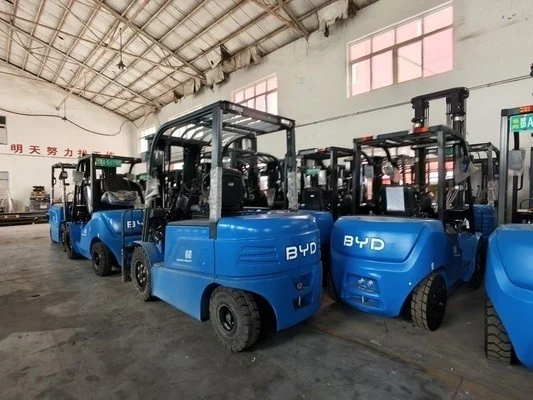
Estimate the load center from the pallet depth and load shape, then compare it with the chart. If the chart includes a derating table, read the capacity at your load center rather than the headline number.
2. Confirm the lift height you will actually use
Capacity can decline as the carriage rises, particularly on high-mast configurations. Check whether the chart provides a single rating or a height-dependent curve. If your racking requires lifting a full load to the top beam, verify capacity at that height, not only at ground level.
3. Account for attachments and non-standard forks
Side shifters, fork positioners, clamps, and longer forks add weight and move the load center forward. Each of these usually requires a derating that the attachment supplier or forklift manufacturer should state. Do not apply the base chart to a truck fitted with an attachment unless the documentation confirms the revised rating.
4. Check the stability assumptions behind the chart
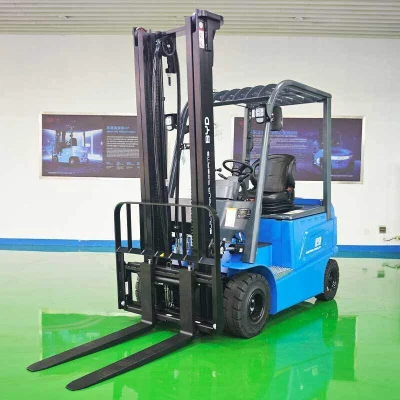
Load charts assume a level surface and a load held in the correct position. Slopes, uneven yard surfaces, and dynamic forces from fast travel or sudden stops reduce the margin. A four-wheel counterbalance electric forklift is a common general-purpose choice in factories, loading areas, and warehouses, but suitability still depends on floor condition, aisle width, and gradient. If your route includes ramps, raise this with the supplier and confirm the truck’s stated limits rather than extrapolating from the load chart.
Documentation and Questions to Settle Before You Sign
The load chart is one part of a package. Before committing, collect the documents and confirm the answers below. This is general procurement guidance, not a claim about any specific model’s verified performance.
| Item to verify | Why it matters | What to request |
|---|---|---|
| Load chart matching the quoted configuration | Prevents buying on a nominal rating that does not apply | Chart with model, mast, carriage, and attachment identified |
| Capacity at your load center and lift height | Shows whether the truck can lift your heaviest pallet at rack height | Derating table or curve, plus the assumed load center |
| Attachment derating | Attachments reduce capacity and shift the load center | Revised rating from the attachment or truck manufacturer |
| Battery and charging configuration | Affects usable shift length and charging logistics | Battery capacity, charger type, and charging time from technical data |
| Floor, aisle, and gradient conditions | Influence stability and practical operation | Supplier guidance on limits and operating conditions |
Two further points deserve attention. First, the load chart describes capacity, not throughput. Work out how many lifts and how much travel each shift involves, then check the battery and charging arrangement against that duty. Second, confirm the service and spare-parts arrangements available in your region. A capacity figure that fits your load is only useful if the truck can be maintained.
If you are evaluating a four-wheel counterbalance electric forklift, share your heaviest load, load center, required lift height, aisle width, floor and ramp conditions, and shift pattern with the supplier. Those details let them confirm which configuration the load chart supports. Without them, any capacity recommendation is an assumption.
Frequently Asked Questions
Does a 5 ton rating mean the forklift can lift 5,000 kg at any height?
No. The rating applies at the load center and lift height stated on the load chart, with the configuration assumed in that chart. Capacity may be lower at a greater load center, at higher lift heights, or with an attachment fitted. Always read the chart that matches the actual truck configuration.
What happens if my load center is larger than the chart value?
The safe capacity decreases. The load’s center of gravity sits farther from the fork face, which increases the overturning moment. Use the manufacturer’s derating information to find the capacity at your actual load center, and do not operate above that figure.
Can I add a side shifter without changing the rated capacity?
Usually not without confirmation. Attachments add weight and can move the load forward, so the rating often needs adjustment. Ask the attachment or forklift manufacturer to state the revised capacity, and keep that document with the truck’s load chart.
Which details should I send when requesting a configuration recommendation?
Provide the heaviest load weight, its dimensions and estimated load center, the lift height at which you handle full loads, aisle and doorway widths, floor surface and any ramps, and the number of hours and lifts per shift. These details let the supplier check the load chart and propose a configuration that fits your operation.