5 Ton Forklift: Critical Pre-Purchase Specification Checks Heavy Industrial Operations
News 20/10/2026
When procuring a 5 ton forklift, heavy industrial operations face unique challenges that make pre-purchase specification checks non-negotiable. A mismatched unit leads to unexpected downtime, safety risks and unnecessary costs your team can avoid with targeted validation. Below we break down the most critical checks your procurement team must prioritize.
Core Load Capacity Specifications
Most procurement teams start with the 5 ton nominal load rating, but few dig into the underlying parameters that determine real-world capacity. Nominal ratings rely on a standard load center distance, the horizontal distance between the fork heel and the center of gravity of your load. Standard load centers typically sit at 500mm or 600mm, but if your team regularly handles wider or longer loads, your effective load center increases. This reduces the maximum safe load your forklift can lift. Always confirm the rated capacity at your actual load center before proceeding.
Load Capacity At Maximum Lift Height
Nominal load capacity also applies only when the mast is fully lowered. As lift height increases, most forklifts see a gradual reduction in safe load capacity. If your operation requires lifting 5 ton loads to heights above 3 meters, you must check the manufacturer’s load chart to confirm capacity at your required working height. Many operations discover too late their 5 ton forklift can only handle 3 tons at the height their work requires.
Chassis and Mast Construction Checks
Heavy industrial operations rarely run on perfectly smooth warehouse floors. Your unit must withstand consistent heavy use, debris-strewn work zones and occasional uneven terrain. Start with tire selection: solid pneumatic tires resist punctures from scrap metal, nails or sharp construction debris, making them the top choice in outdoor or recycling operations. Cushion tires work well on smooth indoor concrete surfaces, but they puncture easily when exposed to sharp materials.
Mast construction also matters. Reinforced masts built with thick-wall steel reduce mast deflection under full load. Excessive deflection increases safety risks and makes precise load placement harder. Check the manufacturer’s published mast deflection rating when loaded to your maximum required weight. This rating tells you how much the mast will bend under load, a key indicator of long-term durability in heavy use.
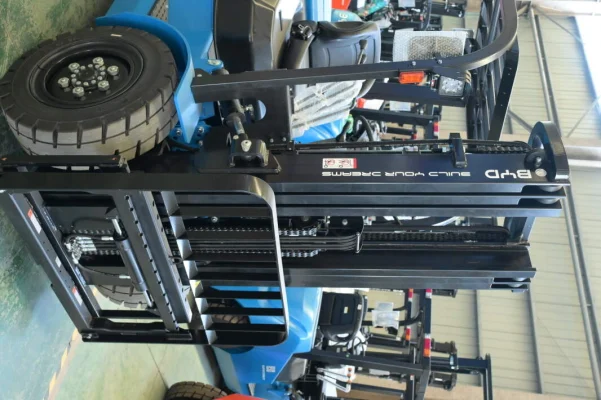
Confirm additional features your operation needs: side shifters let operators adjust load position without moving the entire forklift, fork positioners adjust spacing to match different load sizes, and cabin options protect operators from extreme weather in outdoor settings. Add only features your team actually uses, as extra components add upfront cost and maintenance needs over the unit’s lifespan.
Power Source Matching To Site Rules
5 ton forklifts come in three common power source options, each aligned to different operational needs and site rules. Internal combustion diesel units deliver high torque and long run times, making them the top choice in continuous outdoor heavy use. You must confirm the engine meets local emission regulations applicable to your work site.
Electric 5 ton forklifts run on large rechargeable batteries. They produce zero exhaust emissions, so they work well within indoor manufacturing or storage facilities. Electric units cost less to operate per hour than diesel units, but you must verify battery life matches your work shift length. If your operation runs two or three shifts daily, you will need extra batteries or fast charging infrastructure to keep units running. Plan these additional costs into your total acquisition budget.
Liquefied petroleum gas (LPG) 5 ton forklifts offer clean operation that fits mixed indoor-outdoor use. They require regular refueling and storage of LPG canisters, so confirm your site meets local safety rules applicable to fuel storage before selecting this option.
Frequently Asked Questions
Do all 5 ton forklifts handle heavy industrial work?
No. Many 5 ton units designed to serve light warehouse operations lack the reinforced chassis and sealed components necessary to handle harsh heavy industrial conditions. Always confirm build specifications match your work environment before any purchase agreement.
What key documents should I request from suppliers?
Request official manufacturer specification sheets that include load capacity at maximum lift, load center distance, mast deflection ratings and any required emission or safety certifications. Cross reference every specification against your site’s documented operational requirements.
What happens if I buy a unit with incorrect specifications?
Resale value drops significantly once a unit leaves the dealer lot, and modifications to core specifications like load capacity or power source often cost more than purchasing a correctly spec’d unit upfront. Investing time into pre-purchase checks avoids this costly mistake.