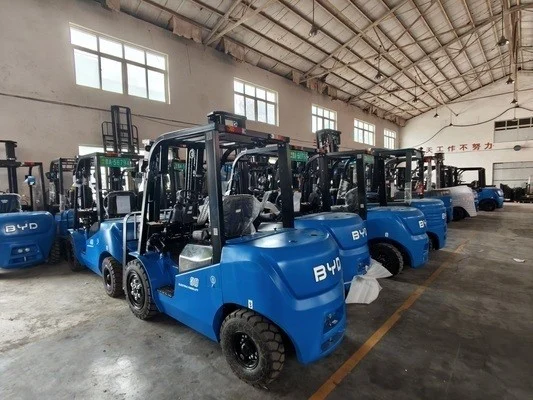
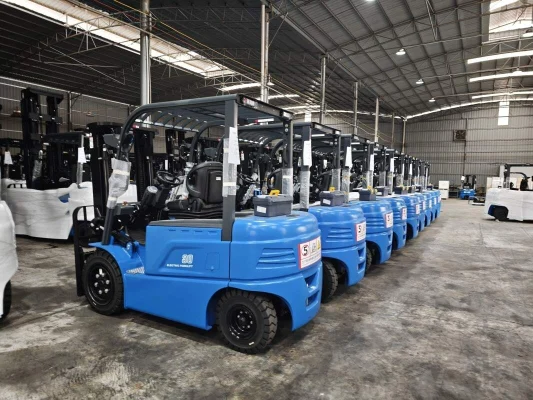
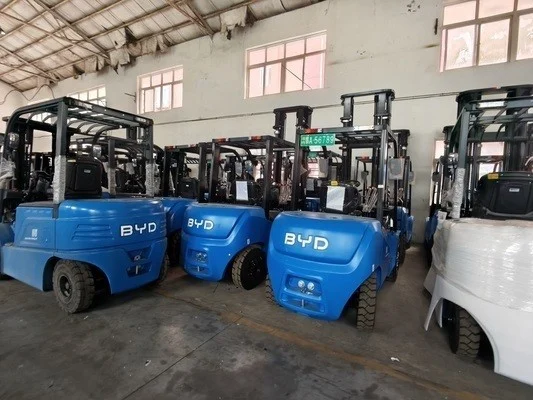
5 Ton Forklift Price: Comparing Lithium Battery Pack Options on a Four-Wheel Counterbalance Electric Forklift
News 01/11/2026
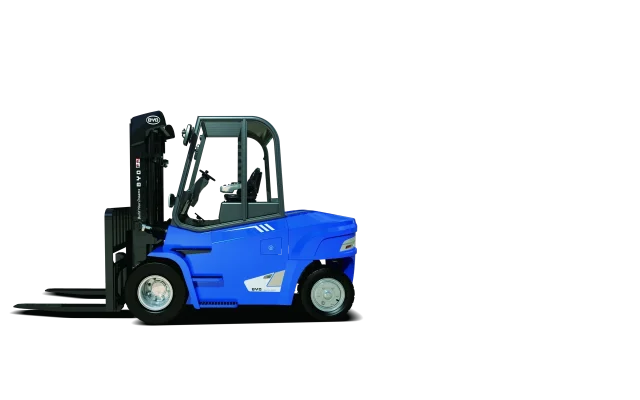
A 5 ton forklift price is not a single number. On a four-wheel counterbalance electric forklift, the lithium battery pack is one of the largest configurable cost items, and its capacity, voltage, charging method, and warranty terms can shift the total price significantly. This comparison explains the battery pack variables that matter, how to evaluate quotes, and what to confirm before you buy. It focuses on four-wheel counterbalance electric forklifts, the type this site supplies.
Why the Battery Pack Drives the Price of a 5 Ton Electric Forklift
The battery pack is not a commodity add-on. A 5 ton load requires high torque and sustained current, so the pack must be sized to the duty cycle, not just to the truck’s nominal voltage. Pack capacity, cell chemistry, battery management system (BMS) features, and charging infrastructure all affect both the initial price and the operating cost. When you compare quotes, separate the truck price from the battery and charger price so you can see what you are actually paying for.
Key Battery Pack Options and How They Compare
Lithium battery packs for a 5 ton counterbalance truck are usually specified by voltage, capacity (Ah or kWh), and charging strategy. The table below compares common configurations on the dimensions that affect price and suitability. The values are typical ranges, not a quote; actual specifications must come from the manufacturer’s technical data sheet.
| Option | Typical voltage | Capacity range | Charging approach | Price impact | Best suited to |
|---|---|---|---|---|---|
| Standard lithium pack | 80 V | 400–500 Ah | Opportunity charging with matched charger | Lower | Single-shift operation with breaks |
| High-capacity lithium pack | 80 V | 600–700 Ah | Fast charging or full-shift charging | Higher | Multi-shift or high-utilization fleets |
| Pack with advanced BMS | 80 V | Varies | Same as above | Moderate premium | Fleets needing remote monitoring and diagnostics |
| Pack with integrated charger | 80 V | Varies | On-board charging from standard outlets | Higher upfront, simpler infrastructure | Facilities without dedicated charging rooms |
These options are not ranked. The right choice depends on your duty cycle, charging window, and available power. A larger pack adds weight and cost; confirm that the truck’s counterweight and compartment are rated for it. Fast charging requires a charger and site power that can support the current, and not every facility can.
Capacity: Match the Pack to the Work, Not the Truck
Capacity should be based on measured energy consumption over a shift. If you do not have measurements, estimate from hours of operation, load weight, lift height, and travel distance. Undersizing the pack leads to opportunity charging and reduced uptime; oversizing adds cost and weight without benefit. Ask the supplier to show the assumed duty cycle behind any recommended capacity.
Charging Method: Opportunity, Fast, or On-Board
Opportunity charging lets the truck top up during breaks and can suit single-shift work with a standard pack. Fast charging can support multi-shift operation but needs a compatible charger and site power. On-board charging simplifies infrastructure but may add cost and limit charging speed. Compare the total cost of charger, installation, and electrical upgrades, not just the pack price.
BMS and Safety Features
A battery management system monitors cell voltage, temperature, and state of charge. Advanced features such as remote monitoring or fault logging can help maintenance planning but add cost. Confirm that the BMS communications protocol is compatible with the truck’s controller and that safety functions meet the manufacturer’s requirements. Do not assume that a higher price guarantees better safety; check the specifications.
How to Compare Quotes and What to Confirm
When you receive a 5 ton forklift price, ask for a breakdown that separates the truck, battery pack, charger, and any installation or training. Then confirm the following:
- Battery voltage and capacity, and whether they are measured at the pack terminals under a defined test condition.
- Duty cycle assumed in the capacity recommendation, including load, lift height, and shift length.
- Charger type, input power requirements, and whether site electrical upgrades are needed.
- Warranty terms for the pack, including cycle life or capacity retention thresholds and exclusions.
- Availability of spare parts and service support in your region.
- Compatibility with the truck’s battery compartment and counterweight.
If a quote does not state these items, ask. A lower headline price may exclude the charger or assume a duty cycle that does not match your operation. Also clarify whether the price includes delivery, commissioning, and operator training.
Frequently Asked Questions
Does a larger lithium battery pack always increase the 5 ton forklift price?
Generally yes, because more cells and a larger enclosure add cost. However, the price difference depends on the specific pack and charger configuration. A larger pack may reduce the need for a second battery or fast charger, so compare total system cost, not pack price alone.
Can I use my existing lead-acid charger with a lithium pack?
No. Lithium packs require a charger with a compatible charging profile and communications. Using an incompatible charger can damage the pack and may void the warranty. Confirm the charger specification with the supplier.
What information do I need to get an accurate quote?
Provide your load weight, lift height, aisle width, floor conditions, shift pattern, and available charging time. Also state whether you need on-board charging or a dedicated charging area. With these details, a supplier can recommend a pack size and give a meaningful price.
Is a lithium pack always the best choice for a 5 ton counterbalance truck?
Lithium packs offer advantages such as opportunity charging and no watering, but they are not automatically the best choice every time. Consider your duty cycle, charging infrastructure, and budget. A four-wheel counterbalance electric forklift with a lithium pack may suit many indoor and outdoor operations, but confirm the truck’s rated capacity at the required load center and lift height.
To move from comparison to a decision, gather your operating data and request a configuration review. This site supplies four-wheel counterbalance electric forklifts with lithium battery packs. Share your load, lift height, and shift details, and we can help you identify the pack options that fit your work and clarify what the price includes.