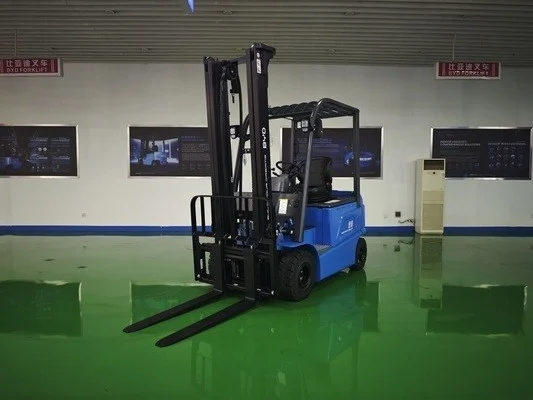
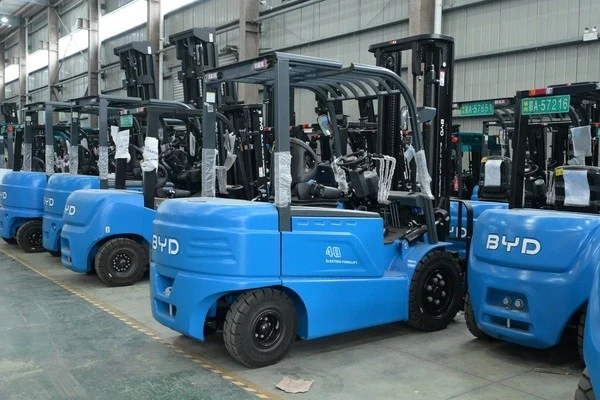
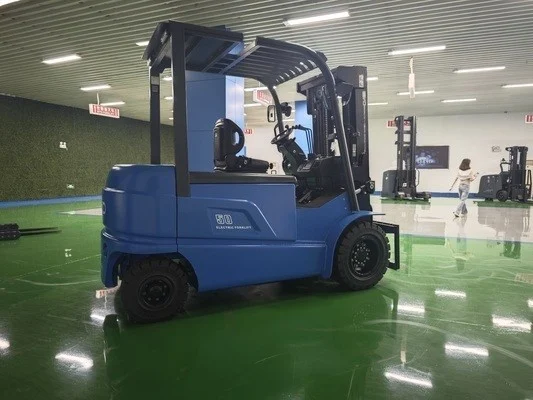
Mast and Lift Height Selection on a Four-Wheel BYD counterbalance forklift: Procurement Checklist
News 22/10/2026
Core Mast Type Options Your BYD Counterbalance Forklift
BYD produces four-wheel counterbalance electric forklifts with three common mast configurations, each built matching specific work environments. Standard masts work well in outdoor loading and unloading operations where overhead space is not limited. Two-stage free lift masts fit indoor warehouses with low ceiling heights, because they keep overall mast height low when fully retracted. Full free lift masts suit container loading and unloading, where clearance inside the container is limited. Each configuration changes clearance under full mast extension, so always align mast type with your most frequent work scenario.
Key Factors Determining Required Lift Height
Your required lift height depends on more than just the height of your stacked pallets. You must account for overhead obstacles, load capacity tradeoffs and site-specific conditions before finalizing your selection.
The most critical measurement accounts for the highest overhead obstacle in your work area. Common obstacles include warehouse ceilings, entry doorways, overhead sprinkler systems, and building support beams.
All forklifts see reduced maximum load capacity as lift height increases. Higher lift heights shift the center of gravity upward, so the truck can carry less weight at full extension than it can at ground level. You must confirm your heaviest intended load matches the published capacity rating at your required lift height.
- Measure maximum vertical clearance from your finished work surface to the lowest overhead obstacle
- Calculate your maximum target stack height, then add required safety clearance
- Confirm your maximum load weight at full lift height matches model specifications
These three steps eliminate most guesswork during initial specification.
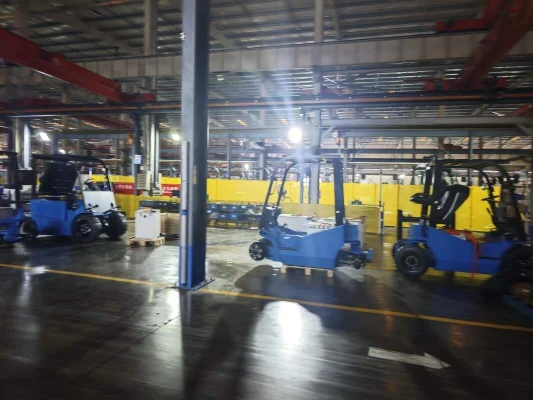
Common Specification Mistakes To Avoid
Many procurement teams make avoidable errors when selecting mast and lift height, leading to unnecessary costs or operational disruptions.
Over-specification is one of the most common issues. Buyers often select a much higher lift height than they actually need to cover future needs. This adds thousands of dollars to initial purchase cost and can reduce vehicle stability in uneven outdoor terrain.
Another common error: forgetting clearance for tilted mast → wait no, another common error: forgetting clearance of tilted mast. Even if your total stack height fits under the ceiling, a tilted mast at full lift adds extra height. If you do not account for this, you can hit overhead obstacles during regular operation.
Third error: ignoring load capacity reduction at height. Many buyers only reference the truck’s nominal ground level capacity, without checking capacity at their maximum required lift. This leads to overloading risks that damage the truck and create safety hazards.
All these mistakes are easy prevent when you collect accurate site data before ordering.
Pre-Order Procurement Verification Checklist
Use this checklist confirm all critical details before finalizing your BYD counterbalance forklift order:
- ☑ All site overhead clearance measurements (doorways, ceilings, fixed obstacles) are properly documented
- ☑ Maximum target stack height is confirmed, with required safety clearance included in calculations
- ☑ Maximum load weight at full lift height matches the selected BYD model’s published specifications
- ☑ Mast type is aligned with your primary work environment (indoor storage, container handling, outdoor loading)
- ☑ Clearance requirements for a fully extended tilted mast → correction: Clearance requirements of a fully extended tilted mast are confirmed against site obstacles
- ☑ Variations in site ground level are accounted for in final lift height calculations
Once you complete this checklist, you can share your site details and requirements with our team, who will help you finalize correct configuration your BYD four-wheel counterbalance electric forklift.
Frequently Asked Questions
Does higher lift height affect lithium battery runtime?
Higher lift masts add a small amount of extra weight to the front of the forklift. This can create minor impacts on runtime during constant high-lift operating cycles. If your operations rely heavily on frequent high-lift work, you can discuss available lithium battery capacity options our team during configuration.
Can I change mast lift height after delivery?
Mast and lift height are core factory-configured components. Post-delivery modification requires major structural changes, incurs high costs and may void original factory warranty. Confirming your required specifications before order placement avoids expensive rework later.
How much clearance should I add above my maximum stacked load?
Most standard operations require a minimum 200mm to 300mm clearance between the top of your highest stored load and the lowest overhead obstacle. This clearance accommodates mast movement, load swing and unexpected variations in load dimensions. Increase this value if you regularly handle irregularly sized loads.