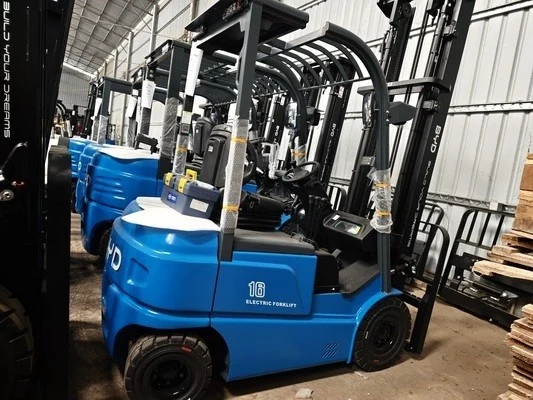
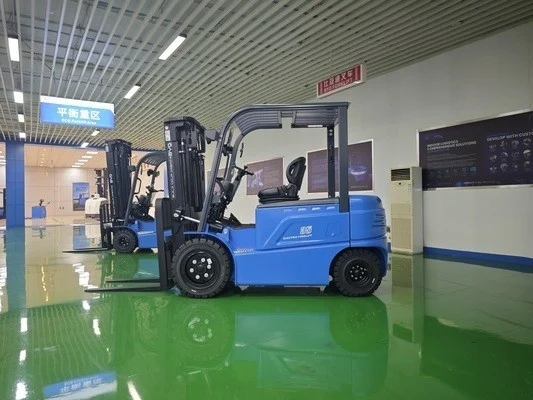
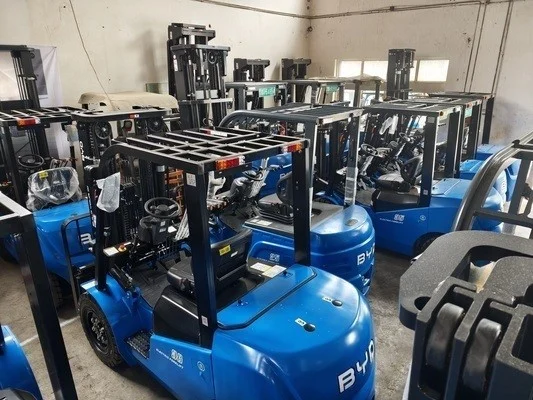
How Steering System Design Impacts Maneuverability Accuracy of BYD counterbalance forklift in Confined Industrial Spaces
News 20/10/2026
BYD counterbalance forklifts operate across a wide range of industrial facilities, many with tight corners, narrow aisles, and crowded work zones. Steering system design directly changes how accurately an operator can position the unit within these confined spaces, affecting both operational speed and workplace safety. Below we break down key design elements, tradeoffs, and limitations that impact overall maneuverability accuracy.
Core Steering Design Elements That Shape Maneuverability Accuracy
Steering systems connect operator input to front wheel movement, and every design choice alters response time, turning range, and feedback to the driver. Two common configurations used in counterbalance forklifts bring distinct performance characteristics.
Rack-and-Pinion Steering Configurations
Rack-and-pinion setups use a linear gear to convert rotational input from the steering wheel into side-to-side movement of the front wheels. This design delivers shorter travel between input and wheel movement, creating more direct response to operator adjustments. Operators can make smaller, more precise corrections when positioning forks in tight loading bays, which cuts down on multiple reverse and forward adjustments to align with pallets. The lighter overall weight of this design also avoids adding unnecessary mass to the front axle, which preserves the counterbalance effect that keeps the unit stable during lifting operations.
Recirculating Ball Steering Configurations
Recirculating ball setups use a threaded nut and ball bearings to reduce friction between steering components. This design typically handles higher load capacities more consistently than rack-and-pinion alternatives, but it adds more play between input and wheel movement. The extra play means operators require larger steering wheel adjustments to achieve the same wheel angle, which reduces accuracy when navigating tight turns in confined spaces. Most heavy-duty counterbalance models use this design, but operators must adapt their steering input to offset reduced responsiveness.
Steering ratio, the relationship between steering wheel rotation and front wheel angle, also plays a major role in accuracy. Lower ratios deliver faster wheel movement with less steering wheel rotation, which lets operators make quick adjustments in tight spaces. Higher ratios require more steering wheel rotation to achieve the same angle, which reduces the chance of overcorrection but slows down positioning in crowded areas. BYD balances this ratio based on the model’s intended use case, with standard counterbalance models targeting mid-range ratios that work across most common industrial settings.
Confined Space Operating Requirements and Design Tradeoffs
Confined industrial spaces impose unique demands on counterbalance forklift steering. Tight aisles, crowded storage areas, and small loading docks require sharp turning angles and precise control, which pushes designers to prioritize specific attributes over others.
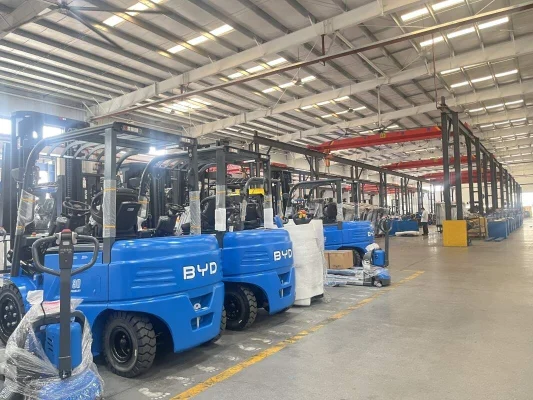
One key design priority centers on minimum turning radius. A smaller turning radius lets the forklift complete 180-degree turns in narrower aisles, which directly improves maneuverability within constrained work zones. Steering system design dictates how far front wheels can turn before contacting the vehicle frame or axle components. Designers can extend turning angle by adjusting the steering knuckle placement and the length of steering tie rods, but these changes can affect overall structural strength under heavy load. Fleet managers selecting models deployed in consistently confined spaces should confirm the model’s maximum turning angle matches their facility aisle width.
Steering sensitivity also matters in confined spaces. More sensitive steering responds to small steering wheel movements with immediate wheel angle changes, which lets operators make tiny adjustments to align forks with pallet openings. Too much sensitivity, however, can lead to accidental overcorrection, especially when operators move between open and confined spaces throughout a shift. Power steering systems, standard on most modern BYD counterbalance models, adjust sensitivity based on vehicle speed, which creates a balance between low-speed precision and high-speed stability.
Key Performance Limitations To Evaluate
Even optimal steering design carries limitations that impact maneuverability accuracy in confined spaces, and fleet managers need to consider these factors when planning fleet deployment.
Electric power steering versus hydraulic power steering creates different performance profiles. Electric power steering delivers more consistent response across temperature changes, and it does not rely on engine-driven hydraulic pumps, which preserves energy usage. Hydraulic power steering adds more weight to the front of the forklift, which shifts the center of gravity and can slightly alter steering response during tight turns. This extra weight also reduces the effective load capacity of the counterbalance design, so manufacturers adjust counterweight to compensate, which increases overall vehicle size and can reduce ability to navigate extremely narrow aisles.
Tire wear also impacts steering accuracy over time. Worn front tires change the effective steering angle and create inconsistent response to steering input, which reduces positioning accuracy in confined spaces. Operators should regularly check tire pressure and tread depth to maintain consistent steering performance. Misaligned steering components also introduce play that reduces accuracy, so routine alignment checks keep steering response predictable.
Counterbalance design itself interacts with steering performance. The rear-mounted counterweight creates a longer wheelbase on most counterbalance forklifts, compared to other forklift types like reach trucks. A longer wheelbase improves stability during heavy lifting, but it increases the minimum turning radius of the unit. This means even optimal steering design cannot overcome the inherent space requirements of a counterbalance configuration in extremely narrow aisles. Fleet managers with aisles narrower than standard industrial dimensions should consider alternate forklift types instead of relying on steering design improvements.
Frequently Asked Questions
Can I adjust steering sensitivity on my existing BYD counterbalance forklift?
Most modern BYD counterbalance models with electric power steering include factory adjustment options that control steering sensitivity. Check your model’s operator manual to access adjustment settings, or contact an authorized service technician to make changes aligned with your facility’s operating conditions.
Does steering design affect lifting capacity of BYD counterbalance forklifts?
Steering design can indirectly affect lifting capacity through added front-end weight. Hydraulic steering components add more mass to the front axle, which requires extra counterweight at the rear to maintain stability. This extra counterweight increases overall vehicle size, but does not reduce rated lifting capacity when the unit leaves the factory.
What steering design works best in consistently confined industrial spaces?
Rack-and-pinion steering with a lower steering ratio generally delivers the highest accuracy in confined spaces. This combination gives operators more responsive control and faster wheel movement that supports quick adjustments during positioning. Always confirm the model’s minimum turning radius matches your facility’s aisle width before finalizing your selection.
When evaluating BYD counterbalance forklifts used in confined spaces, prioritize steering configuration, turning radius, and sensitivity to match your facility’s unique layout. Confirm model specifications against your work zone dimensions to ensure the unit delivers the accuracy your operations require.