Ground Clearance and Tire Configuration Effects on BYD counterbalance forklift Operation Across Uneven Industrial Surfaces
News 19/10/2026
When operating a BYD counterbalance forklift across uneven industrial surfaces, two core vehicle settings directly impact stability, safety and overall productivity: ground clearance and tire configuration. This guide focuses on how these settings interact with common uneven terrain, and what checks you need to complete before selection and operation.
Core Parameters Affecting Stable Operation
Ground Clearance
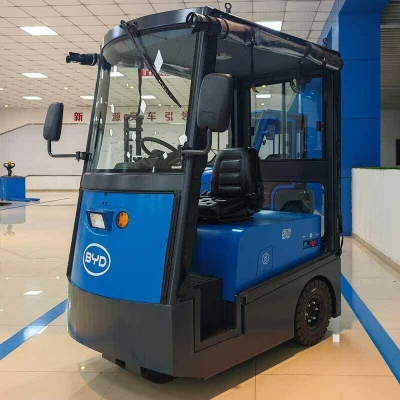
Ground clearance refers to the distance between the lowest point of the forklift chassis and the supporting ground. Industrial sites with cracked concrete, uneven paving, or debris-strewn yards require enough clearance to avoid undercarriage damage and prevent hanging up on raised obstacles. When sourcing your unit, you need to confirm the base model’s factory stated ground clearance, then check if any added components like underbody guards or battery enclosures reduce this distance.
Configuration tradeoffs exist here: higher clearance improves obstacle capability but can raise the vehicle center of gravity, which reduces maximum stability under full load. Always cross check center of gravity specifications against your typical load weights and lift heights before final selection.
Tire Configuration
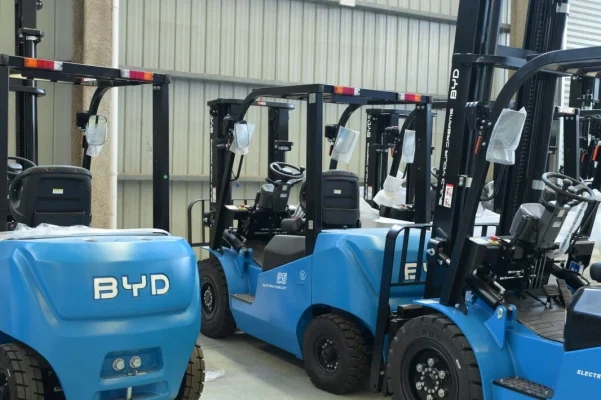
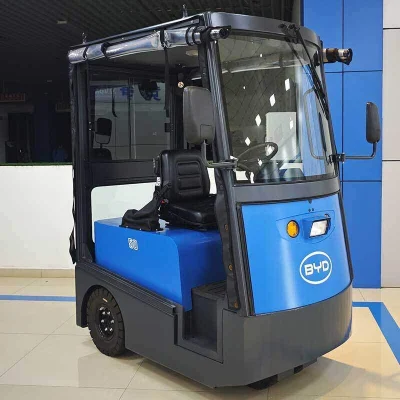
Two common options fit counterbalance forklift applications: solid cushion tires and pneumatic tires. Solid cushion tires mount close to the wheel hub, keeping the vehicle’s overall center of gravity lower. They work well on moderately uneven paved surfaces, but offer minimal vibration absorption and traction on loose or deeply uneven ground. Pneumatic tires, whether solid or air filled, provide larger contact patches and better shock absorption. They deliver improved grip on soft or uneven outdoor industrial yards. Drawbacks include higher overall vehicle placement, which changes clearance and center of gravity dynamics.
Configuration Tradeoffs by Common Industrial Scenarios
Different industrial sites face different uneven terrain challenges. The table below outlines common configurations and their associated considerations:
| Configuration | Ideal Use Case | Potential Risks | Items to Confirm with Supplier |
|---|---|---|---|
| Standard Ground Clearance + Solid Cushion Tires | Moderately uneven indoor industrial concrete floors | Low traction on loose gravel or deeply rutted ground | Factory confirmed ground clearance measurement, full load stability rating |
| High Ground Clearance + Pneumatic Tires | Outdoor uneven unpaved industrial storage yards | Raised center of gravity reduces full load stability | Maximum allowable load with high clearance configuration, tire pressure rating (air filled options) |
| Mid Range Clearance + Semi-Pneumatic Tires | Mixed indoor and outdoor operation | Lower obstacle clearance than high clearance setups | Overall center of gravity specification matching your typical load range |
Pre-Operation Checks and Safety Guidelines
Even with an optimal configuration, uneven ground introduces additional stability risks. Follow these guidelines to maintain safe operation:
- Inspect ground conditions before moving heavy loads, map any large uneven sections that exceed your forklift’s clearance capability
- Check tire condition and pressure daily (air filled units) to maintain consistent contact and traction
- Reduce travel speed when crossing uneven sections to maintain vehicle control
- Avoid full load lifts on extremely uneven ground, even when your unit has high clearance and large tires
- Complete monthly inspections of undercarriage components to catch damage from repeated contact with uneven obstacles
Operators need training to recognize terrain limits and adjust operation to match conditions. Never exceed the manufacturer’s stated load capacity, regardless of your tire and clearance setup.
Final Pre-Purchase Checklist
Before completing your order, confirm these details with your authorized BYD forklift distributor to avoid mismatched configuration:
- Factory stated ground clearance with your selected configuration
- Maximum load capacity and stability rating with your chosen tire and clearance setup
- Warranty coverage covering your selected configuration and intended operating environment
- Scheduled maintenance intervals specific to your tire type and terrain exposure
- Availability of replacement parts matching your custom configuration
This step ensures your vehicle matches your site’s unique terrain needs directly.
Frequently Asked Questions
Can I modify my existing BYD counterbalance forklift to improve performance on uneven ground?
Some changes like tire swaps or aftermarket underbody guards are possible, but any alteration changes the vehicle’s original center of gravity and stability rating. Always consult BYD or an authorized service provider before making modifications, to confirm changes do not void your warranty or create unsafe operating conditions.
What should I prioritize when selecting configuration: higher clearance or better tires?
Start with your most common operating environment. If your site operations stay mostly indoors with minor unevenness, solid tires with standard clearance often meets your needs. If you operate primarily outdoors on uneven ground, you must match both clearance and tire type to your terrain requirements.
Do all BYD counterbalance forklift models support high clearance and pneumatic tire configurations?
Available configuration options vary by model and rated load capacity. You must confirm available factory configurations through an authorized BYD forklift distributor before placing your order. Aftermarket configurations carry additional safety and warranty risks.