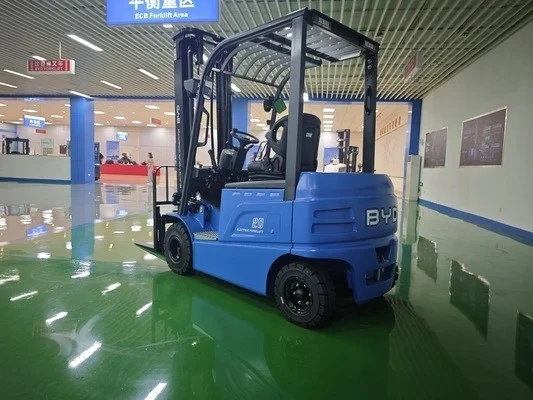
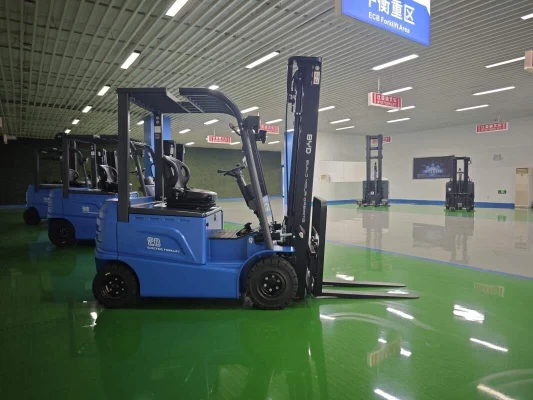
BYD ECB forklift Load Charts: Reading Capacity at Height Before Specifying a Four-Wheel Counterbalance Electric Forklift
News 22/10/2026
When you specify a BYD ECB four-wheel counterbalance electric forklift, your load chart holds critical data about actual carrying capacity at different lifting heights. Many new buyers only check base rated load, then face capacity shortfalls once their forklift reaches higher lifting heights. This guide walks you through core concepts, reading steps and common errors to help you get the right specification your operation needs.
Core Concepts Every Buyer Needs To Understand
Before you dive into a BYD ECB load chart, you need to recognize three core metrics that shape your final capacity:
- Load center distance: This is the horizontal distance from the forklift fork heel to the load center of gravity. Standard load centers measure 500mm or 600mm on most common pallet loads, but custom or irregular loads shift this value and reduce total capacity.
- Rated base capacity: This value applies when your lift height stays at the lowest position, and your load matches the standard load center distance. It does not reflect capacity at higher lifting heights.
- Actual capacity at height: This is the maximum safe load your BYD ECB forklift can carry when lifting to your target working height. Capacity drops as lifting height increases, due to stability changes across the four-wheel counterbalance design.
Four-wheel counterbalance electric forklifts rely on rear counterweight to maintain front load stability. As lift height increases, the vehicle’s center of gravity shifts forward, so maximum safe load capacity decreases. This relationship is clearly outlined in the official BYD ECB load chart, so you must confirm capacity before finalizing your order.
Step-by-Step Process To Read Your BYD ECB Load Chart
1. Confirm Your Operation Requirements First
Gather your own operation data before you open the load chart: record your maximum required lifting height, your average load weight, your load center distance and any attached attachment you plan to use. Attachments like side shifters or fork positioners add weight to the front of the forklift, which reduces remaining capacity you can use toward your load.
2. Cross Reference Your Data Against Chart Values
| Check Item | What You Need To Confirm | Action Item |
|---|---|---|
| Load center distance | Match your actual load center to the load chart’s base assumption | Request an updated chart from our BYD sales team when your load center falls outside standard values |
| Target lifting height | Locate your exact required height on the chart’s vertical or horizontal axis | Always round up to the next height mark on the chart to add a safety buffer |
| Attachment installed | Find the attachment capacity correction factor listed on the chart | Apply correction to base capacity before finalizing your selection |
| Slope and ground condition | Check if your operating environment exceeds the vehicle’s stated slope limits | Confirm adjusted capacity with our team if you operate regularly on sloped ground |
After you cross reference all your data, the value you get becomes your maximum safe working capacity. Never exceed this value during daily operation.
Common Load Chart Reading Mistakes To Avoid
Even experienced buyers make avoidable errors that lead to incorrect specification. The most common issues include:
- Ignoring attachment impact: Many buyers forget that any front-mounted attachment reduces total forklift capacity. Even light attachments shift the load center forward and cut available capacity. Always account for attachment weight and position when reading the chart.
- Using base rated capacity across all heights: Base capacity only applies at low lift heights. As lift height increases, capacity drops steadily. If you need to lift loads 3 meters or higher, you must check the corresponding capacity value at that exact height.
- Mismatching load center distance: If you carry larger or irregular loads with a longer load center than the standard value the chart uses, your actual safe capacity will be lower than the chart shows. Always request an adjusted chart when your load center falls outside standard ranges.
- Forgetting environment impact: Soft ground, steep slopes or uneven surfaces reduce forklift stability. Even if your load matches chart values on paper, you may need to reduce maximum working load to maintain safe operation.
If you have non-standard operating conditions, share all your requirements with our team. We can help you review the load chart and confirm correct capacity matching your operation.
Frequently Asked Questions
Does a BYD ECB forklift load chart change if I use lithium iron phosphate battery?
BYD ECB four-wheel counterbalance electric forklifts use built-in lithium battery packs that integrate into the vehicle’s counterbalance weight. The load chart includes the battery weight as part of the base vehicle design, so you do not need to apply extra adjustments to factory-built lithium battery models. Confirm adjustments with our team if you install any after-market battery changes.
Where can I get an official load chart of my desired BYD ECB model?
Official load charts are specific to each model configuration. You can contact our sales team to get the correct official load chart matching your required configuration and operating parameters.
Can I increase my forklift capacity after adding extra counterweight?
Modifying counterweight changes the original vehicle design and safety characteristics, and voids factory warranty. It also creates major safety risks from reduced braking performance and unstable lifting. Always select a model with a factory-rated capacity that matches your needs instead of modifying an existing unit.
Before you finalize your BYD ECB four-wheel counterbalance electric forklift order, confirm your actual capacity at your maximum required lifting height via an official load chart. Share your operating conditions, load details and required lifting height with our team to get a customized capacity check and configuration recommendation.