Calculating BYD ECB forklift Total Cost of Ownership Across Industrial Material Handling Operations
News 06/10/2026
Core Cost Components Included in BYD ECB forklift TCO Calculations
Total cost of ownership (TCO) captures every expense associated with a forklift from purchase to end of life, rather than just upfront sticker price. For? No, wait, no independent for:
Total cost of ownership (TCO) captures every expense associated with a forklift from purchase to end of life, rather than just upfront sticker price. When evaluating BYD ECB models, break costs into four core categories to build an accurate calculation.
Upfront Acquisition Costs
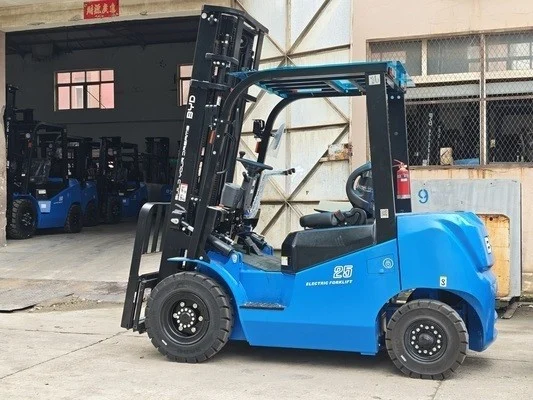
BYD ECB forklifts are fully integrated electric models, so upfront costs include the unit itself, integrated lithium iron phosphate battery, delivery, and any facility modifications needed to support charging. Upfront pricing typically runs higher than comparable internal combustion (IC) forklifts, but includes the battery as part of the purchase, eliminating need for separate battery purchases or recurring rentals common with older electric forklift designs.
Ongoing Operational Expenses
This category covers energy, maintenance, labor, and insurance. BYD ECB models use energy more efficiently than IC forklifts and older lead-acid electric models, leading to lower per-hour energy costs. Fewer moving parts eliminate need for oil changes, engine tune-ups, and exhaust system repairs, cutting annual maintenance spending significantly.
Downtime and Productivity Costs
Unplanned downtime cuts operational output and adds extra labor costs to cover gaps. BYD ECB forklifts offer faster full charging and support opportunity charging during breaks, reducing need for battery swaps in multi-shift operations. Longer battery service life also reduces unplanned outages linked to battery degradation.
End-of-Life Residual Value
Most TCO calculations overlook residual value, but this factor can shift results significantly. BYD lithium iron phosphate batteries retain most capacity after five years of regular use, so used BYD ECB forklifts hold higher market value than older electric or IC models.
Adjust TCO Calculations Your Specific Operation Type
TCO outcomes change dramatically based on how and where you use your forklift. Adjust your calculations aligned with your operation’s core characteristics.
Indoor Warehouse and Storage Operations
Indoor operations benefit from zero tailpipe emissions, a key advantage BYD ECB forklifts deliver over IC models. Emission compliance costs add ongoing expenses IC models require in enclosed indoor spaces, so these get added to IC TCO when comparing against BYD ECB units. Multi-shift indoor operations see the biggest TCO gains from opportunity charging that eliminates downtime battery swaps.
Outdoor Yard and Loading Dock Operations
BYD ECB models offer sealed components and weather-resistant options suitable for light to moderate outdoor use. If your operation runs year-round in wet or cold climates, add any costs for specialized tires or enclosures to your upfront TCO calculation. Cold temperatures can reduce battery range slightly, so adjust your energy cost projections based on local climate conditions.
High-Volume Distribution Centers
Higher annual utilization widens TCO gaps between BYD ECB and IC forklifts. Every hour of operation delivers incremental savings from lower energy and maintenance costs, so payback periods for higher upfront costs shrink to 3-4 years in most high-volume facilities.
Common Mistakes in BYD ECB forklift TCO Calculation
These common errors skew results and lead to incorrect purchasing decisions:
- Forgetting to include charging infrastructure installation costs: Even small facilities need basic upgrades to support charging, so these get added to upfront TCO.
- Ignoring available incentives: Many regional governments and utility companies offer rebates or tax credits for electric industrial equipment, which reduce upfront costs significantly.
- Underestimating downtime costs: Even a few hours of unplanned downtime per month adds up to thousands in lost output over a year, a factor that often favors more reliable BYD ECB models.
- Excluding residual value: Higher end-of-life value reduces net total ownership cost, so omitting this makes BYD ECB TCO look higher than actual results.
Step-by-Step Actionable TCO Calculation Process
Follow this simple process to get an accurate TCO your BYD ECB forklift:
- List all upfront costs: Include unit price, delivery, charging infrastructure installation, facility modifications, and any applicable taxes or fees. Subtract any incentives or rebates you qualify to receive.
- Project annual ongoing costs: Calculate expected annual energy use based on your estimated operating hours, add estimated maintenance costs, insurance premiums, and any labor costs associated with charging or battery handling.
- Factor in productivity impacts: Add or subtract costs linked to downtime. If BYD ECB models reduce expected downtime by 10 hours per year, calculate the associated productivity gain and subtract that from total annual cost.
- Estimate residual value: Research local used electric forklift market prices to get a realistic residual value at the end of your planned ownership period. Subtract this from your total net cost.
- Calculate annual or per-hour TCO: Divide your total net cost over the ownership period by number of years to get annual TCO, or by total projected operating hours to get per-hour TCO easy comparison against other forklift options.
Frequently Asked Questions
How does BYD ECB forklift TCO compare traditional internal combustion forklifts?
In most high-utilization industrial operations, BYD ECB models deliver lower long-term TCO despite higher upfront costs. Lower energy costs and reduced maintenance offset the initial price difference within 3-5 years for most operations, but low-utilization sites (fewer than 1000 operating hours per year) may see longer payback periods.
What residual value can I expect my BYD ECB forklift?
Residual value depends on utilization, maintenance history, and local market demand for used electric forklifts. Generally, BYD lithium iron phosphate batteries retain 70-80% original capacity after 5 years of regular use, so the full unit holds higher residual value than lead-acid electric or older IC forklifts.
Do I need account for new charging infrastructure costs in TCO?
Yes. Charging infrastructure installation adds upfront cost, but many operations can use existing electrical connections lower power models. High-capacity fast chargers support multi-shift operations and add more upfront cost, but deliver long-term savings from reduced downtime.
Can TCO calculations adjust to different ownership terms?
Yes. If you lease your BYD ECB forklift instead purchasing, you can replace upfront acquisition cost with monthly lease payments, and add any required lease maintenance fees to ongoing costs. The core calculation structure remains the same.
Conclusion
Accurate TCO calculation helps material handling managers make informed purchasing decisions aligned with long-term operational goals. BYD ECB forklifts offer clear TCO advantages in many high-utilization industrial settings, but every operation has unique requirements that change final cost outcomes. Always adjust calculations to match your facility’s utilization rate, operating environment, and ownership timeline to get accurate, actionable results.