BYD ECB35 Four-Wheel Counterbalance Electric Forklift: Questions to Ask About Mast, Carriage, and Hydraulic Options
News 03/11/2026
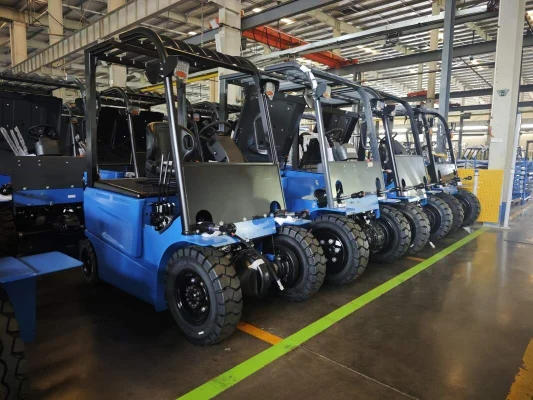
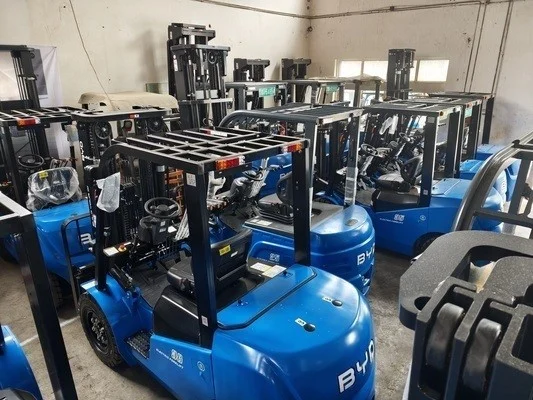
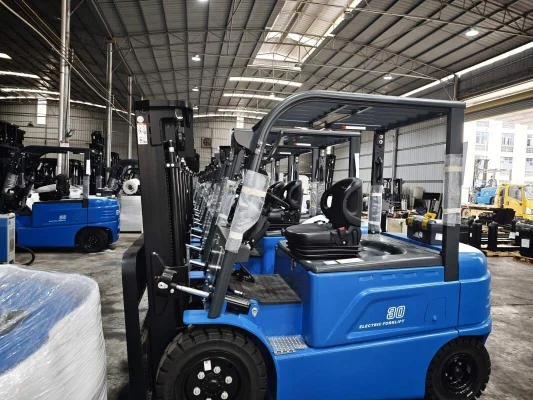
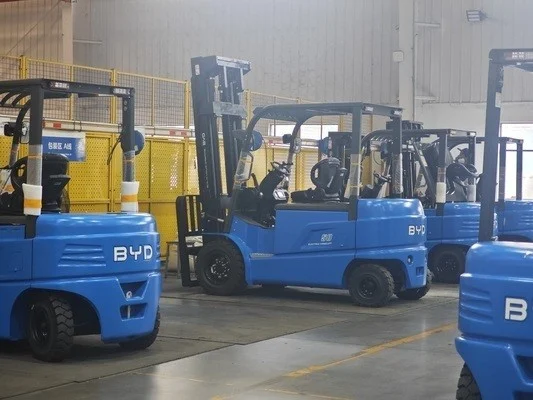
When specifying a BYD ECB35 four-wheel counterbalance electric forklift, the mast, carriage, and hydraulic options determine how well the truck matches your loads, racking, and floor conditions. The ECB35 is a 3.5-tonne class model, but published configurations vary by region and model year. This article lists the questions to ask and the data to collect so you can verify compatibility before purchase.
Mast Questions That Affect Lift Height and Capacity
The mast is the most visible specification, yet its impact on capacity and aisle width is often underestimated. Ask these questions to avoid a truck that lifts to height but cannot handle the load at that height.
What lift height do you actually need?
Measure the highest shelf or stacking point, then add clearance. Remember that capacity decreases as lift height increases, especially with a fully extended mast. Ask the supplier to provide the capacity chart showing rated load at your required lift height and load center. The ECB35’s rated capacity of 3,500 kg (approximate, confirm with local datasheet) applies at a specific load center, typically 500 mm or 600 mm. If your load center is longer, capacity will be lower.
Which mast type suits your application?
Standard duplex, triple-stage, and full-free-lift masts are common. A full-free-lift mast allows the forks to rise without increasing overall height, useful in low-clearance areas such as trailers or mezzanines. Ask whether the proposed mast provides free lift and how much. Also confirm the closed mast height and overhead guard height to ensure the truck fits through doorways and under obstructions.
How does the mast affect aisle width?
Mast type and carriage width influence the truck’s overall dimensions and turning radius. Provide your narrowest aisle and right-angle stack dimensions to the supplier. They can calculate the required aisle width using the truck’s actual dimensions, including any optional sideshift or fork positioner. Do not assume a standard mast will fit; verify with the manufacturer’s dimension drawing.
What about visibility and lighting?
Mast channel design and hose routing can affect forward visibility. Ask if the mast has a clear-view design and whether additional lighting is available for dim environments. If you operate in cold storage or outdoors at night, confirm that the mast and carriage are compatible with the lighting and camera options you need.
Carriage and Fork Configuration Questions
The carriage connects the load to the mast. Its width, fork spacing, and attachments must match your pallets and handling tasks.
What carriage width and fork length are appropriate?
Carriage width should accommodate your widest pallet without excessive overhang. Fork length should be at least two-thirds of the load depth, and the load center must not exceed the rated load center. For the ECB35, confirm the standard carriage width and available fork lengths. If you handle multiple pallet sizes, consider a fork positioner to adjust spacing without leaving the seat.
Do you need sideshift or fork positioning?
Sideshift allows lateral fork movement, useful for precise placement in racking. Fork positioners adjust fork spacing hydraulically. Both add weight and reduce residual capacity. Ask the supplier to provide the capacity reduction for each attachment and confirm that the hydraulic system can support them. Also check whether the attachment requires additional hydraulic lines and whether those lines affect mast visibility or hose routing.
What about special attachments?
If you need a clamp, rotator, or other attachment, verify that the carriage and mast are rated for it. The ECB35’s hydraulic system may require a different pump or valve configuration. Ask for the attachment’s weight and load center, and request a revised capacity chart. Do not assume the base truck can handle any attachment without derating.
Hydraulic System and Option Questions
The hydraulic system powers lifting, lowering, and attachments. Its configuration affects performance, maintenance, and energy use.
What hydraulic controls are available?
Options include mechanical levers, electronic joysticks, and integrated armrest controls. Consider operator comfort and task repetition. Ask whether the controls are proportional, allowing precise movement. For cold storage, confirm that the hydraulic oil and seals are rated for your temperature range. The supplier should provide the recommended oil viscosity and any cold-weather precautions.
How does the hydraulic system interact with battery and runtime?
Hydraulic functions draw energy from the battery. If you perform many lift cycles per hour, the hydraulic system’s efficiency affects runtime. Ask about the pump type and whether it is load-sensing. Also inquire about regenerative lowering, which can recover energy. However, do not expect specific runtime figures without a duty-cycle analysis. Provide your average lift height, load weight, and cycles per shift to the supplier for an estimate.
What maintenance access is provided?
Ask about the location of hydraulic filters, fluid check points, and hose routing. Easy access reduces downtime. Confirm the recommended hydraulic fluid change interval and whether the system includes a return filter. For cold storage, check if the hydraulic tank has a heater or if the oil is specified for low temperatures.
Frequently Asked Questions
Can the BYD ECB35 be configured with a full-free-lift mast?
Full-free-lift masts are often available as an option, but availability depends on the region and model year. Ask your BYD dealer to confirm the mast types offered for the ECB35 and provide dimension drawings and capacity charts for each.
How do I determine the right fork length for my pallets?
Fork length should be at least two-thirds of the load depth, and the load center must not exceed the truck’s rated load center. Measure your deepest pallet and consult the capacity chart. If you handle varied pallet sizes, consider adjustable forks or a fork positioner.
What hydraulic oil is recommended for cold storage operation?
The recommended hydraulic oil depends on the ambient temperature. Ask the supplier for the approved oil specifications and any cold-weather packages, such as synthetic oil or tank heaters. Do not assume standard oil will perform well in freezing conditions.
Can I add a sideshift to the ECB35 after purchase?
Adding a sideshift after purchase may be possible, but it requires hydraulic modifications and a new capacity rating. Consult the dealer to ensure the mast and carriage are compatible and to obtain an updated capacity chart. Post-purchase additions can affect warranty and safety.
How do I verify the ECB35’s capacity with my actual load?
Use the capacity chart provided by the manufacturer, which shows rated load at various load centers and lift heights. For precise verification, request a load test with your typical load and lift height. Do not rely on the nominal capacity alone.
Before finalizing your order, gather your load weights, load centers, lift heights, aisle widths, and duty cycle. Ask the supplier for dimension drawings, capacity charts, and hydraulic schematics. Confirm that the proposed configuration meets your needs and that all options are factory-approved. A thorough review now prevents costly adjustments later.