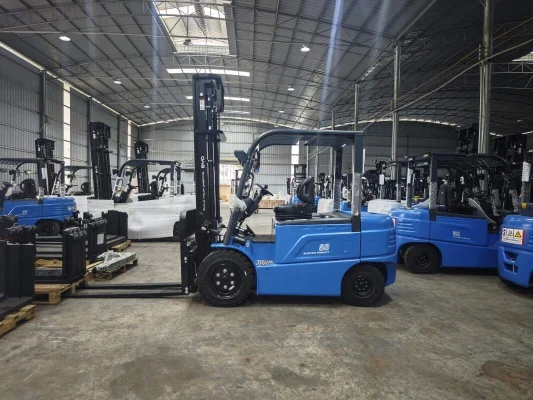
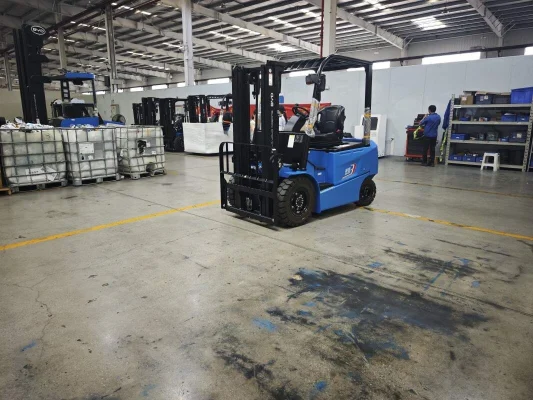
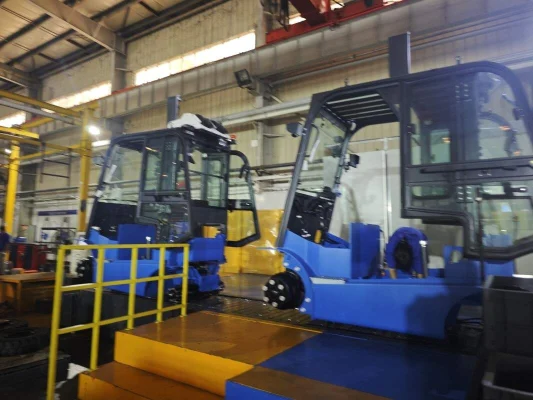
BYD ECB35 Four-Wheel Counterbalance Electric Forklift: Procurement Checklist Covering Load Center, Mast Options, and Battery Configuration
News 11/11/2026
Buying a BYD ECB35 four-wheel counterbalance electric forklift starts with three numbers that shape every later decision: the load center your loads actually present, the lift height and mast free-lift your racking demands, and the battery configuration that matches your shift pattern and charging window. Until these are settled, quoted capacities, mast choices and charger sizing remain provisional. This checklist lists the data a buyer should gather and the points to confirm with the supplier before an order is placed. Product-specific figures should come from current BYD technical documentation; the values below are the parameters to verify, not published specifications.
Load center and rated capacity: what to confirm first
A counterbalance truck is rated at a defined load center, usually measured from the fork face to the load’s center of gravity. Rated capacity applies at that load center and at a stated lift height. Move the load center outward, and the safe capacity falls; the truck does not simply carry its nominal rating anywhere on the forks.
Before requesting a configuration, record:
- The heaviest load, including pallet, packaging and any attachment weight.
- Load dimensions, especially depth along the forks, so the real load center can be calculated rather than assumed.
- Whether loads are uniform or vary widely; the worst case governs the rating check.
- Any attachment planned, since attachments shift the load center and reduce net capacity.
Ask the supplier to confirm the rated capacity at your actual load center and lift height, not only the headline figure. If your loads are near the limit, request the derating curve and check it against the heaviest combination you expect. A common procurement error is specifying capacity at a short load center while routinely handling deeper loads.
Mast options, lift height and site conditions
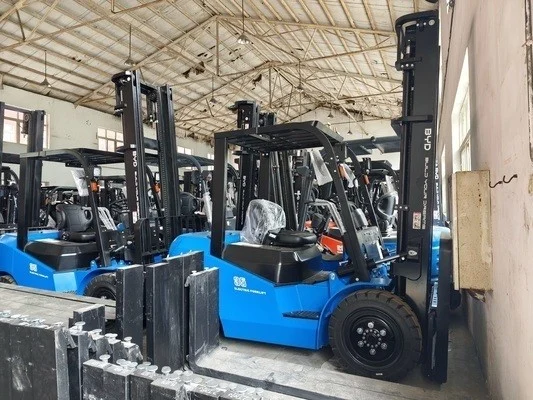
Mast selection follows the racking, the door openings and the overhead obstructions on site. The main choices are duplex and triplex masts, with or without free lift. Free lift lets the forks rise within the mast before the mast itself extends, which matters where a low doorway or mezzanine edge limits overall height.
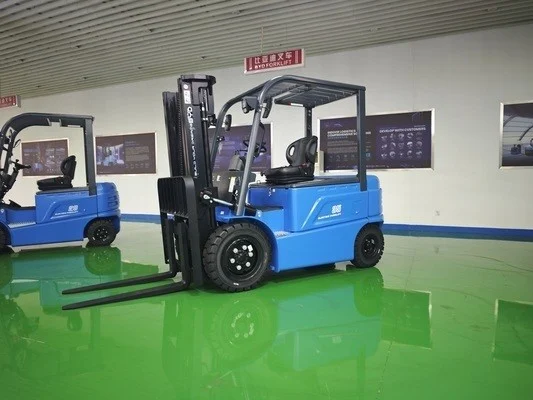
Collect these site facts:
- Maximum lift height needed to place loads at the top beam, plus clearance above the load.
- Closed mast height and overall lowered height, compared with doorways and roof trusses.
- Whether free lift is required at low-clearance entry points.
- Floor condition and slope; ramps and uneven surfaces affect safe operation and should be discussed with the supplier.
- Aisle width against the truck’s dimensions, so the chosen model can turn and stack safely.
Mast options also affect residual capacity, because a taller or heavier mast changes the truck’s stability envelope. Confirm capacity at the maximum lift height you specify, and confirm that the collapsed height fits every route the truck will use. If the site has gradients, state the slope and length; do not assume a standard configuration suits it without checking.
Battery configuration, charging and acceptance checks
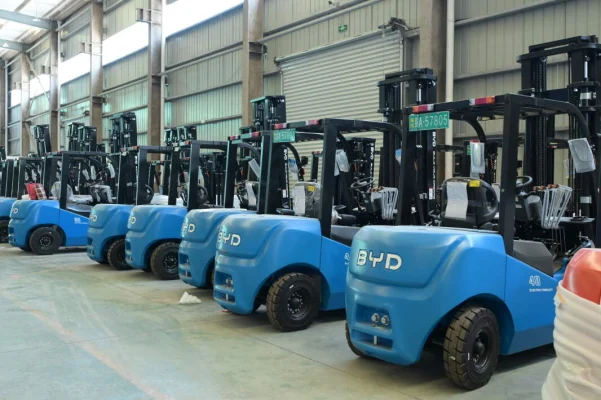
The BYD ECB35 is a lithium battery model, so battery configuration is a commercial and operational decision, not an afterthought. Establish the energy demand first: shifts per day, hours of actual run time, and the length of the break or shift-change window available to charge. Then agree with the supplier how battery capacity, charger type and charging location meet that pattern.
Points to settle in the inquiry:
- Battery capacity offered and the run time it is expected to support under your duty cycle.
- Charger type, input power available on site, and whether opportunity charging between shifts is intended.
- Charging area requirements, ventilation and electrical safety provisions.
- Battery management and monitoring features, and what the supplier documents about them.
- Warranty terms covering the battery, charger and truck, stated in writing.
Acceptance checks should follow the agreed configuration. At handover, verify the model and serial numbers, the mast type and lift height, the battery and charger supplied, and that the rated capacity plate matches the configuration ordered. Request the operator manual and confirm that operators receive familiarisation on the specific controls and charging procedure. Record any deviation from the purchase order before signing acceptance.
Because published data changes, ask the supplier to confirm every figure against the current datasheet at the time of quotation. Where a parameter is not documented, treat it as open rather than assuming a value. Buyers who bring measured loads, racking dimensions, shift patterns and site constraints to the discussion get a configuration that can be checked; buyers who ask only the headline capacity get a quotation that may not fit the job.
Frequently asked questions
Can the ECB35 handle a load heavier than its rated capacity at a short load center?
No. Rated capacity is tied to a specified load center and lift height. A load whose center of gravity sits farther out reduces safe capacity, and exceeding the rating is a stability risk. Confirm capacity at your actual load center with the supplier.
Do I need a triplex mast with free lift?
It depends on lift height and overhead clearance. Free lift helps where the mast cannot extend before entering a low doorway or under a mezzanine. If your top beam is high and entry clearances are generous, a simpler mast may meet the need. Compare closed height and capacity at full lift before deciding.
How do I size the battery and charger?
Start with measured run time per shift and the charging window available. Then ask the supplier to match battery capacity and charger output to that duty cycle, and confirm the electrical supply and charging area requirements. Do not size from shift count alone.
What should I check at delivery?
Verify model, serial number, mast type, lift height, battery and charger against the purchase order, and confirm the capacity plate reflects the configuration supplied. Keep the manual and record any discrepancy in writing before acceptance.