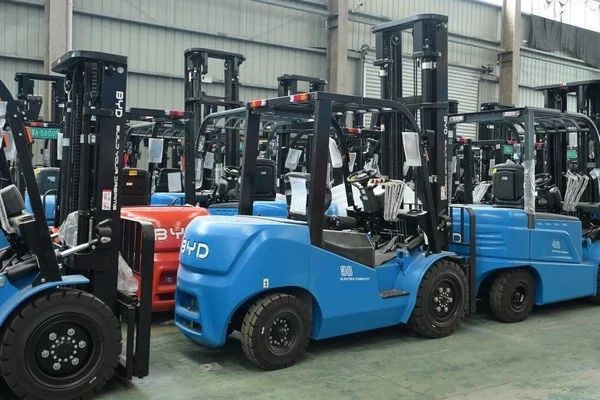
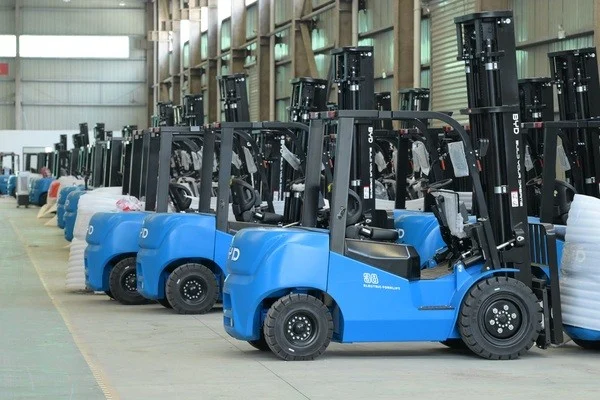
Electric Forklift Price: How to Compare Four-Wheel Counterbalance Quotes When Load, Lift Height, and Battery Configuration Differ
News 06/11/2026
An electric forklift price is rarely a single number you can line up beside another quote and trust. Two four-wheel counterbalance electric forklifts can carry the same rated load yet differ substantially in price once lift height, load center, battery chemistry, charger, and attachment requirements change. The practical task is not to find the cheapest number but to normalize each quote onto the same technical basis so the comparison reflects what you actually need to move, lift, and recharge.
This guide explains which quote lines usually drive cost differences, how to build a comparison sheet, and where buyers most often misread a proposal. Figures are deliberately omitted where they would require verified manufacturer data; instead, you get the parameters to request and the questions to ask.
Why the Same Load Rating Does Not Mean the Same Price
Rated capacity is measured at a defined load center, commonly 500 mm or 600 mm, and at a stated lift height. A truck rated at a given capacity at a low height may need derating as the carriage rises or as the load center moves outward. That means the specification that matters is not one number but a capacity curve tied to height and load center.
When you compare quotes, check whether each supplier states the same load center and the same lift height at which capacity is rated. A quote that quietly assumes a shorter lift height or a tighter load center is not describing the same machine, even if the headline capacity matches.
- Load center: the horizontal distance from the fork face to the load’s center of gravity; confirm the value used in the rating.
- Lift height: distinguish free lift, rated height, and maximum fork height.
- Derating: ask how capacity changes at your actual lift height and load center.
- Attachment impact: sideshifters, fork positioners, and clamps add weight and shift the load center, which usually reduces usable capacity.
These variables explain much of the spread between quotes that appear to describe the same truck. A proposal that omits them is incomplete rather than cheap.
Build a Like-for-Like Comparison Sheet
The most reliable way to compare electric forklift prices is to force every quote into one structured table. Ask each supplier to complete the same fields, and mark anything left blank as unresolved rather than assuming a default.
| Comparison field | What to record | Why it changes price |
|---|---|---|
| Rated capacity and load center | Capacity, load center distance, lift height at rating | Higher capacity and longer load centers require heavier structures and counterweight |
| Lift height and mast type | Rated height, maximum height, free lift, mast stages | Taller masts and multi-stage designs add material and complexity |
| Battery configuration | Chemistry, voltage, capacity in Ah or kWh, whether included or leased | Battery and charger are often priced separately and vary widely |
| Charging method | Onboard or external charger, charge time, opportunity charging suitability | Charger hardware and charging strategy affect total cost |
| Attachments | Type, added weight, resulting derating | Attachments add cost and can reduce usable capacity |
| Tyres and environment | Tyres specified, indoor or outdoor use, floor and ramp conditions | Different tyres and sealing suit different surfaces |
| Delivery and commissioning | What is included, who performs handover | Excluded services appear later as extra charges |
| Warranty and service scope | Covered components, duration, response terms | Support terms are part of the commercial comparison |
A completed sheet turns a pile of PDFs into a decision tool. If a supplier cannot fill a field, ask directly rather than guessing; unresolved specifications are a reason to pause, not a reason to pick the lowest figure.
Battery Configuration: The Line Item Buyers Misread Most
Battery configuration is where quotes diverge most sharply. Lithium-ion and lead-acid options differ in how they are purchased, charged, and maintained, and a quote may include a battery, exclude it, or price it as a separate lease. Before comparing totals, establish exactly what is included.
Questions to settle before comparing totals
- Is the battery included in the quoted price, or listed separately?
- What voltage and capacity are specified, and does that match the truck’s motor and controller?
- Is a charger included, and is it onboard or external?
- Does the charging approach suit your shift pattern, including breaks and between-shift charging?
- What maintenance does the battery type require, and who performs it?
- Are there site requirements such as ventilation, charging area layout, or electrical supply capacity?
Lithium-ion configurations often support opportunity charging, which can reduce the need to swap batteries across shifts, but the suitability depends on duty cycle, charger availability, and the manufacturer’s guidance. Lead-acid batteries typically require planned charging and watering routines. Neither is universally cheaper; the right choice depends on your operating pattern and the infrastructure you can support.
Treat the battery and charger as part of the machine specification, not an accessory. A quote with a smaller battery or no charger may look lower while requiring additional spending later.
Lift Height, Attachments, and Site Conditions That Change the Number
Lift height affects price through mast design and structural requirements. A truck that must place loads on high racking needs a mast rated to that height, and the capacity at height must be confirmed rather than assumed. Free lift matters in confined spaces or where the mast cannot extend beyond the overhead guard.
Site conditions also shape the specification. Aisle width, floor surface, ramps, and door openings determine whether a given four-wheel counterbalance electric forklift can operate safely and efficiently. Outdoor use or uneven surfaces may call different tyres and sealing. These requirements should be stated in the inquiry so suppliers quote a machine suited to the application rather than a generic configuration.
Attachments deserve explicit attention. Adding a sideshifter or clamp increases the carriage weight and moves the load center forward, which normally reduces the capacity available at the forks. Ask each supplier to state the derated capacity with the attachment fitted. A quote that lists an attachment without adjusting capacity is incomplete.
As a hypothetical example, a warehouse moving palletized goods to mid-height racking on smooth concrete with a single shift pattern would specify a different battery and charging arrangement than an operation running multiple shifts with limited charging windows. The two quotes would not be comparable until both state capacity, lift height, battery, charger, and attachment derating on the same basis.
Frequently Asked Questions
Why do two quotes with the same capacity differ so much?
Capacity is only one variable. Differences in lift height, load center, mast type, battery chemistry and capacity, charger inclusion, attachments, and service scope all affect the total. Normalize every quote onto the same specification sheet before comparing totals.
Should I compare prices with or without the battery?
Compare on a consistent basis. If one quote includes the battery and charger and another excludes them, the totals are not equivalent. Ask each supplier to state clearly what the price includes and to price the battery and charger separately if needed.
Does a higher lift height always cost more?
Generally a taller or more complex mast adds cost, but the amount depends on the design and the capacity required at height. Confirm the rated capacity at your actual lift height and load center rather than assuming the headline rating applies throughout the lift range.
Can I add an attachment later without changing the price basis?
Attachments affect capacity and may require a different specification. Discuss the attachment with the supplier before finalizing the quote so the derated capacity and any structural implications are stated up front.
What information should I send when requesting a quote?
Provide the load weight and dimensions, load center, required lift height, aisle and door dimensions, floor and ramp conditions, shift pattern, charging infrastructure, and any attachment needs. This lets the supplier propose a four-wheel counterbalance electric forklift configuration matched to the task. If you are considering a BYD four-wheel counterbalance electric forklift, share these details so the selection and configuration can be confirmed against available technical data.