BYD ECB35 Four-Wheel Counterbalance Electric Forklift: What Procurement Teams Should Confirm Before Ordering
News 31/10/2026
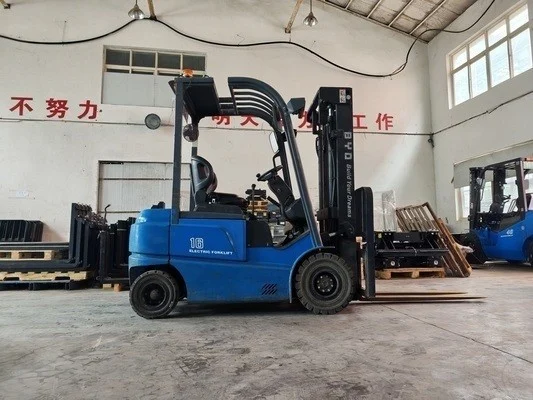
An order inquiry centered on the BYD ECB35 four-wheel counterbalance electric forklift usually moves faster when the buyer arrives with a defined operating profile rather than a single model number. The ECB35 is a counterbalance truck, so its suitability depends on load weight, load center, lift height, aisle width, floor and ramp conditions, shift pattern, and charging arrangements. Before requesting a quotation, confirm those conditions and ask the supplier to map them to documented configuration data. This guide sets out the information a procurement team should gather, the technical points worth putting in writing, and the checks to complete before acceptance.
Define the Duty Cycle Before Discussing Configuration
Configuration questions cannot be answered meaningfully until the work is described. A truck that handles occasional pallet movement in a warehouse differs from one working a loading dock across multiple shifts. Collect the following details and share them with the supplier.
- Load profile: the heaviest routine load, the typical load, and the load center at which those loads are handled. A rated capacity figure applies to a stated load center; loads extending beyond it reduce the safe working capacity.
- Lift height: the maximum height required, plus the height at which the truck travels with a load. Free lift and mast type both affect the working envelope.
- Travel and aisle dimensions: aisle width, door and gateway clearances, and turning space. Counterbalance trucks need room to maneuver, and the required aisle depends on the truck dimensions and the load.
- Floor and slope: surface type, condition, inclines, dock ramps, and any thresholds. Confirm the permitted gradients with the supplier rather than assuming a value.
- Shift pattern: hours per shift, shifts per day, and the breaks available for charging or battery exchange.
- Attachments: any clamp, push-pull, or other attachment changes the load center and residual capacity, so it must be declared before configuration.
Where a figure is unknown, measure it. Estimating lift height or aisle width from memory is a common source of rework later in the process.
Technical Points to Put in Writing
Once the duty cycle is clear, ask the supplier to confirm the specific configuration against manufacturer technical documentation. The following items belong in the written specification, not only in conversation.
Capacity, Load Center, and Mast
Request the rated capacity at the load center you actually use, the mast type and closed and extended heights, and the residual capacity when the declared attachment is fitted. State the lift height required and confirm the selected mast meets it.
Battery and Charging Arrangement
Confirm the battery type and capacity offered, the charger specification, charging time, and whether opportunity charging fits your shift pattern. Ask what charging infrastructure the site must provide, including power supply requirements and the space needed at the charging point. If battery exchange is expected, confirm the procedure and equipment involved.
Dimensions, Tyres, and Operator Environment
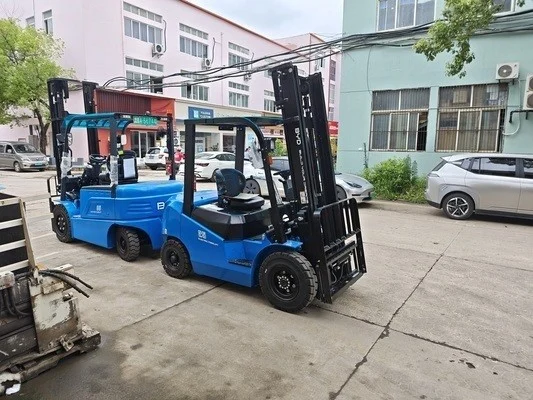
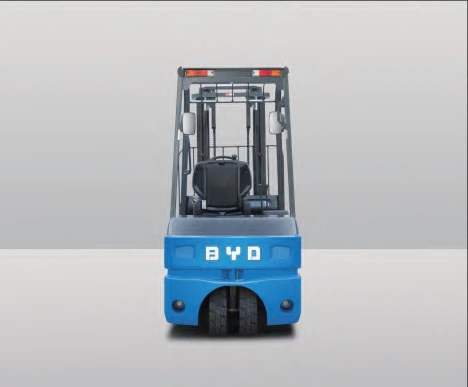
Obtain overall dimensions, turning radius, service weight, and tyre type suited to your floor conditions. Confirm the operator compartment features included in the quoted configuration, and ask which items are standard and which are options.
Documentation Package
Ask which documents will be supplied: operating manual, maintenance schedule, spare parts information, and any declarations applicable to the product. Do not assume certifications or approvals; request the documents that apply to the exact model and configuration being quoted.
Commercial and Acceptance Checks
Technical fit is only part of the order. The commercial and handover stages deserve equal attention.
- Scope of supply: confirm exactly what the price includes, such as charger, battery, attachments, delivery, commissioning, and operator training.
- Lead time and delivery terms: ask the supplier to state lead time and delivery responsibilities in writing. Avoid relying on verbal estimates.
- Warranty terms: request the warranty period, what it covers, and any conditions that affect validity, such as servicing requirements.
- Service support: clarify spare parts availability, response arrangements, and who performs maintenance locally.
- Pre-delivery confirmation: ask that the final configuration be confirmed against the agreed specification before shipment.
- Acceptance checks: at handover, verify the model and serial identification, compare the delivered configuration with the order, confirm the documentation package, and complete a function check in your own operating area. Record any discrepancies immediately.
A short written checklist signed at handover prevents most disputes about configuration and condition.
Frequently Asked Questions
What information should accompany an inquiry?
Provide the load weight and load center, required lift height, aisle and doorway dimensions, floor and ramp conditions, shift pattern, charging power available, and any attachments. These details let the supplier propose a configuration that matches the work rather than a generic model.
Can the ECB35 handle our heaviest pallet?
That depends on the rated capacity at your load center and the lift height selected. Compare your heaviest routine load against the documented capacity at the relevant load center, and account for any attachment, which reduces residual capacity.
How should charging be planned?
Charging planning follows the shift pattern and the battery and charger specification confirmed in the quotation. Ask the supplier to state charging time and infrastructure requirements, then check that the site power supply and charging location can support them.
What should be verified at delivery?
Check the model and serial identification, the delivered configuration against the agreed specification, the documentation package, and basic functions in your operating area. Report any mismatch before signing acceptance.
Procurement teams that document the duty cycle, obtain a written configuration, and plan acceptance checks reduce the risk of a truck that does not match the job. Share your actual load, lift height, and site conditions with the supplier so the ECB35 configuration can be assessed against real requirements.