BYD Electric Forklift Charging Logistics: Planning Opportunity Charging Windows Around Shift Handovers
News 05/11/2026
Opportunity charging works best when it fits the rhythm of the shift change, not when it interrupts the busiest hour. On a four-wheel counterbalance electric forklift, a short charge during a handover can restore usable energy without pulling a truck out of a peak task. The planning question is how to identify those windows, confirm the equipment supports them, and avoid the common mistake of treating every break as a charging slot. The notes below apply to BYD four-wheel counterbalance electric forklifts with lithium batteries; exact charging limits, charge rates, and battery temperature ranges must come from the manufacturer’s technical documentation, since they vary by model and configuration.
Why shift handovers are the natural charging window
A handover already involves a stopped truck, an operator change, and a short paperwork or briefing period. That pause is a low-cost place to add energy, because the truck is not needed on the floor. The benefit is not automatic, however. A handover window is only useful if the truck is actually parked near a charger, the handover lasts long enough to matter, and the battery is within its permitted charging conditions.
Two practical constraints shape the decision. First, opportunity charging is a partial charge, not a full cycle. Its value depends on how much energy the truck consumed during the previous period and how much the next period demands. Second, lithium batteries are generally more tolerant of partial charging than older lead-acid designs, but that does not mean every partial charge at every temperature is acceptable. Confirm the manufacturer’s guidance on charge frequency, state-of-charge limits, and temperature before treating handovers as routine charging points.
In a typical warehouse or loading operation, the handover may be ten to twenty minutes. That is often enough to add a meaningful amount of energy, but the real gain depends on charger output and the truck’s acceptance rate. Rather than assume a fixed result, measure energy consumed per shift and compare it with what a handover charge can deliver under the site’s actual conditions.
Building a handover charging plan that matches the workload
Map the shift pattern before touching the charger
Start with a simple record of each truck’s work: shift length, tasks, distance travelled, load weights, lift heights, and the time and duration of each handover. This record shows whether the truck returns to a charger location or must be driven there, and whether the handover is long enough to justify the trip. A truck that finishes its shift far from the charging area may lose the whole window to travel.
Next, identify the peak periods. If the busiest hour follows the handover, the charge must finish before that hour begins. If the handover sits in a quiet period, a longer partial charge may be possible without affecting throughput. The plan should protect peak availability first and use the remaining windows second.
Check the actual charging capability
Several items must be verified with the supplier or the site’s electrical team before scheduling:
- Charger compatibility: the charger must match the battery voltage and chemistry, and the connector must be correct.
- Charge rate: the truck’s and battery’s accepted charge rate determines how much energy a short window can deliver.
- Temperature limits: charging and storage temperature ranges differ by battery and configuration; confirm the minimum and maximum before planning winter or cold-store charging.
- Ventilation and electrical supply: the charging area needs adequate power capacity and, where required, ventilation and fire-safety arrangements consistent with local rules.
- Battery management system behavior: the BMS may limit charge current at low or high temperatures or at high state of charge. Ask how the system behaves in the site’s actual temperature range.
None of these values should be guessed. If the technical data sheet does not state a figure, write it down as an open item and confirm it in writing.
Decide between opportunity charging and a full recharge
Opportunity charging at handovers suits operations with multiple short breaks and trucks that return near the charger. It is less suitable when trucks work far from charging points, when the handover is too short to add useful energy, or when the battery temperature is outside the permitted charging range. In those cases, a planned full charge between shifts may be the more reliable routine. The choice is a scheduling decision, not a claim that one method is always better.
| Planning item | Why it matters | What to confirm | Typical status |
|---|---|---|---|
| Handover duration and location | Determines whether a charge is feasible | Measured time and distance to charger | Site-specific |
| Charger output and compatibility | Sets energy added per window | Voltage, connector, accepted charge rate | Confirm with supplier |
| Battery temperature range | Charging may be restricted outside limits | Operating, storage, and charging temperature limits | Confirm in technical data |
| BMS charge behavior | Affects real charge rate at temperature extremes | Current limits and cut-off conditions | Confirm with supplier |
| Electrical supply and safety | Prevents overload and compliance issues | Capacity, protection, local requirements | Site assessment |
Avoid the common scheduling errors
The most frequent mistakes are treating every break as a charging window, charging without checking battery temperature, and assuming a short charge always restores a fixed amount of energy. Another error is scheduling the charge during the handover but forgetting the travel time to the charger. A simple rule helps: only count a window if the truck can reach the charger, connect, charge, and return before the next task starts. If that sequence does not fit, the window is not real.
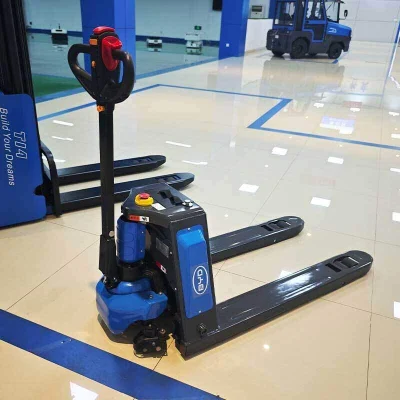
It also helps to rotate which truck charges at which handover, so that no single truck is repeatedly pulled from peak work. Keep a log of energy added and tasks completed, and review it after a few weeks. The log shows whether the plan is holding up or whether the shift pattern needs adjustment.
Questions buyers ask about handover charging
Can a BYD electric forklift be opportunity charged during every shift handover?
Not necessarily. It depends on the battery’s permitted charging temperature, the charger’s compatibility and output, the handover duration, and the truck’s energy use. Confirm these points with the manufacturer’s documentation and the site’s electrical assessment before making it routine.
How long should a handover charge last?
There is no universal duration. The useful length is the time needed to add the energy the next period requires, within the battery’s accepted charge rate and temperature limits. Measure actual consumption and charge acceptance rather than relying on a general rule.
Does partial charging damage a lithium battery?
Lithium batteries are generally suited to partial charging, but the manufacturer’s guidance on charge frequency, state-of-charge range, and temperature still applies. Follow the technical documentation rather than assuming any partial charge is harmless.
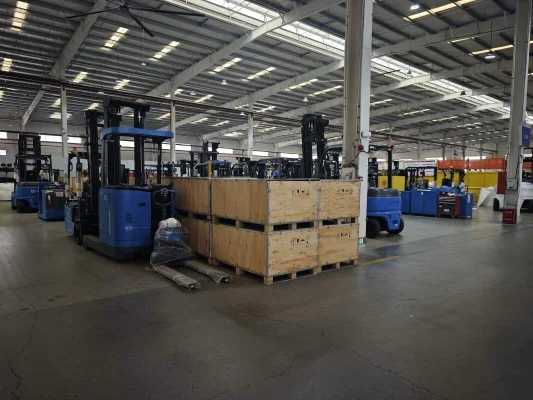
What should be checked before adding a charger near the handover area?
Check the electrical supply capacity, charger compatibility, ventilation and fire-safety requirements, cable routing, and the space needed for safe connection. Also confirm that the charging location does not block aisles or emergency routes.
When is a full recharge a better choice than handover charging?
A full recharge may be better when trucks work far from chargers, handovers are too short, or battery temperatures fall outside permitted charging conditions. The decision should follow the measured shift pattern and the manufacturer’s limits.
Before finalizing a plan, collect the shift schedule, handover times, charger locations, energy use per shift, and the battery’s charging temperature range. Ask the supplier to confirm charger compatibility, accepted charge rate, BMS behavior at temperature extremes, and any site requirements. Then run a short trial and compare energy added with tasks completed. If you share your load weights, lift heights, shift pattern, and charging area layout, the team can help match a BYD four-wheel counterbalance electric forklift configuration to your actual operation.