Configuring a BYD Forklift China Four-Wheel Counterbalance Electric Truck: Load Capacity, Mast Options, and Battery Choices Buyers Must Verify
News 11/11/2026
A BYD forklift China procurement project usually succeeds or fails on the specification sheet, not on the price line. Before you request a quotation, confirm three things: the load you actually lift at the height you actually lift it, the mast that reaches your racking without blocking your aisles, and the battery and charging arrangement your shift pattern can support. This guide explains what to check in each area, which figures come from the manufacturer’s technical data, and which values only your own operation can supply.
Start With the Load, Not the Model Name
Rated capacity on a four-wheel counterbalance electric forklift is a conditional number. It applies at a stated load center, normally 500 mm or 600 mm, and at a stated lift height. Move the load forward or lift it higher and the safe capacity falls. Buyers who compare models on the headline rating alone often order a truck that cannot handle their heaviest pallet at the top beam of the racking.
Build a short load list before contacting any supplier:
- Heaviest pallet or attachment load, including packaging and any clamp or spreader weight.
- Load dimensions and the actual load center, measured from the vertical face of the fork to the center of gravity.
- Required lift height at the floor and at the highest shelf, plus free lift needed to enter double-deck trailers or low clearances.
- Any attachment that shifts the load forward, since this reduces residual capacity.
Ask the supplier to confirm residual capacity at your load center and lift height, not only the nominal rating. If the data sheet shows a derating curve, read it against your heaviest combination. Where the information is missing, request it in writing rather than assuming the headline figure applies.
Check Axle Load and Floor Limits
A heavier battery and a taller mast both raise the truck’s own weight and shift its center of gravity. Confirm the ground bearing capacity of your warehouse floor and the load limit of any ramp, dock plate, or mezzanine the truck will cross. These are site conditions the supplier cannot verify remotely, so record them in your enquiry.
Mast, Dimensions, and Aisle Fit
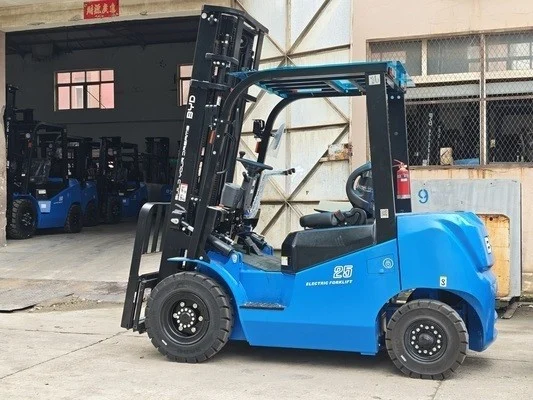
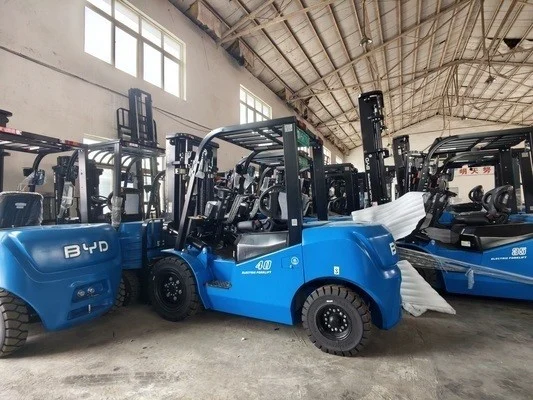
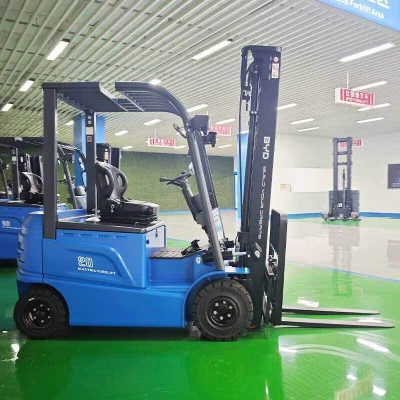
Mast choice follows from the building, not from preference. A standard duplex mast suits many single-deep racking layouts, while a triple-stage mast adds collapsed height advantage and free lift where ceilings or trailer entries are tight. Each added stage affects visibility, weight, and cost, so specify the smallest configuration that meets your lift height and overhead clearance.
| Parameter to confirm | Why it matters | Who supplies the value |
|---|---|---|
| Rated capacity and load center | Defines the safe load at your handling point | Manufacturer data plus your load list |
| Max lift height and free lift | Reaches top racking and clears trailer doors | Manufacturer data plus your racking survey |
| Collapsed mast height | Fits under doors, lights, and sprinkler lines | Manufacturer data plus building drawings |
| Right-angle stacking aisle | Determines whether the truck can turn in your aisles | Manufacturer data plus measured aisle width |
| Tyre type and floor condition | Affects traction, wear, and ride on your surface | Site inspection |
Measure the narrowest aisle, the door openings, and the lowest overhead obstruction along the actual travel route. Include any slope, dock ramp, or floor joint the truck must cross, and note whether the surface is smooth concrete, coated, or uneven. A four-wheel counterbalance electric forklift is a common general-purpose choice across factories, loading bays, and warehouse transfers, but it is not automatically suitable everywhere; gradeability, aisle width, and floor strength decide the fit.
Attachments and Visibility
If you need a side shifter, fork positioner, or clamp, state it at enquiry stage. Attachments change the effective load center and may require a different capacity rating. Also check that the mast and carriage you select preserve adequate forward visibility with your typical load, since tall loads and wide carriages can obscure the fork tips.
Battery and Charging Decisions to Confirm
Battery configuration should follow the duty cycle. Establish how many hours the truck runs per shift, how many shifts per day, and whether the truck can return to a charging point during breaks. Then confirm with the supplier which battery capacity and charger are offered with the model you are considering, and what charging window that combination supports.
- Charging location: dedicated bay, ventilated area, and distance from the work zone.
- Electrical supply available on site, including voltage and available power at the charging point.
- Whether opportunity charging during breaks is part of your plan or whether a full charge between shifts is required.
- Battery handling and replacement arrangements, if any, and who performs them.
Do not assume a particular runtime, charge time, or cycle life. These depend on the specific battery and charger supplied, ambient conditions, and how the truck is used. Ask the supplier to state the tested conditions behind any performance figure they quote, and treat figures without stated conditions as unconfirmed. A lithium battery option may reduce maintenance tasks compared with lead-acid, but the practical difference depends on your charging routine and the equipment actually supplied.
Operating Environment Checks
Confirm temperature range, dust or moisture exposure, and any fire or insurance requirements that affect battery location and charging areas. These constraints belong in the technical enquiry so the proposed configuration matches the site, rather than being discovered after delivery.
Frequently Asked Questions
What information should I send with a BYD forklift China enquiry?
Send your heaviest load and its load center, required lift height, narrowest aisle and door dimensions, floor and ramp conditions, shift pattern, charging point location, and any attachment requirement. This lets the supplier propose a four-wheel counterbalance electric forklift configuration instead of a generic model.
Can I rely on the rated capacity shown on the data sheet?
Only at the load center and lift height stated with that rating. If your load is deeper or higher, ask for the residual capacity at your actual conditions and confirm it in the quotation.
How do I choose between mast options?
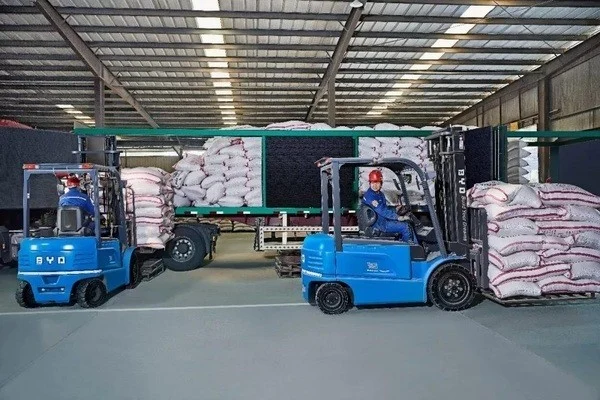
Match the mast to your highest shelf and your lowest overhead clearance. Choose the simplest configuration that reaches the required height while fitting under doors and services, then check that visibility with your typical load remains acceptable.
What should I verify before accepting delivery?
Check the model and serial identification, rated capacity plate, mast type and lift height, battery and charger specification, and that the delivered configuration matches the agreed quotation. Confirm that operator training and the documentation you requested are included, and record any deviation in writing.
Specification errors are cheaper to fix on paper than on the loading dock. Confirm load, mast, and battery details against your measured site conditions, keep the agreed values in the quotation, and ask the supplier to identify any figure that depends on test conditions you have not seen.