Comparing Battery Options on a Four-Wheel Counterbalance Electric Forklift: Runtime, Charging Windows, and Fleet Sizing
News 04/11/2026
Battery choice on a four-wheel counterbalance electric forklift rarely comes down to a single specification. The practical question is whether the battery, charger, and shift pattern together keep the truck available when your loads need moving. A pack that looks generous on paper can still fall short if charging takes longer than the break between shifts, and a modest pack can work well when opportunity charging fits the workflow. This comparison sets out the dimensions that matter — runtime, charging windows, and fleet sizing — so you can judge which configuration matches your operation rather than which chemistry sounds most advanced.
What Runtime Actually Depends On in a Four-Wheel Counterbalance Electric Forklift
Runtime is not a fixed property of a battery. It is the result of usable energy, how hard the truck works, and the conditions on the floor. Two sites running the same model can see very different shift lengths before a recharge is needed.
Load, lift height, and duty cycle
Every lift, lower, travel, and hydraulic movement draws energy. Heavier loads, higher lift heights, longer travel distances, and frequent attachment use raise consumption. A truck cycling pallets at floor level in a compact warehouse asks far less of the battery than one stacking to racking top levels across a large yard.
Floor, slope, and environment
Rough or sloping surfaces increase rolling resistance and motor effort. Cold storage or unheated buildings can affect usable capacity, depending on the battery and the manufacturer’s guidance. These factors should be described honestly when you request a configuration, because they change the runtime estimate.
Battery condition and age
Capacity fades with cycling and with poor charging habits. A pack that met a full shift when new may not do so after years of service. Fleet planning should account for this decline rather than assuming new-truck performance indefinitely.
Because these variables interact, no responsible supplier can quote a precise runtime without your duty cycle. The useful approach is to provide measured or estimated hours, load weights, lift heights, and shift patterns, then confirm the expected runtime against the manufacturer’s technical data for the specific model and battery.
Charging Windows: Matching the Pack to Your Shift Pattern
Charging is where battery options diverge most visibly. The comparison below describes general characteristics of common battery and charging approaches; confirm the details against the technical documentation supplied with the truck you are considering.
| Consideration | Conventional lead-acid | Lithium-ion (as offered on BYD models) |
|---|---|---|
| Typical charging style | Often planned as a full charge cycle, with battery care routines | Generally suited to opportunity charging during breaks |
| Battery swapping | Common practice where multi-shift operation demands it | May reduce the need to swap, depending on duty cycle |
| Maintenance routines | Requires watering and ventilation considerations | Sealed operation generally simplifies daily routines |
| Charging area needs | Dedicated charging room often required | Charging points can be placed closer to work areas, subject to site rules |
These are general tendencies, not guarantees. Charger capacity, available power supply, site safety rules, and the manufacturer’s charging instructions determine what is actually permitted. A charging window that looks convenient may not be feasible if the electrical infrastructure cannot support it.
Questions to settle before choosing a charging strategy
- How long are the breaks, and is there a reliable place to plug in during them?
- Does the site have the electrical capacity and safety provisions the charger requires?
- Will the truck operate across multiple shifts without a long idle period?
- Is battery swapping an option you are prepared to manage, or do you prefer to avoid it?
Answering these honestly often narrows the choice faster than comparing chemistry labels. If a truck can opportunity charge during natural pauses, a smaller pack may serve the same shift as a larger one that must be charged in a single long window.
Fleet Sizing: How Many Trucks and Batteries You Need
Fleet sizing is a capacity-planning exercise, not a simple division of work by truck count. The goal is enough available truck-hours to cover peak demand plus reasonable contingency.
A practical sizing sequence
- Map demand by hour and by day, not just by total pallets moved.
- Estimate the productive truck-hours each task requires, including travel and lift time.
- Subtract time lost to charging, swapping, maintenance, and operator breaks.
- Compare the result with the truck-hours each unit can realistically deliver in your duty cycle.
- Add contingency for peak periods and unplanned downtime.
Consider a hypothetical application: a warehouse running two shifts, with peak activity in the first two hours of each shift. If trucks can opportunity charge during lunch and shift change, the number of units needed may be lower than if every truck must be taken out of service for a long charge. The difference is not the battery alone but the charging routine built around it.
Common sizing errors
- Counting nominal shift length as available runtime without checking duty cycle.
- Ignoring the time a truck spends waiting for a charger or a swap.
- Planning around new-battery performance and neglecting capacity fade.
- Assuming one charger per truck is always necessary, or always sufficient.
Where multi-shift operation is continuous, the choice between larger packs, opportunity charging, and battery swapping becomes a workflow decision. Each has trade-offs in capital cost, floor space, labor, and electrical infrastructure. None is universally superior; the right answer depends on how your operation actually runs.
Limits, Trade-Offs, and What to Verify Before Ordering
Battery comparisons often oversimplify. A few honest constraints deserve attention.
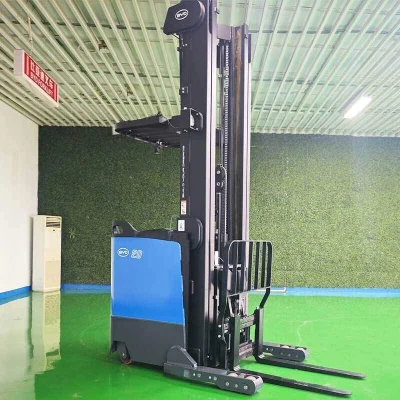
Runtime claims need context. Any figure quoted should state the load, lift height, duty cycle, and temperature assumed. Without that context, the number is not comparable across suppliers.
Charging infrastructure is part of the decision. Charger ratings, supply capacity, ventilation, and site safety rules can rule out an otherwise attractive option. Confirm these with your facilities team early.
Battery life depends on use and care. Charging habits, depth of discharge, temperature, and maintenance all influence how long a pack remains serviceable. Manufacturer guidance should be followed, and expected service life should be confirmed in writing rather than assumed.
Total cost includes more than the pack. Chargers, electrical work, floor space, labor time, and replacement timing all contribute. A like-for-like comparison should include these items.
When you request a configuration, supply your actual load weights, lift heights, aisle and travel distances, floor and slope conditions, shift pattern, break structure, and available electrical supply. These details let the supplier match a four-wheel counterbalance electric forklift and battery option to your operation instead of quoting a generic package.
Frequently Asked Questions
Can a lithium-ion battery on a counterbalance truck run a full shift without charging?
It can, in some duty cycles, but not universally. Runtime depends on load, lift height, travel distance, temperature, and battery capacity. Ask the supplier to confirm expected runtime against your specific duty cycle and the technical data for the model you are considering.
Is opportunity charging always better than a single full charge?
Not always. Opportunity charging suits operations with regular pauses and suitable charging points. Where pauses are rare or electrical capacity is limited, a different routine may be more practical. The right approach depends on your shift structure and site infrastructure.
How many spare batteries should a multi-shift fleet keep?
There is no universal number. It depends on charging time, shift length, duty cycle, and whether swapping is part of your workflow. A sizing exercise using measured truck-hours and realistic charging windows gives a defensible answer.
Does battery choice affect how many trucks I need?
It can. If charging or swapping removes trucks from service for long periods, more units may be needed to cover peak demand. A charging strategy that fits natural breaks can reduce the required fleet size, provided the duty cycle supports it.
What information should I prepare before requesting a quote?
Load weights, lift heights, aisle widths, travel distances, floor and slope conditions, shift patterns, break times, and available electrical supply. These details allow a meaningful configuration discussion rather than a generic estimate.