Lithium Ion Forklift Battery Capacity Verification: Nameplate Ratings, Usable Energy, and Test Conditions Buyers Should Confirm Before Accepting a Four-Wheel Counterbalance Electric Forklift
News 06/11/2026
A nameplate kWh figure on a lithium ion forklift battery is a rated value, not a promise of energy you can draw on every shift. Before accepting a four-wheel counterbalance electric forklift, confirm three things: what the nameplate rating actually represents, how much of that energy the battery management system lets you use, and the test conditions behind any capacity claim. Ask the supplier to document each item in writing, then check the delivered battery against that documentation.
Reading a Lithium Ion Forklift Battery Nameplate Correctly
A nameplate typically shows nominal voltage, rated capacity in ampere-hours, and sometimes energy in kilowatt-hours. Energy equals voltage multiplied by ampere-hours, so a 48 V pack rated at 400 Ah corresponds to roughly 19.2 kWh at nominal voltage. That arithmetic is simple; the interpretation is where buyers get caught out.
Rated capacity is usually stated at a defined discharge rate, temperature, and cut-off voltage. A pack rated at a multi-hour discharge rate will deliver less energy when drained quickly during intensive loading work. Ask which discharge rate, ambient temperature, and end-of-discharge voltage the rating assumes, and whether the figure is measured at the pack terminals or at the charger.
Also distinguish nominal voltage from operating voltage. A lithium ion pack holds a relatively flat voltage curve across much of its state of charge, so ampere-hour ratings and voltage-based state-of-charge displays do not always track the way lead-acid users expect. Confirm how the battery management system reports remaining energy.
Usable Energy, Depth of Discharge, and Operating Limits
Usable energy is the portion of rated capacity the battery management system allows you to access under normal operation. Manufacturers often set upper and lower state-of-charge limits to protect cell life, so usable energy can be meaningfully lower than the nameplate figure. Request the stated usable window and the conditions attached to it.
Depth of discharge also interacts with duty cycle. A pack cycled deeply every shift may be managed differently from one that receives opportunity charging during breaks. Neither approach is universally better; the right answer depends on shift length, charging windows, and whether the truck runs multiple shifts.
Confirm these points with the supplier:
- Usable energy window as configured on delivery, including any reserve held back by the battery management system.
- Continuous and peak discharge current limits, and how they change with temperature.
- Charging temperature range and any derating applied in hot or cold conditions.
- Behavior at low state of charge: warning thresholds, power reduction, and shutdown sequence.
- Whether the truck’s controller and the battery management system communicate, and which limits take precedence.
These limits matter more than a single capacity number. A truck that loses lifting or travel speed early in a shift may not complete the work even if the pack still holds charge.
Test Conditions and Acceptance Checks Before You Sign
Capacity claims are only comparable when the test conditions match. Ask the supplier to state the discharge rate, ambient temperature, cut-off voltage, and measurement point used to support the rated figure. If the supplier cannot provide this, treat the claim as unverified rather than assume a standard test applies.
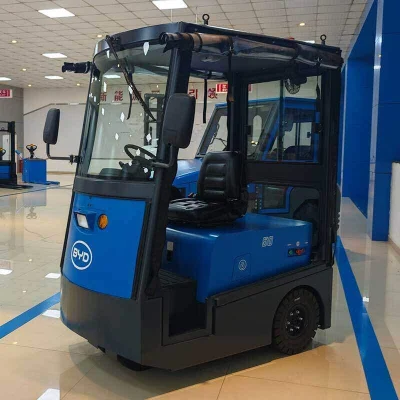
A practical acceptance check uses your own duty cycle. In a hypothetical scenario, a warehouse runs a four-wheel counterbalance electric forklift across an eight-hour shift with mixed pallet handling and periodic charging during breaks. The buyer records starting state of charge, work completed, and ending state of charge over several shifts, then compares the observed energy use against the documented usable window. This does not prove a laboratory capacity figure, but it shows whether the delivered configuration supports the intended work.
Documentation to request before acceptance:
| Item | What to confirm |
|---|---|
| Nameplate rating | Nominal voltage, rated ampere-hours, stated energy, and the basis of each figure |
| Usable energy | Configured state-of-charge limits and any reserve held by the battery management system |
| Test conditions | Discharge rate, temperature, cut-off voltage, and measurement point |
| Charging profile | Charger model, charging voltage and current, and temperature limits |
| Warranty terms | Capacity or state-of-health thresholds, exclusions, and how claims are assessed |
Keep the accepted documents with the truck records. If a future capacity dispute arises, the agreed test conditions and usable window are the reference points.
Frequently Asked Questions
Does rated capacity equal the energy available during a shift?
No. Rated capacity is a reference figure tied to defined test conditions. Usable energy depends on the state-of-charge limits the battery management system applies, plus temperature, discharge rate, and how the truck is operated.
Why does the truck slow down before the battery is empty?
The battery management system or truck controller may reduce power as state of charge falls, protecting cells and preserving enough energy to move the truck safely. Ask the supplier to explain the warning and derating sequence so operators know what to expect.
Should I compare capacity claims between suppliers directly?
Only when the test conditions match. A claim measured at a different discharge rate, temperature, or cut-off voltage is not directly comparable. Ask each supplier to state the basis of the figure and compare like with like.
What should I provide when requesting a configuration?
Share shift length, load weights, lift heights, load center, aisle width, floor and ramp conditions, charging windows, and ambient temperatures. These details let the supplier recommend a four-wheel counterbalance electric forklift configuration and explain which capacity and charging assumptions apply. Confirm all specifications against the manufacturer’s technical documentation before ordering.