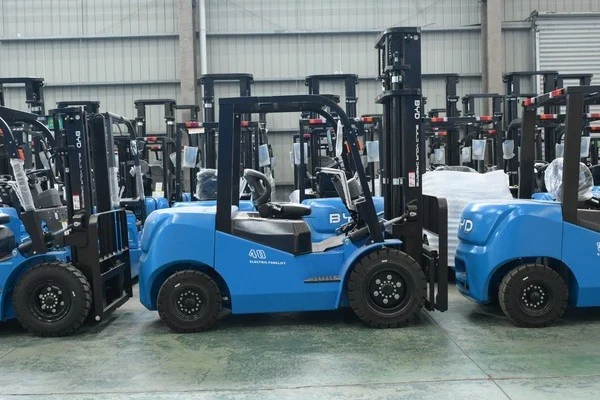
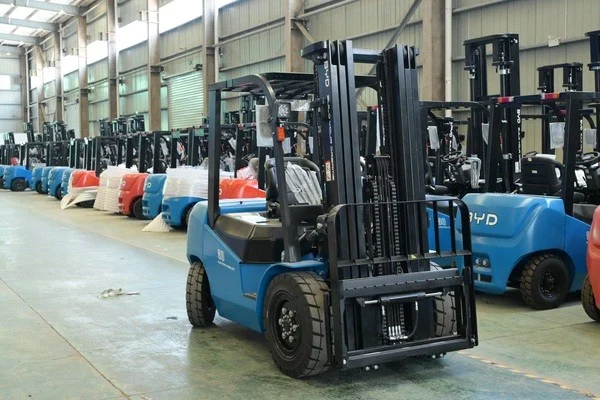
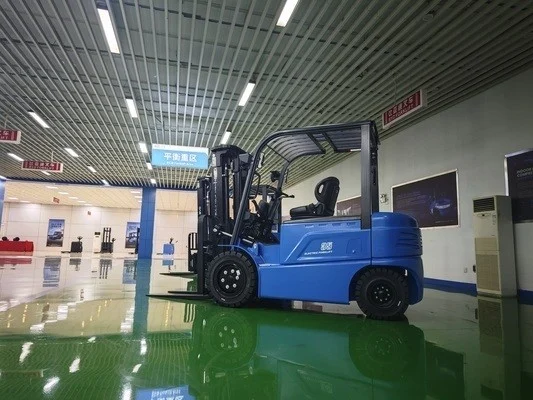
BYD Forklift for Sale: Verifying Mast, Overhead Guard and Overhead Obstruction Clearance Before You Order
News 07/11/2026
Buying a BYD forklift means matching the machine to your building before it arrives. The most common pre-order oversights involve vertical dimensions: mast height, overhead guard height and the clearance above the aisle. A four-wheel counterbalance electric forklift can fit your load capacity and still fail at the door frame, the sprinkler line or the rack beam. This guide explains what to measure, what to ask the supplier and how to verify the numbers before you commit.
Why Vertical Dimensions Decide Whether a BYD Forklift Fits
A counterbalance truck lifts the load in front of the operator, so the mast and carriage sit ahead of the chassis. That geometry creates two separate height profiles. The first is the collapsed or lowered mast height, which governs whether the truck passes under doors, pipes and mezzanine edges. The second is the extended height at full lift, which governs whether the mast or carriage reaches the rack beam or the ceiling.
Both profiles must be checked against your actual building, not against a generic warehouse drawing. Aisle width, rack beam height and overhead services interact. A truck that clears the door may still strike a low-hanging fire sprinkler branch line once inside. A truck that reaches the top beam may have no room left above the mast when fully raised.
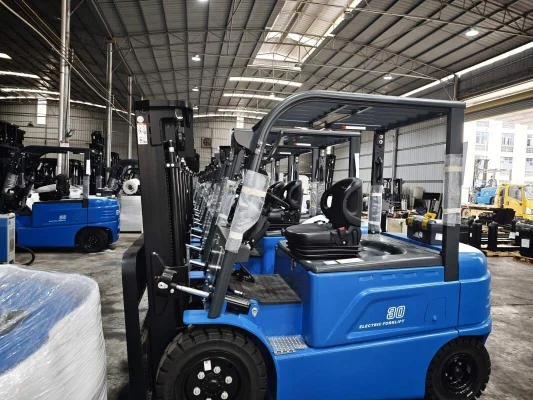
Overhead guard height matters separately. The guard protects the operator from falling objects, and it also sets the practical minimum clearance under rack beams and mezzanines. In low-clearance buildings, the guard height and the collapsed mast height together define the truck’s travel envelope.
What to Measure Before You Request Pricing
Measure the building first and the load second. Record the following at each location the truck will serve, including doorways, ramps and turns.
- Lowest overhead obstruction on every route: door headers, roller shutter housings, pipework, cable trays, ducting, lighting, sprinkler heads and branch lines.
- Rack beam heights: the top beam you must reach, plus the clearance above it to the ceiling, roof truss or sprinkler deflector.
- Mezzanine and canopy edges: the underside height where the truck must pass beneath.
- Floor level and slope: dock ramps, transitions and drainage channels change effective ground clearance and load stability.
- Aisle width and turning radius available: these decide whether a four-wheel counterbalance truck can maneuver at all in a given bay.
Measure to a fixed reference such as the finished floor, and note the date. Racking is sometimes re-configured after installation, so confirm current beam heights rather than relying on an old layout drawing.
Mast and Overhead Guard Checks: Parameter by Parameter
The table below links each dimension to the risk it creates and the document you should request from the supplier. Treat every cell as a verification step, not a specification.
| Parameter or configuration | Why the application cares | What to confirm with the supplier | Trade-offs and limits |
|---|---|---|---|
| Collapsed mast height | Governs travel under doors, pipes and mezzanines | Dimensional drawing showing the exact mast type and lowered height | A taller lift mast usually increases collapsed height; confirm the specific mast, not a family average |
| Extended height at full lift | Determines whether the carriage reaches the top beam and clears the ceiling | Lift height rating and the height at which rated capacity applies | Capacity typically falls as lift height and load center increase; ask how the rating is defined |
| Overhead guard height | Sets the operator envelope and clearance under low structures | Guard height and any optional guard or cabin configuration | A full cabin or added roof structure changes the envelope; confirm the as-built height |
| Load center and attachment effect | Attachments and off-center loads reduce usable capacity | Derated capacity chart when an attachment is fitted | Do not assume the base rating applies once a clamp, rotator or extended fork is added |
| Free lift | Lets the forks rise inside a low doorway before the mast extends | Whether the chosen mast offers free lift and how much | Free lift adds mast complexity; confirm the collapsed height with free lift included |
| Battery and charging envelope | Charging area height and access affect daily operations | Charging equipment footprint and any site requirements | Confirm site power, ventilation and charging location before ordering |
Standard and optional items vary by model and market. Ask the supplier to mark clearly which features are standard, which are optional and which require factory confirmation. Do not accept a verbal assurance that a given mast will clear a given beam; request the dimensional drawing with the selected mast and guard.
Applying the Numbers: A Hypothetical Low-Bay Scenario
Consider a hypothetical parts distributor with a 4.2 m ceiling, sprinkler branch lines at 3.6 m and a top rack beam at 3.0 m. The truck must travel through a 2.6 m door header and turn in a 3.5 m aisle. None of these figures are product data; they illustrate the check sequence.
- Compare the collapsed mast height plus any free-lift allowance with the 2.6 m door header. If the drawing shows a higher collapsed height, that mast will not pass.
- Compare the overhead guard height with the 3.6 m sprinkler line, allowing a working margin above the guard.
- Confirm that the selected lift height places the forks at the 3.0 m beam without the mast top entering the sprinkler zone.
- Check the derated capacity at the actual load center and lift height, not the headline capacity.
- Confirm the turning radius against the 3.5 m aisle, including any pedestrian clearance the site requires.
If any step fails, the answer is not to force the truck into the bay. Options include selecting a different mast configuration, relocating the obstruction, reducing the top beam height or reconsidering whether a four-wheel counterbalance truck suits that particular aisle. In narrow aisles or very high racking, a different truck category may be the honest answer, and a supplier should say so.
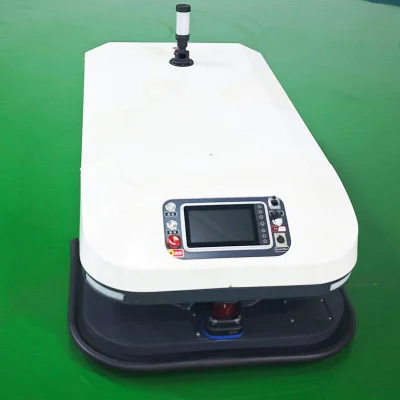
This is where a BYD forklift enquiry becomes useful: send the measured heights, the load weight at the actual load center, the aisle width and the required lift height. The supplier can then propose a four-wheel counterbalance electric configuration that fits, or explain why it does not.
Verification Steps and Questions Before You Sign
Order confirmation should include a dimensional drawing tied to the exact model and mast. Walk through these checks before payment.
- Request the drawing with collapsed height, extended height, guard height and free lift marked.
- Match the drawing to your measured obstruction list, location by location.
- Ask how rated capacity is defined at your required lift height and load center, and request the derated chart if an attachment is involved.
- Confirm which items are standard, optional or subject to factory confirmation.
- Ask what documentation accompanies delivery, such as a dimensional sheet and configuration list, so you can verify on arrival.
- Plan a pre-delivery site check: measure the actual route again and confirm nothing has changed.
If a supplier cannot provide a dimensional drawing before order, treat that as a risk. A verbal promise about clearance is not a substitute for a drawing. Equally, do not accept a specification copied from a different mast or model.
Frequently Asked Questions
Can I raise the overhead guard to gain clearance?
Guard height is part of the truck’s designed structure and should not be modified without manufacturer approval. Changing it can affect protection and stability. If clearance is tight, ask about alternative guard or cabin configurations and confirm the as-built height in writing.
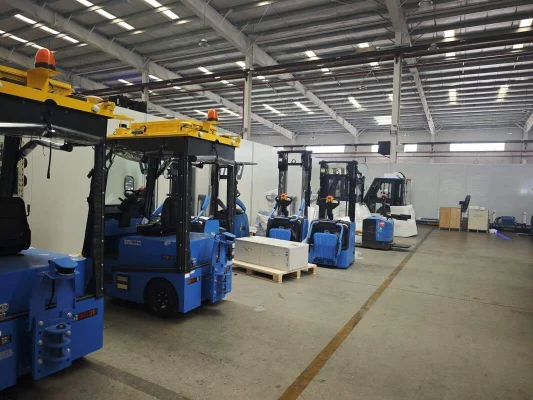
Does a higher lift height always mean a taller collapsed mast?
Often, but not always. Mast design, number of stages and free lift all affect the collapsed profile. Confirm the collapsed height of the specific mast you are ordering rather than assuming a relationship between lift height and lowered height.
How do I check capacity when the load center is not standard?
Request the capacity chart or derating table that applies to your load center, lift height and any attachment. The headline capacity usually assumes a defined load center; a longer or heavier load reduces the safe working load.
What if my aisle is too narrow for a four-wheel counterbalance truck?
Measure the aisle and the truck’s turning radius, then discuss the result with the supplier. If the aisle genuinely cannot accommodate the truck, say so and consider layout changes or a different handling approach. A four-wheel counterbalance truck is a common general-purpose choice, but it is not suitable every aisle.
Which measurements should I send with a quotation request?
Send the lowest overhead obstruction on each route, the top rack beam height, the clearance above it, the door header heights, the aisle widths, the load weight and load center, the required lift height and your floor conditions. These let the supplier propose a configuration and flag any conflict early.