What Battery Capacity and Charging Infrastructure Decisions Mean When Comparing BYD Forklift Price Quotes
News 30/10/2026
A BYD forklift price quote can look complete while leaving out the two items that most affect lifetime cost: the battery capacity actually included and the charging infrastructure the site must provide. Two quotes with similar headline prices can describe very different packages once you compare usable energy, charger type, charging time, and electrical work. The practical approach is to read every quote against your own duty cycle and your building’s power supply before treating any price as comparable.
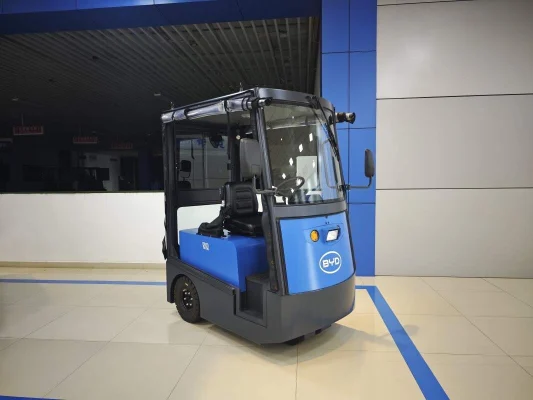
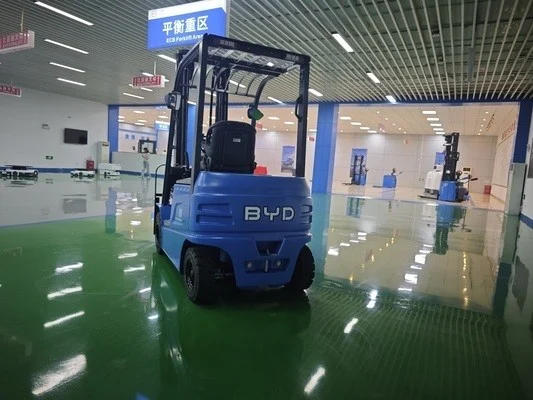
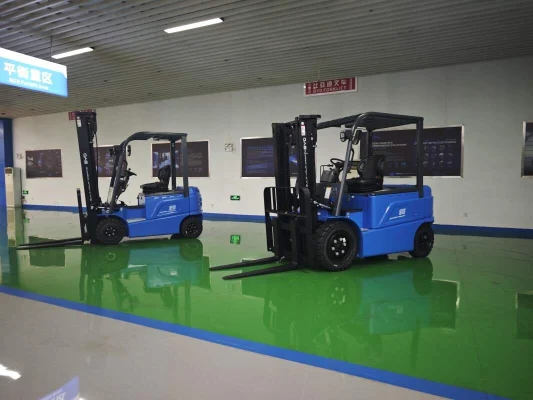
This comparison covers four-wheel counterbalance electric forklifts, the category this site supplies. It explains which battery and charging details to extract from a quote, how those details interact with shift patterns, and where a lower price may simply move cost into infrastructure or lost uptime.
Why Battery Capacity Changes the Meaning of a Price
Battery capacity, usually stated in kilowatt-hours, sets how much work a truck can do between charges. It is not the same as the nominal pack size printed on a brochure. Usable energy, allowable depth of discharge, and the way capacity is rated all affect how long a truck can run in real conditions. A quote that lists only voltage and amp-hours without the kilowatt-hour figure or the discharge assumptions is hard to compare with another quote.
Capacity also interacts with truck configuration. A larger pack adds weight and may require a different counterweight or compartment arrangement. That can change the price of the truck itself, not just the battery. When a quote is noticeably cheaper than another, check whether the difference sits in capacity, in the charger, or in what the supplier assumes about your shifts.
Details to pull from each quote
- Battery chemistry and nominal voltage
- Rated capacity in kilowatt-hours and the conditions behind that rating
- Recommended depth of discharge and the resulting usable energy
- Whether the pack is integrated with the truck or removable
- Stated charging time and the charger output assumed
- Any warranty terms tied to capacity retention or charging practice
If a figure is missing, ask the supplier to confirm it in writing. Do not infer capacity from the price level.
Charging Infrastructure: The Cost Line Quotes Often Leave Out
Charging is where many comparisons break down. A quote may include a charger, or it may assume you already have one. It may assume opportunity charging during breaks, a full overnight charge, or battery exchange. Each assumption implies different electrical capacity, different charger counts, and different operating routines.
Before comparing prices, map the electrical side of the project. The questions below are general planning prompts, not specifications; confirm actual requirements with the supplier and a qualified electrical contractor.
Questions that expose hidden infrastructure cost
- What charger output does the quoted charging time assume?
- Does the quote include the charger, cables, and connectors, or only the truck?
- What supply voltage and current does the charger need at the proposed location?
- Is a dedicated circuit, distribution board, or transformer upgrade likely?
- How many trucks will share each charger, and at what times?
- Does the charging location need ventilation, fire separation, or spill containment?
- Who performs installation, commissioning, and any local inspection?
These items vary widely by site, so no responsible quote can be judged on truck price alone. A higher truck price that includes a matched charger and a realistic charging plan may be cheaper overall than a low truck price that leaves electrical work to you.
Matching Capacity and Charging to Your Duty Cycle
The right combination depends on how the truck is used, not on a single benchmark number. Use the comparison table below to organize what each quote assumes. The rows are decision points; the entries should come from your own operation and the supplier’s written confirmation.
| Decision point | What to compare | Why it matters to price |
|---|---|---|
| Shift pattern | Hours per shift, shifts per day, break length | Sets energy demand and whether one charge per day is realistic |
| Duty intensity | Load weight, lift height, travel distance, ramp use | Raises energy consumption and can require a larger pack |
| Charging window | Available hours between shifts and charger output | Determines charger size and count, a major cost line |
| Electrical supply | Existing capacity at the charging point | May add upgrade work not shown in the truck quote |
| Fleet size | Trucks per charger and peak charging overlap | Affects how many chargers the project truly needs |
| Operating environment | Temperature, dust, floor conditions, aisle width | Can influence pack choice, charging location, and truck configuration |
As a hypothetical example, a warehouse running one eight-hour shift with long overnight parking may find a full overnight charge sufficient, which favors a simpler charger setup. A two- or three-shift operation with short breaks may need opportunity charging, a larger pack, or more chargers, and the quote should state which. These are illustrations of the decision logic, not measured results from any site.
Common mistakes when comparing quotes
- Comparing truck prices while ignoring whether a charger is included
- Accepting a charging time without knowing the charger output behind it
- Assuming the existing electrical supply can support the planned chargers
- Choosing a smaller pack to lower the price, then losing uptime during peak periods
- Overlooking local rules on charging areas and electrical installation
Where a quote lacks these details, treat the price as provisional. Ask the supplier to state the assumptions and to identify which items are excluded. That request is normal in industrial procurement and usually clarifies the comparison quickly.
Because battery and charger options depend on the truck configuration, the most useful next step is to share your actual load weight, lift height, shift pattern, charging window, and available power supply. With those details, a supplier can propose a four-wheel counterbalance electric forklift configuration and state the battery and charging assumptions behind the price. Confirm final specifications against the manufacturer’s technical documentation rather than relying on a summary quote.
Frequently Asked Questions
Does a higher BYD forklift price quote always mean a larger battery?
No. Price differences can come from the truck configuration, the charger, warranty terms, delivery, or service scope. Ask each supplier to list battery capacity, charger inclusion, and charging assumptions separately so the comparison is like with like.
Can I add a larger battery later instead of choosing one now?
Sometimes, but it depends on the truck’s compartment and counterweight design, and on whether the charger can support the change. Raise the question during quotation so the supplier can confirm compatibility in writing rather than assuming an upgrade is straightforward.
How do I know whether my electrical supply is adequate?
Start with the charger’s required input, which the supplier should state, then have a qualified electrical contractor assess the existing supply at the charging location. The quote should make clear whether electrical work is included, excluded, or unknown.
Is opportunity charging always cheaper than a full overnight charge?
Not necessarily. Opportunity charging can reduce the pack size needed but may require more chargers or a different charging routine. Compare total project cost, including electrical work and any effect on uptime, rather than comparing charger prices alone.