How Many Types of Forklift Are There: Translating Load Charts and Lift Height Needs into Four-Wheel Counterbalance Electric Forklift Specifications
News 01/11/2026
Forklift types are usually grouped by how they carry a load, how the operator stands or sits, and what energy source drives them. The count varies by classification system, so no single number is definitive. What matters more is that most general factory, loading-dock, and warehouse-transfer work falls to one broad category: the four-wheel counterbalance electric forklift. This article answers the type question briefly, then focuses on the practical task behind it: turning a load chart and a lift height requirement into a specification you can actually discuss with a supplier.
Why the Type Count Varies, and Which Type Usually Applies
Different sources count types differently. Some count by power source (electric, diesel, LPG), some by operator position (sit-down, stand-on), and some by mast or carriage design (counterbalance, reach, stacker, order picker). A single machine can appear in several groups at once, which is why the number you see depends on the classification scheme rather than on a fixed industry total.
You can keep the picture manageable by separating three questions:
- How is the load held? A counterbalance truck carries the load ahead of the wheels and uses rear counterweight to stay stable. Other designs use outriggers, straddle legs, or a moving mast.
- Where does the operator sit? Sit-down, stand-on, or walk-behind.
- What powers it? Battery-electric, diesel, or LPG.
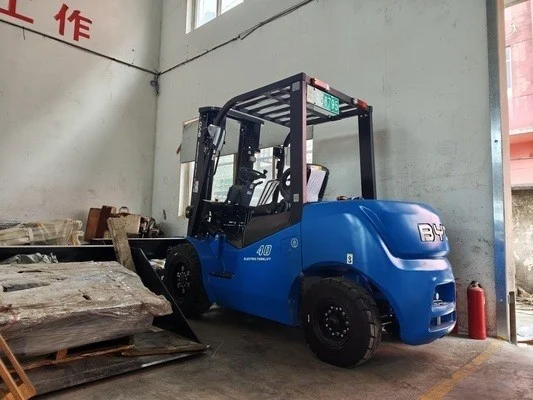
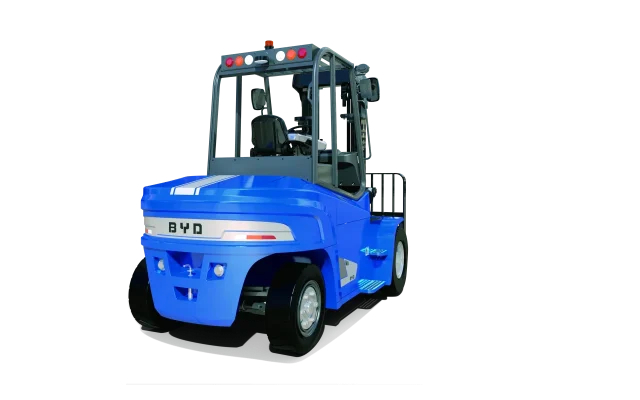
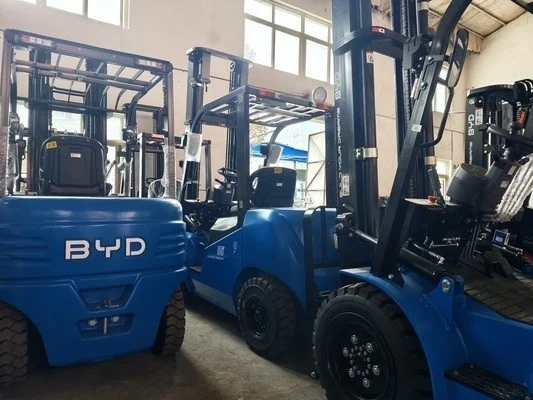
General handling work — unloading road vehicles, moving palletized goods between zones, stacking in racking — commonly uses a sit-down counterbalance truck. When that truck is battery-powered with four wheels, it is the four-wheel counterbalance electric forklift. This is the default subject here, and it is the product scope this site sells. Other designs have legitimate niches, but they are not substitutes when your task needs counterbalance stability at height with a seated operator.
Reading a Load Chart Without Misreading It
A load chart is not a single capacity number. It is a set of limits that change with load center and lift height. Two trucks rated at the same nominal capacity can behave very differently once the load moves forward or the carriage rises.
Load center is the first variable
Load center is the horizontal distance from the vertical face of the fork to the center of gravity of the load. Standard pallets are often assessed at a nominal load center, but a deep load, an overhanging load, or a load that sits forward on the tines shifts the center of gravity outward. When the load center increases, the safe capacity decreases. A chart that lists one capacity at one load center does not authorize that capacity at a larger load center.
Lift height changes the allowable load
Many charts show a capacity reduction as lift height increases, because a raised load and extended mast change the stability picture. If your racking requires placing a load at a specific height, check the chart at that height — not at floor level. A truck that handles the pallet at ground level may not be rated to handle the same pallet at the top beam.
Attachments and fork position matter
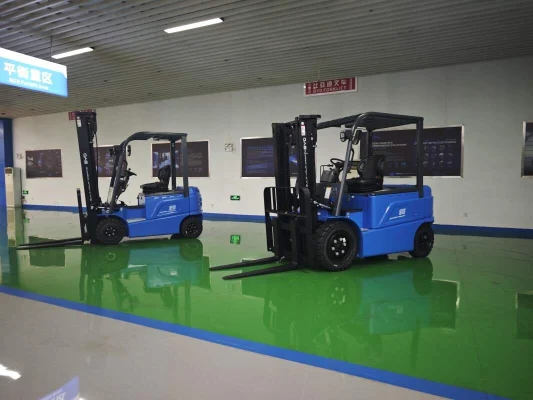
Side shifters, fork positioners, clamps, and other attachments add weight and move the load center forward. Their effect must be accounted for using the attachment supplier’s data and the truck manufacturer’s derating information. Do not assume the base rating still applies.
What to record before you ask a supplier
- Maximum load weight, including pallet and any packaging
- Load dimensions and where the center of gravity sits relative to the fork face
- Maximum lift height where the load must be placed or retrieved
- Whether the load is handled at that height or only transported at low level
- Any attachment planned, and its weight and forward offset
These five items let a supplier check a proposed model against the actual duty rather than against a headline capacity.
Turning Lift Height and Duty into a Specification
Lift height is not just a mast length choice. It interacts with capacity, overhead clearance, and the building itself. Work through the following in order.
1. Establish the true lift height
Measure the height at which the fork carriage must place the load, then add the clearance needed to enter and withdraw from the rack or stack. The required mast stage — duplex, triplex, or a full-free-lift arrangement — depends on how much unobstructed lift is needed before the mast stages extend, which matters inside trailers and low-clearance doorways.
2. Check overhead obstructions
Extended masts, sprinkler lines, door headers, and roof trusses all limit where a truck can operate. A mast that reaches the required height may still be unusable in a building with low clearance at the lift point. Record the lowest overhead obstruction along the travel path.
3. Confirm capacity at height
Match the load weight to the chart value at your required lift height and load center. If the chart shows a reduction, use the reduced figure. Where the manufacturer’s data is not available, ask for the chart at the specific height and load center rather than estimating.
4. Measure the aisle and turning space
Four-wheel counterbalance trucks need aisle width that accommodates their turning radius and the load. Right-angle stacking aisles are generally wider than those used by reach trucks, so confirm your actual aisle dimensions against the proposed model’s dimensions. Do not assume a truck fits because a similar one does.
5. Assess floor, slope, and surface
Floor condition, drainage gaps, dock levelers, and ramps affect traction and stability. Slopes require specific attention; check the manufacturer’s rated gradient and do not treat a gentle ramp as automatically acceptable. Outdoor yards with soft or uneven surfaces may favor different tire and chassis choices, which should be confirmed with the supplier.
6. Match battery and charging to the shift pattern
Battery capacity, charging time, and opportunity-charging arrangements must fit the number of shifts and the available charging window. Lithium battery trucks can be opportunity-charged in many configurations, but the specific charging profile and infrastructure should be confirmed against the manufacturer’s technical documentation. Do not size a battery from a rule of thumb alone.
7. Confirm the operating environment
Cold stores, dusty areas, flammable atmospheres, and food-contact zones impose additional requirements. Where a special environment applies, state it explicitly; explosion protection and cold-store suitability are configuration questions that need documented confirmation, not assumptions.
Frequently Asked Questions
Does a higher capacity rating always mean a better choice?
No. A truck rated higher than needed can be larger, heavier, and harder to maneuver in tight aisles. The right rating is the one that meets your load at your load center and lift height with an appropriate margin, while still fitting the building.
Can I use the nominal capacity if I lift only slightly above floor level?
Only if the load chart supports that capacity at the load center and height involved. Even low lifts can be outside the chart if the load center is larger than the rated value or an attachment is fitted.
What if my racking height is close to the truck’s maximum?
Check capacity at that specific height and confirm overhead clearance along the travel path. Operating near a maximum leaves little margin, and any attachment or off-center load can push the duty beyond the rated envelope.
Is a four-wheel counterbalance electric forklift suitable outdoors?
It can be, depending on surface condition, slope, and tire specification. Outdoor use should be discussed with the supplier using your actual yard conditions, because soft ground and gradients change the requirements.
What to Confirm Before Requesting a Quote
The most useful next step is to assemble your actual duty data: load weight and dimensions, load center, required lift height with clearance, aisle and overhead measurements, floor and slope conditions, shift pattern, and charging arrangements. With those figures, a supplier can check a specific four-wheel counterbalance electric forklift configuration against your operation and identify where the data is incomplete. If you are evaluating this site’s range, share your load and lift height details so the selection and configuration discussion starts from your real conditions rather than a generic capacity figure.