Evaluating BYD Forklift Price Points Against Long-Term Operational Energy Savings Supports Informed Equipment Selection
News 15/10/2026
Buyers focusing food production and warehousing operations often prioritize initial equipment costs, but evaluating BYD forklift price alongside long-term operational energy savings creates clearer paths toward informed purchasing decisions. BYD builds electric forklifts powered lithium iron phosphate batteries, which differ significantly from traditional internal combustion or lead acid electric models in upfront cost and ongoing operating expenses. Food production and warehousing operations have unique multi-shift, hygiene and temperature requirements that impact both upfront investment and long-term cost, so this guide breaks down relevant evaluation steps aligned this industry.
Core BYD Forklift Applications Food Production Warehousing
Food production and warehousing operations combine multiple different material handling tasks, each matching specific types BYD forklifts. Below outlines common use cases, applicable conditions and inherent limitations:
- Counterbalance electric forklifts: Works well transferring raw ingredients from delivery yards to production areas, and moving finished goods from production lines to storage areas. These units handle heavier loads and work across both indoor and outdoor surfaces. Their main limitation: requires wider working aisles than other options, so they reduce available storage space in high-density racking setups.
- Reach forklifts: Ideal high-bay rack storage common modern food warehouses. These units fit narrow aisles, boost storage density and handle standard pallet loads common finished food goods. Limitations include lower outdoor capability, especially on uneven or unpaved surfaces, and lower maximum load capacity compared counterbalance models.
- Pallet trucks: Suits horizontal transport pallets loading docks, production lines and short-distance storage moves. These units have low upfront cost and require minimal space to maneuver. Limitations include low maximum lifting height, so they cannot serve high racking storage needs.
- Stacker forklifts: Works well low to medium height racking in smaller production storage areas. These units cost less than reach trucks and fit tighter spaces than counterbalance models. Limitations include lower load capacity at maximum lifting heights, so they do not work heavy bulk storage common large distribution centers.
Each operation must match forklift type to its own specific layout and task mix before evaluating price points, as wrong type selection creates unnecessary costs regardless upfront investment.
Key Configuration Parameters Food Production Warehousing
Food production and warehousing has unique operational constraints that make specific configurations critical long-term cost and performance. Each parameter below follows industry relevance, verification steps and tradeoffs buyers need consider.
Battery Energy System
Why industry cares: Most food production and warehousing runs multi-shift operations, so reliable energy delivery directly impacts uptime. Electric power also produces no exhaust emissions, which aligns food safety standards requiring no fossil fuel contamination food products.
Procurement verification steps: Confirm battery capacity matches your longest shift length without mid-shift charging. If your site includes cold storage zones holding raw or finished food products,核对 minimum operating temperature and charging temperature range the battery supports. Confirm battery management system features matching your site charging infrastructure.
Configuration tradeoffs and limitations: Standard capacity batteries work well single-shift operations, keeping initial price lower. Higher capacity or fast-charging configurations raise upfront BYD forklift price, but eliminate mid-shift battery swaps or charging breaks that reduce productivity. Not all models offer cold-rated battery configurations, so buyers must confirm availability before finalizing orders, as standard batteries lose significant usable capacity at low temperatures common frozen food storage.
Hygiene And Corrosion Resistance
Why industry cares: Food production facilities require regular washdowns to prevent bacterial contamination and meet food safety regulations. Food residue and cleaning chemicals can cause corrosion on unprotected components, leading premature failure and contamination risks.
Procurement verification steps: Confirm all electrical components carry full sealing to withstand high-pressure washdowns. Check that frame and fitting surfaces use corrosion-resistant coating compatible common food industry cleaning chemicals. Confirm lubricants used moving parts meet food safety standards if the forklift works in direct contact food products.
Configuration tradeoffs and limitations: Standard configurations work well dry storage areas with no regular washdown requirements, keeping initial price lower. Food-grade washdown configurations raise upfront cost, but eliminate contamination risks and extend service life in active production areas. Not all BYD forklift models support food-grade washdown configuration, so confirm options with your supplier.
Dimension And Load Capability
Why industry cares: Most food warehouses prioritize high-density storage to maximize space, so aisle width and turning radius directly impact usable storage capacity. Food operations also handle varying load sizes from small ingredient pallets to large full-pallet finished goods, so load capability must match your typical tasks.
Procurement verification steps: Measure your actual working aisle width and minimum turning clearance before matching to a model. Confirm maximum lifting height matches your existing racking system.核对 actual remaining load capacity when using any custom attachments (like clamp attachments for non-palletized goods) you need.
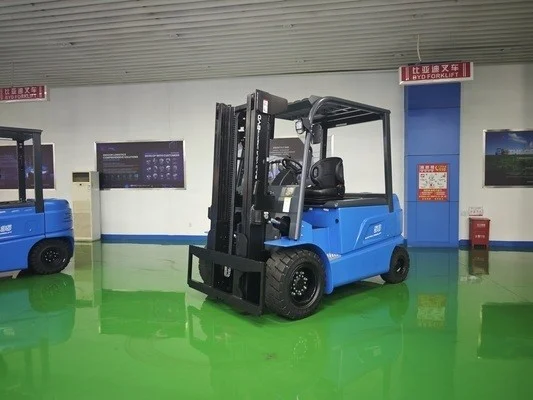
Configuration tradeoffs and limitations: Narrow aisle models raise initial price but let you increase total storage capacity without expanding warehouse footprint. Standard wider-aisle models cost less but reduce total available storage space. Load capacity decreases as lifting height increases, so confirm your maximum load at your maximum required lifting height, not just base-rated load capacity.
| Parameter Type | Industry Risk | Supplier Confirmation Items | Configuration Status |
|---|---|---|---|
| Battery Temperature Rating | Capacity loss in cold storage | Minimum operating/charging temperature range | Standard / Cold Zone Optional |
| Washdown Compatibility | Contamination, premature corrosion | Sealed electronics, food-grade lubricants | Standard Dry / Food Grade Optional |
| Working Aisle Width | Inability maneuver existing space | Minimum turning radius, required aisle width | Model Dependent, Confirm |
| Attachment Load Capacity | Overloading, premature component failure | Actual capacity with your required attachment | Factory Custom Optional |
Upfront BYD Forklift Price Vs Long-Term Energy Savings
BYD electric forklifts typically carry higher upfront price than comparable internal combustion forklifts or lead acid electric models. But electric operation delivers far lower ongoing energy costs, which adds up significantly over the multi-year service life typical forklifts. Food warehousing operations often run 2-3 shifts daily, so cumulative energy savings can offset higher initial investment within a few years of operation.
Follow these steps conduct your own analysis aligned your operation:
- Document your total annual operating hours per forklift, including any seasonal peak increases.
- Record your current local electricity costs per unit, compare against any fossil fuel costs you would use alternative models.
- Request projected annual energy consumption from your BYD supplier based on your actual operating profile.
- Calculate total annual energy costs for the BYD model, compare against competing alternative options.
- Calculate how many years required recover any higher upfront investment through annual energy savings.
Beyond energy savings, BYD lithium iron phosphate batteries typically last longer than traditional lead acid batteries, which reduces long-term battery replacement costs. This adds additional savings that further offset higher initial BYD forklift price. Keep in mind your own operational hours directly impact payback period: operations with higher annual operating hours see faster payback, while low-usage single-shift operations may take longer offset higher upfront cost.
No universal calculation applies all operations, because local energy prices, operational hours and configuration needs vary widely across different food production sites. Always base your analysis your own specific site data, not general industry averages.
Frequently Asked Questions
Do all BYD forklift models work cold storage areas food operations?
Not all models include cold-rated configurations. Buyers must confirm the selected model offers temperature-rated batteries, sealed components and cold-optimized hydraulic fluids before placing orders. Standard unrated batteries lose significant usable capacity at low temperatures common frozen food storage, leading unexpected downtime.
Does higher BYD forklift price always deliver bigger long-term savings?
Higher upfront price usually includes larger batteries or premium special configurations, which only deliver additional savings if your operation actually needs those features. Single-shift dry storage operations with low operating hours do not need high-capacity batteries or food-grade washdown configurations, so premium models will not deliver enough extra savings offset higher initial cost. Always match configuration level your actual needs.
What hygiene checks must I complete before purchasing a BYD forklift food production facilities?
First confirm the model supports high-pressure washdown, with fully sealed electrical components to prevent water damage. Second check that all exposed coatings and lubricants meet food safety standards compatible your operation. Third confirm corrosion resistance matches the type cleaning chemicals you use on site. Standard non-washdown models can develop mold or bacterial growth gaps, creating food safety risks over time.
What data should I collect suppliers before evaluating BYD forklift price?
Collect upfront price including all required configurations, projected annual energy consumption, estimated annual maintenance costs, and battery service life warranty. Combine these to calculate total five-year ownership cost, which gives far more accurate comparison than focusing only initial price. This approach accounts long-term energy savings and other ongoing costs, helping you make the most informed decision your operation.
Before finalizing any BYD forklift purchase food production and warehousing, confirm all required configurations match your site-specific conditions, calculate total ownership cost including long-term energy savings, and verify all model capabilities with your local supplier. This process ensures you select equipment that fits your budget and meets your operational needs long-term.