How Battery Management System Design Impacts Electric Forklift Uptime and Long-Term Ownership Costs
News 06/10/2026
Electric forklifts rely on robust battery performance to deliver consistent operation in warehouses, distribution centers, and manufacturing facilities. The battery management system (BMS) acts as the central control unit that monitors, regulates, and protects the battery pack. Small differences in BMS design create large gaps in overall vehicle uptime and total ownership expenses over the equipment lifespan. This guide breaks down key design elements and their real-world impact.
Core BMS Design Elements That Impact Electric Forklift Performance
Cell Balancing Accuracy
Electric forklift battery packs combine multiple individual cells to deliver required voltage and capacity. Over time, minor differences in cell capacity lead to uneven charge levels across the pack. High-quality BMS design includes precise active cell balancing that redirects energy to undercharged cells during charging and discharging. Poor balancing leaves some cells overworked while others remain underutilized, reducing overall pack capacity within just a few years of regular use.
Thermal Management Integration
Battery chemistry performs best within a narrow temperature range. Extreme hot or cold conditions accelerate cell degradation and reduce available capacity. Modern BMS designs integrate directly with the forklift’s thermal system to adjust charging rates and activate heating or cooling as needed. Designs that lack accurate temperature sensing force the system to operate with generic safety margins, cutting available power in cold weather or increasing degradation risk during high-intensity operation in warm environments.
Adaptive Charge Control Logic
Adaptive charge control adjusts charging parameters based on current battery state, ambient conditions, and recent usage patterns. BMS with advanced control logic can shorten charging times during peak operation without damaging cells, and optimize trickle charging during off hours to preserve cell health. Basic BMS designs use fixed charging profiles that do not adapt to real-world conditions, leading to longer charge times and unnecessary cell stress.
How BMS Design Directly Impacts Electric Forklift Uptime
Uptime directly impacts operational output, so even small reductions in downtime create significant value across fleet operations. Well-designed BMS reduces unplanned downtime through two key mechanisms: early fault detection and prevention of premature battery failure.
Advanced BMS continuously monitors cell health, voltage output, and internal temperature. It can alert operators to minor issues before they escalate into full battery failure that strands the vehicle on the work floor. Early detection also allows maintenance teams address issues during scheduled breaks, eliminating unplanned work stops.
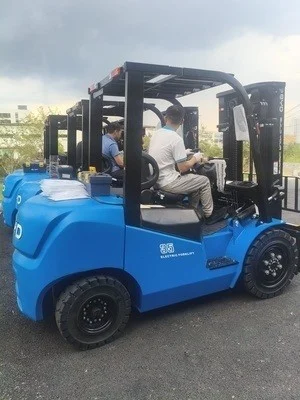
In addition, accurate cell balancing and thermal management reduce the frequency of unexpected capacity drops. A well-designed BMS maintains consistent pack capacity throughout its lifespan, so operators do not encounter unexpected mid-shift shutdowns due to depleted battery capacity that basic BMS fails to report accurately.
How BMS Design Reduces Long-Term Ownership Costs
Total ownership cost includes initial purchase price, maintenance expenses, and battery replacement costs. BMS design impacts each of these categories.
Battery replacement represents one of the largest expenses associated with electric forklift ownership. A well-designed BMS extends usable battery lifespan, delaying expensive replacement costs. It also reduces unnecessary maintenance visits, as the BMS provides accurate health data that eliminates unnecessary diagnostic work.
Lower energy consumption is another financial benefit. Efficient BMS design reduces parasitic energy loss during charging and operation, lowering monthly electricity bills across fleet operations.
Key Selection Criteria When Evaluating Electric Forklift BMS
When assessing electric forklift options, prioritize these BMS features aligned with your operating conditions:
1. Match BMS capabilities to your operating temperature range. If your facility operates in unheated space in cold climates, look for BMS with integrated low-temperature charging protection and cell heating controls.
2. Confirm active cell balancing is included, not just passive balancing. Active balancing delivers far greater lifespan benefits to high-capacity lithium-ion packs common in modern electric forklift.
3. Check data access capabilities. BMS that provides detailed health and usage data allows your team plan maintenance and battery replacement proactively, rather than reacting to unexpected failures.
4. Understand BMS warranty terms. Many manufacturers tie battery warranty coverage to BMS performance, so confirm warranty terms align with expected lifespan.
Frequently Asked Questions
Do all electric forklifts come with equivalent BMS quality?
No. BMS quality and design varies significantly across manufacturers and price points. Lead-acid battery electric forklifts often use simpler BMS designs, while lithium-ion electric forklifts typically include more advanced designs to protect higher battery investment. Lower-cost models often cut corners on BMS features to reduce initial purchase price, leading to higher long-term costs.
Can I upgrade the BMS on my existing electric forklift?
Aftermarket BMS upgrades work with some electric forklift models, but compatibility varies widely. You must confirm the upgrade matches your battery chemistry, pack configuration, and vehicle control system before installation. Many older forklifts with lead-acid batteries do not deliver meaningful cost savings from BMS upgrades, due to the remaining lifespan of the original battery pack.
How does BMS design impact fast charging capabilities?
Fast charging places greater stress on battery cells. BMS design with accurate real-time monitoring and adaptive charge control enables safe fast charging without excessive cell degradation. BMS with basic control logic cannot support consistent fast charging, leading to accelerated cell degradation even if the battery chemistry itself supports fast charging.
What level of maintenance does a modern electric forklift BMS require?
Modern solid-state BMS designs require very little scheduled maintenance. Most units only need occasional software updates to address performance bugs or add new features. You should include BMS health checks as part of your regular scheduled forklift maintenance to confirm all sensors and control components work as intended.
BMS design remains an often-overlooked factor when comparing electric forklift options, but its impact on uptime and long-term costs makes it a critical evaluation point. Prioritizing high-quality BMS design aligned with your specific operating conditions delivers greater long-term value than focusing solely on initial purchase price.