BYD Forklift for Sale: Confirming Turn Radius and Right-Angle Stacking Aisle Dimensions Before You Commit
News 08/11/2026
Buying a four-wheel counterbalance electric forklift without checking the numbers that govern aisle geometry is one of the most common and most expensive planning mistakes. If you are comparing a BYD forklift available through this site, the practical question is not only how much the truck can lift, but whether it can turn inside your actual right-angle stacking aisle and still place a pallet where the racking needs it. This article explains which dimensions to confirm, how they interact, and what to ask before you commit.
Why Turn Radius and Aisle Width Decide Whether a Truck Fits
Right-angle stacking is the tightest routine manoeuvre in most warehouses: the truck approaches a rack face, turns 90 degrees, and places or retrieves a load. The space this needs depends on the truck’s turning geometry, the load length, the rack depth, and the clearance your operators need to work safely. A truck that performs well in a wide bay can become unusable in a narrow one, and a truck that fits a narrow aisle may sacrifice other characteristics you value.
Manufacturers publish turning radii and aisle-width recommendations, but those figures are calculated under stated assumptions about load size, load centre, and clearance. They are a starting point, not a guarantee. Your building, racking, and pallet mix set the real requirement.
Definitions worth agreeing on before you quote
- Turning radius: the radius traced by the outer point of the truck during a turn. Ask whether the figure refers to the chassis, the counterweight, or the outermost point including any load.
- Right-angle stacking aisle: the clear distance from the rack face to the opposite obstruction, measured where the turn occurs, not an average aisle width.
- Load centre: the horizontal distance from the fork face to the load’s centre of gravity. A longer load centre reduces the load the truck can carry at a given height.
- Clearance: the working margin operators need between the load, the rack uprights, and the opposite rack or wall.
Parameters to Confirm and How to Check Them
The following table groups the dimensions that matter most in a right-angle stacking decision. Every entry in the “verify with supplier” column should be confirmed against the current technical data sheet and, where relevant, a site-specific calculation. Do not accept verbal estimates in place of documented figures.
| Parameter | Why it matters in this application | What to verify with the supplier | Configuration notes and limits |
|---|---|---|---|
| Rated load and load centre | Determines whether the truck can lift your pallet weight at your required height | Rated capacity at the stated load centre; capacity at your actual lift height and with any attachment fitted | Attachments typically reduce remaining capacity; confirm the derated figure, not the base rating |
| Turn radius and right-angle stacking aisle | Sets the minimum aisle your layout must provide | Published turning radius and recommended aisle width, including the assumptions used | Confirm whether the figure includes load length and required clearance |
| Overall width and length | Affects clearance at rack faces and doorways | Dimensions with the standard fork carriage and with any optional equipment | Optional equipment can change the footprint |
| Lift height and mast type | Governs whether the truck reaches your top beam and whether it clears overhead obstructions | Maximum fork height, closed mast height, and overhead guard height | Higher masts can reduce residual capacity; confirm the combination you intend to buy |
| Battery and charging arrangement | Affects shift planning, charging space, and available power | Battery voltage and capacity, charger type, charging time, and any site power requirements | Confirm the charging routine suits your shift pattern and available space |
| Floor and tyre condition | Influences traction, braking, and safe turning | Recommended floor condition and tyre options | Wet or uneven floors may require different tyres; confirm suitability |
Measure your aisle, not the drawing
Take measurements at the rack face where the turn actually happens. Racking is rarely perfectly aligned, and a single protruding upright or a column can reduce the usable width. Record the narrowest point along the route the truck will travel, including doorways and any turns outside the racking. If the layout is still on paper, mark the intended load length and the clearance you expect operators to have.
Match the load to the truck, not the truck to the brochure
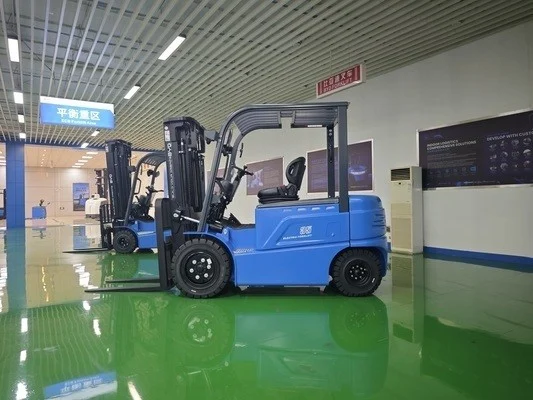
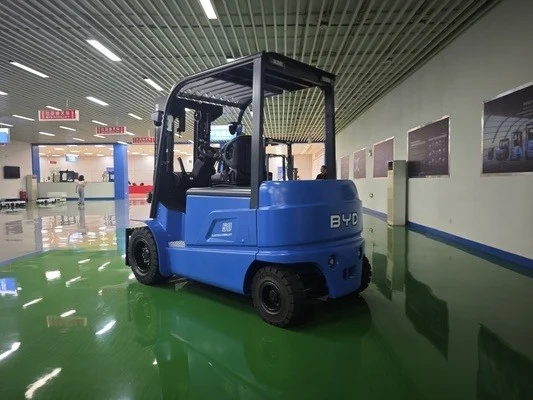
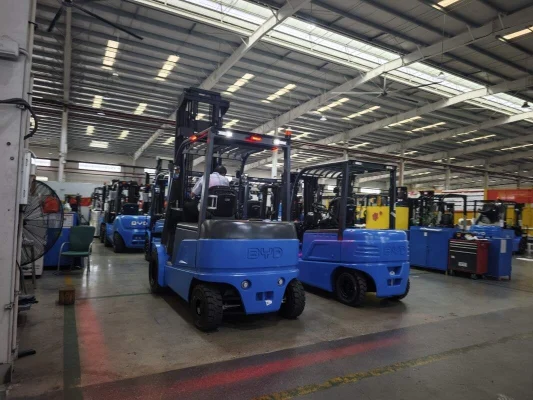
A four-wheel counterbalance electric forklift is a common general-purpose choice in factories, loading areas, and warehouse transfer work. Whether it suits a specific aisle depends on the load and the geometry together. A long pallet carried at a long load centre needs more space to turn than a compact load of the same weight. Confirm the capacity at your actual load centre and lift height rather than relying on the headline rating.
Questions to Settle Before You Commit
Use the following checklist as a conversation guide with the supplier. The goal is to replace assumptions with documented figures and a shared understanding of how the truck will be used.
- What is the rated capacity at my load centre, at my maximum lift height, and with the attachment I intend to use?
- What turning radius and right-angle stacking aisle does the published data state, and what load size and clearance do those figures assume?
- What are the overall dimensions with the mast, carriage, and any optional equipment I plan to order?
- What battery and charger combination is recommended, and what charging time and space should I plan for?
- What floor, tyre, and environmental conditions should I confirm before delivery?
- What documentation will be supplied at handover so I can verify the delivered configuration against the order?
If your measured aisle is narrower than the recommended right-angle stacking aisle, do not assume the truck will manage with careful driving. Either revise the layout or discuss a different configuration with the supplier. Where the aisle or lift requirement falls outside what a four-wheel counterbalance truck can safely serve, say so plainly rather than forcing a fit.
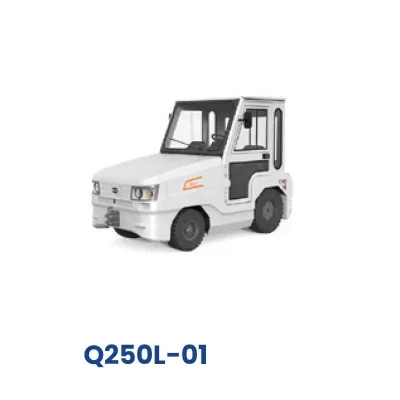
To move from general guidance to a specific recommendation, share your load weight and dimensions, required lift height, measured aisle width, floor condition, and shift pattern. With those details, this site can help you review BYD four-wheel counterbalance electric forklift configurations that match your operation, and identify the parameters that still need confirmation from the manufacturer’s technical data.
Frequently Asked Questions
Can I use the published aisle width as a direct layout target?
Treat it as a reference figure calculated under stated assumptions. Measure your own aisle at the narrowest point and confirm with the supplier whether the published figure includes load length and working clearance. Your layout and operating practice determine the real requirement.
Does a larger rated capacity always mean a larger turning radius?
Not necessarily, and the relationship depends on the specific model and configuration. Ask for the turning radius and aisle recommendation of the exact model and equipment combination you are considering, rather than inferring from capacity alone.
What if my aisle is narrower than the recommended figure?
Discuss the options with the supplier before ordering. Possible responses include revising the racking layout, changing the load size, or selecting a different configuration. Do not assume that careful operation compensates for an aisle that is too narrow.
Which documents should I check at delivery?
Compare the delivered truck against the order confirmation: model, rated capacity at the stated load centre, mast and lift height, fork dimensions, battery and charger specification, and any attachments. Keep the technical data sheet with the handover documents.