BYD Forklift for Sale: A Buyer’s Checklist Covering Load Center, Lift Height and Attachment Compatibility
News 31/10/2026
Searching BYD forklift for sale usually returns a long list of listings that look alike. The differences that matter sit in three specification areas: load center, lift height, and attachment compatibility. A machine that looks well matched on paper can still be the wrong choice if those three values are read loosely. This checklist walks through what to confirm before you request a quotation, and which documents you should expect to see.
This article covers four-wheel counterbalance electric forklifts, including lithium-battery models. If your work involves a different truck category, the questions below still help you frame requirements, but the configuration answers will differ.
Start With the Load Center, Not the Headline Capacity
Rated capacity is always tied to a stated load center. A truck rated at a given capacity at a 500 mm load center will have a lower allowable capacity when the same load sits farther forward. This is the single most common source of mismatch between a buyer’s expectation and a delivered machine.
What to Measure on Your Actual Loads
- The horizontal distance from the vertical face of the fork to the center of gravity of the load, including the pallet or stillage.
- The heaviest single load, not the average load.
- Whether loads vary enough that two capacity figures are needed: one typical and one worst case.
Long or irregular loads, such as pipe bundles or double-deep pallets, push the center of gravity forward. Ask the supplier to confirm the derated capacity at your measured load center rather than accepting the headline number. Where the load center is not stated on the data sheet, treat the capacity figure as incomplete.
Load Center and Attachment Stack-Up
Attachments add their own weight and move the load forward. A side-shifter, a clamp, or a rotator changes both the effective load center and the residual capacity. The combined effect should be stated by the manufacturer or calculated from the attachment’s own load chart. Do not assume the base truck rating still applies.
Lift Height, Free Lift and the Mast You Actually Need
Lift height is not a single number to match against your racking. Several related values determine whether a truck works in your building.
Values to Confirm
- Maximum fork height: the highest point the forks reach, which must clear the top beam of your highest rack level with margin to enter and withdraw a pallet.
- Free lift: how far the forks rise before the mast extends. This matters in trailers, containers, and low-clearance doorways.
- Closed mast height: the overall height with the mast lowered, which must pass under doors, mezzanines, and overhead services.
- Extended height: the overall height at full lift, which must clear the building’s roof structure and sprinkler heads.
Capacity also falls as lift height increases on many masts. Ask whether the rated capacity holds at your maximum lift height, or only at a lower level. A truck that meets your tonnage at floor level may not meet it at the top rack beam.
Match the Mast to the Aisle and the Load
A mast that is taller than necessary raises the closed height and can restrict where the truck can travel. A mast that is too short forces double handling. Bring your racking drawing, aisle width, and doorway dimensions to the conversation, and ask the supplier to confirm the mast choice against those figures.
Attachment Compatibility: Ask Before You Order
Attachment questions are best settled before the order, not after delivery. The truck’s carriage, hydraulic supply, and capacity rating all interact with the attachment.
Points to Verify With the Supplier
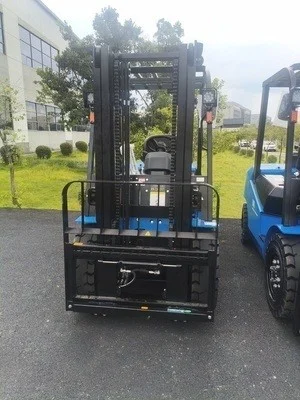
- Carriage class and fork spacing the truck is supplied with, and whether the intended attachment mounts directly or needs an adapter.
- Hydraulic flow and pressure available at the carriage, and the number of auxiliary functions the attachment requires.
- Whether the attachment’s own weight and forward offset have been included in the residual capacity calculation.
- Any change to overall width or turning radius caused by the attachment, checked against aisle width.
- Whether the attachment manufacturer’s mounting instructions and load plate are supplied with the unit.
Where an attachment is sourced separately, confirm in writing who is responsible for the compatibility check and the resulting capacity plate. A clear division of responsibility prevents disputes later.
Assumptions to State in Your Enquiry
If you are still comparing options, describe the duty in plain terms: load type, weight range, lift height, aisle width, floor surface, ramp gradients, shift pattern, and charging arrangements. These inputs let the supplier propose a configuration instead of a generic listing. Treat any proposed configuration as provisional until the capacity, mast, and attachment figures are confirmed against your own measurements.
Frequently Asked Questions
Does a higher lift height reduce capacity?
On many mast designs it can. The amount depends on the mast type and the manufacturer’s load chart. Ask for the capacity at your specific lift height rather than relying on the headline rating.
Can I add an attachment after delivery?
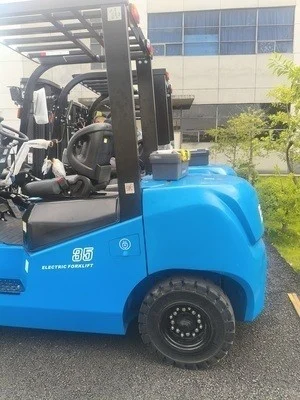
It may be possible, but the capacity plate and stability assumptions must be reviewed. Adding an attachment without updating the rating can leave the truck operating outside its stated limits.
What should I include in a quotation request?
Include your heaviest load and its load center, maximum lift height, closed and extended height limits, aisle and doorway dimensions, floor and ramp conditions, shift pattern, and any attachment you intend to use. Ask the supplier to state the capacity at your load center and lift height, and to confirm attachment compatibility in writing.
How do I verify the delivered machine matches the order?
Check the capacity plate, mast markings, fork spacing, and attachment mounting against the agreed specification. Confirm that the load chart supplied with the truck reflects the configuration you ordered, including any attachment.