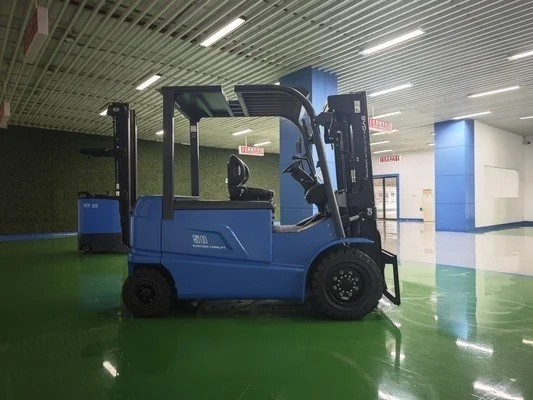
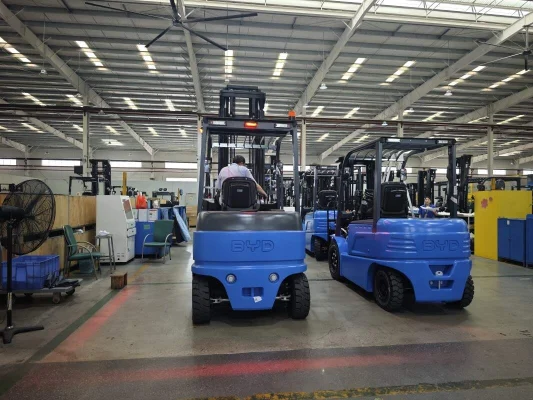
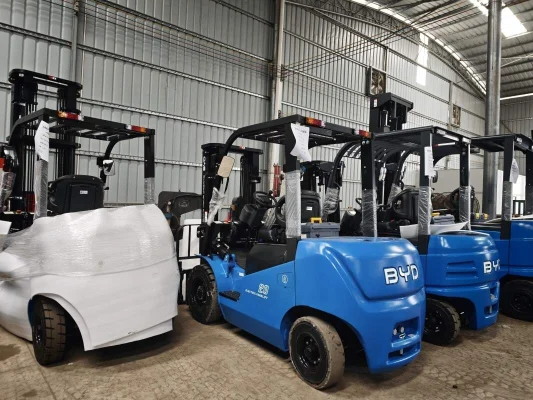
BYD Lithium Forklift: Questions Buyers Should Ask About Duty Cycle, Lift Height, and Battery Configuration Before Selecting a Four-Wheel Counterbalance Electric Forklift
News 03/11/2026
A BYD lithium forklift purchase usually starts with a model number and a price request, but the answers that matter come from your own operation. Before you compare configurations of a four-wheel counterbalance electric forklift, clarify three things: how hard the truck will work each shift, how high and how far it must lift, and how the battery will be sized, charged and maintained. The questions below help you gather that information and ask suppliers the right follow-ups. Where a specification is not yet documented, treat it as an item to confirm rather than an assumption.
Start With the Work Cycle, Not the Model Name
Duty cycle describes the real workload: hours per shift, lifts per hour, average travel distance, load weight distribution, ramp use and idle time. Two sites running the same truck can place very different demands on it. A truck that moves light loads short distances on a flat floor is not working under the same conditions as one that lifts near its rated capacity onto racks all day.
Ask your supplier how they define light, medium and heavy duty, and which of your operating figures they need. A useful habit is to record a representative shift: count lifts, note the heaviest loads, measure the longest travel legs and identify any ramps. This record becomes the basis of the configuration discussion and later acceptance checks.
- Number of shifts per day and days per week
- Lifts per hour and average lift height
- Heaviest load, average load and load center
- Travel distance, aisle width and floor condition
- Ramp gradient and duration of use, if any
- Ambient temperature and any dust, moisture or cold-storage exposure
Lift Height, Load Center and Capacity: Questions That Change the Specification
Rated capacity is tied to a stated load center, usually the distance from the fork face to the load’s center of gravity. A load whose center sits farther out reduces the capacity the truck can safely handle at height. Lift height adds another variable, because mast type and residual capacity at height affect what you can actually do.
Ask these questions before accepting a capacity figure:
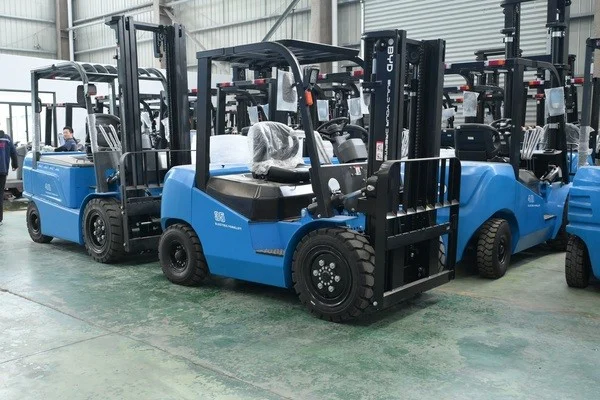
- At what load center is the rated capacity stated?
- What capacity remains at my maximum lift height?
- Which mast type suits my rack heights, and what is the closed height?
- Does the truck need free lift to enter low openings or containers?
- What aisle width does the chosen configuration require?
Provide your rack beam heights, pallet dimensions and heaviest expected load. If your loads are unusual, such as long items or off-center weights, say so; the supplier may need to check stability and attachment compatibility. Do not accept a single headline capacity number as proof that a truck suits every task on your site.
Battery Configuration and Charging: What to Confirm Before Ordering
Lithium traction batteries differ from lead-acid packs in charging behavior, maintenance needs and how opportunity charging can fit a shift pattern. The practical questions are about energy per shift, charger compatibility, charging windows and the site’s electrical capacity.
| Topic | What to ask | Why it matters |
|---|---|---|
| Battery capacity | Which pack options are offered, and what shift length and workload do they support? | Undersizing leads to mid-shift charging; oversizing adds cost and weight |
| Charging pattern | Is opportunity charging supported, and during which breaks? | Charging during breaks can reduce the need to swap packs |
| Charger and power supply | What charger is required, and what electrical supply does it need? | Site power capacity and connector type must match |
| Temperature | How does charging and discharge behave in cold storage or hot areas? | Operating limits affect scheduling and pack choice |
| Service and data | What battery monitoring, warranty terms and service support are available? | These affect long-term ownership planning |
Request documented figures from the manufacturer’s technical data rather than verbal estimates. If a supplier cannot provide a specification, ask them to confirm it in writing before you commit.
FAQ: Practical Questions Buyers Often Ask
Can one battery pack cover two shifts?
That depends on energy consumption per shift, which is driven by load, lift height and travel distance. Ask the supplier to calculate the expected energy demand from your shift record, then compare it with the pack options. Opportunity charging during breaks may change the answer, but confirm charger availability and site power first.
How do I verify capacity at my actual lift height?
Request the capacity chart that corresponds to the mast and load center you plan to use. Check the residual capacity at your maximum height and compare it with your heaviest load. If your load center is greater than the standard value, ask how capacity is affected.
What should be included in an acceptance check?
Agree on the configuration in writing: mast type, lift height, rated capacity and load center, battery pack, charger and any attachments. At delivery, verify these against the documents and confirm that the truck operates correctly under a representative load. Record any deviations immediately.
Which parameters should I send with a selection request?
Send your shift pattern, heaviest and average loads, load center, maximum lift height, aisle width, floor and ramp conditions, and charging arrangements. These details let the supplier propose a four-wheel counterbalance electric forklift configuration that matches your site instead of a generic model.
To move from general questions to a concrete proposal, share your operating data with our team and ask which BYD four-wheel counterbalance electric forklift configurations fit your loads, lift heights and charging schedule. Confirm every specification against the manufacturer’s technical documentation before ordering.