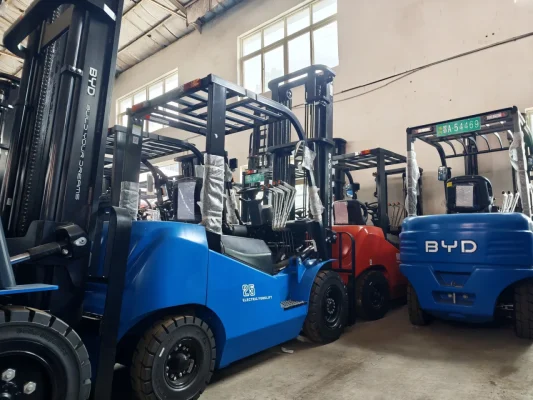
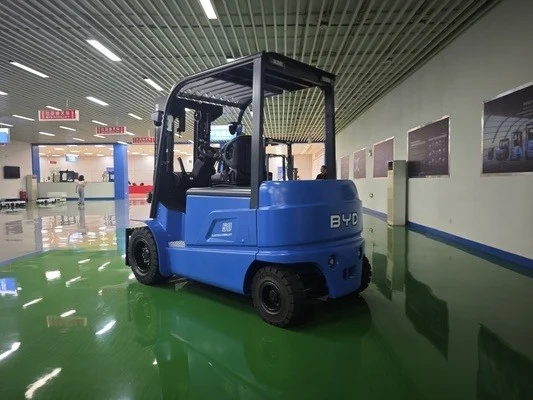
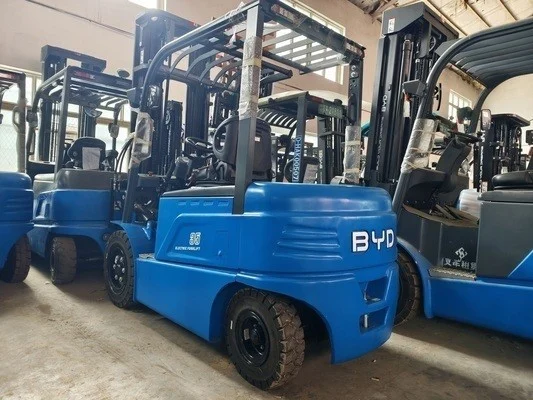
BYD lithium forklift: Operational Adaptability Narrow Aisle High-Density Storage Operations
News 12/10/2026
Core Design Features Supporting Narrow Aisle Operations
High-density storage operations rely on tight aisle layouts to maximize available floor space. Traditional forklifts often struggle to navigate these narrow paths, due to larger frames and bulky lead-acid battery housings. BYD lithium forklift models address this challenge through purpose-built compact designs that prioritize maneuverability without sacrificing lifting capacity.
Battery Placement Advantages
BYD integrates lithium battery packs directly into the forklift chassis, rather than mounting them as separate oversized modules above the drive train. This design lowers the unit’s overall center of gravity, improving stability during cornering and lifting in tight spaces. It also removes dedicated battery changing bay requirements, which saves additional storage floor space that would otherwise remain reserved to support battery swaps.
Most entry-level BYD lithium forklift models deliver turning radii between 1.7 meters and 2.2 meters, allowing them to navigate aisles as narrow as 2.1 meters. This fits the vast majority of modern high-density storage racking configurations, which commonly use aisle widths between 2 meters and 2.5 meters.
Key Operational Adaptability Benefits
Beyond physical size, BYD lithium forklift technology delivers multiple adaptability benefits that align with high-density storage needs. One key advantage lies in opportunity charging capability. Lithium chemistry accepts partial charges without degradation, so operators can top up battery power during scheduled work breaks. This eliminates long mid-shift downtime needed to complete full battery swaps, supporting continuous multi-shift operations.
Another key benefit involves zero exhaust emissions. Unlike internal combustion forklifts, BYD lithium powered units produce no on-board emissions during operation. This allows deployment inside enclosed storage facilities without extra ventilation infrastructure, matching indoor high-density storage requirements.
Many BYD lithium forklift models also include regenerative braking systems. These systems recapture kinetic energy when the forklift slows or lowers loads, redirecting it back to the battery. This extends overall runtime between charges and reduces wear on brake components, lowering long-term maintenance needs.
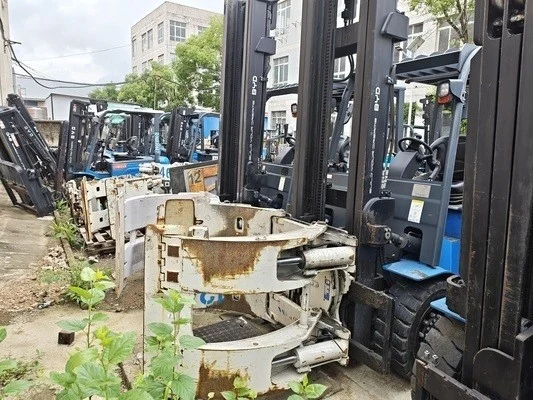
BYD produces lithium forklift models covering common load ranges from 1.5 tons to 5 tons, so operations can select a unit matching their typical load sizes, from small pallets of consumer goods to heavier industrial materials.
Practical Selection Guidance And Limitations
When This Forklift Fits Your Operation
BYD lithium forklift works best when operations already use or plan to implement narrow aisle high-density storage layouts. It also fits facilities running multiple daily shifts well, where downtime reduction creates clear value. Indoor operations prioritizing consistent air quality also gain significant benefits from zero-emission operation.
Important Limitations To Evaluate
Initial acquisition cost of BYD lithium forklift models sits higher than comparable lead-acid powered forklifts. Smaller operations with limited upfront capital should calculate long-term savings from lower maintenance and longer battery lifespan before making a purchase commitment.
Extremely cold storage environments with consistent temperatures below -20 degrees Celsius may require optional battery insulation packages. Not all base BYD lithium forklift models include this feature, so confirm available options with local dealers before completing your order.
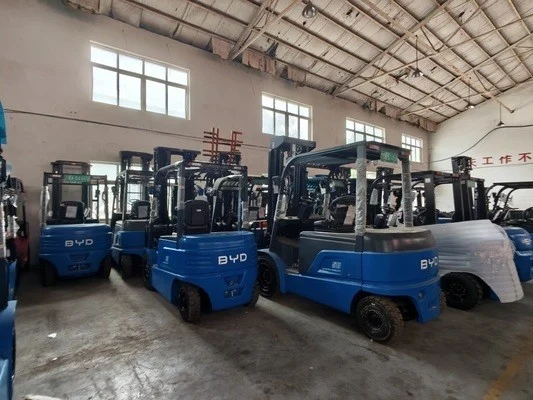
Maximum lifting height also varies across different BYD lithium forklift models. Operations using multi-level high-density racking must confirm the selected model’s lifting height rating matches their tallest rack level to avoid performance issues.
Actionable Final Takeaways
BYD lithium forklift delivers strong operational adaptability within narrow aisle, high-density storage operations. Its compact design and lithium technology address key pain points traditional forklifts face in tight storage layouts, from maneuverability issues to downtime related to battery changes.
Before moving forward with a purchase, verify three critical details: your facility’s minimum aisle width matches the selected model’s turning radius requirement, your operating environment stays within the battery’s rated temperature range, and your budget accommodates the higher initial investment.
Many operations gain long-term value from the extra storage capacity unlocked by narrow aisle configurations, paired with lower long-term operating costs from BYD lithium technology. Always confirm specific model specifications with your local BYD authorized dealer to match your facility’s unique operational needs.
Frequently Asked Questions
Can BYD lithium forklift work in existing narrow aisle storage setups?
Most standard BYD lithium forklift models navigate aisles as narrow as 2.1 meters, which matches most existing high-density storage layouts. You should measure your aisle width and confirm the model’s turning radius requirement with your dealer before final selection.
Does battery lifespan hold up under constant daily use in high-density operations?
BYD lithium forklift batteries typically deliver between 2000 and 3000 full charge cycles under standard operating conditions, which translates to 5 to 7 years of typical daily use. Actual lifespan varies based on charging habits and consistent operating temperature.
Do I need special charging infrastructure?
BYD lithium forklifts work with standard 3-phase power connections available in most warehouse facilities. You do not need custom installation beyond standard outlet placement near break areas supporting opportunity charging.