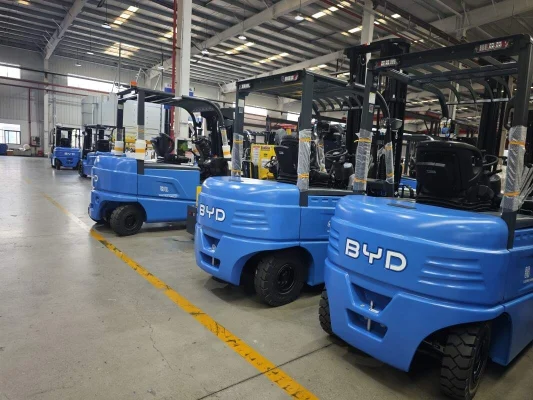
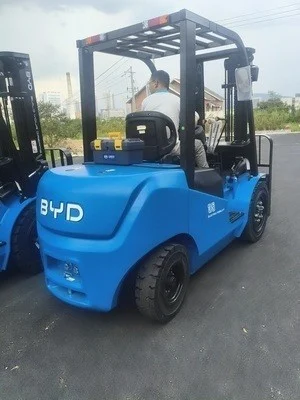
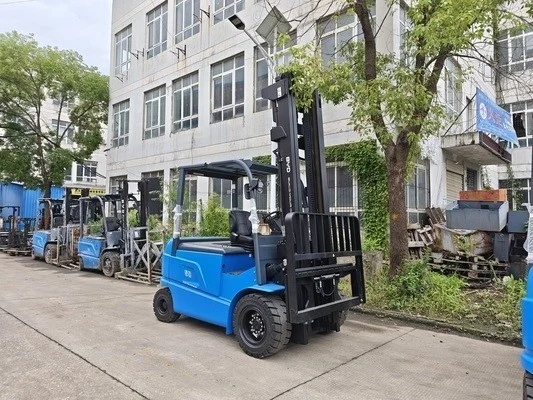
BYD Lithium Forklift: How to Specify Mast, Load Center, and Battery Options When Configuring a Four-Wheel Counterbalance Electric Forklift
News 04/11/2026
Configuring a BYD lithium forklift starts with three decisions that shape safety, throughput, and long-term costs: the mast, the load center, and the battery. Unlike a generic checklist, this guide explains how each choice interacts with real warehouse conditions and where to verify data before you commit. The goal is a four-wheel counterbalance electric forklift that matches your loads, aisles, and charging routine—not a machine that merely looks adequate on paper.
Start with the Job, Not the Spec Sheet
Before comparing mast heights or battery capacities, document the work. A common mistake is to order a forklift based on the heaviest pallet alone, ignoring lift height, attachment use, and aisle width. Those factors change the required capacity and stability. Gather these inputs first:
- Heaviest load weight and its dimensions, including overhang.
- Maximum lift height needed at the rack or truck bed.
- Load center—the distance from the vertical face of the forks to the load’s center of gravity.
- Attachment type and weight, if any (for example, a sideshifter or clamp).
- Narrowest aisle and turning clearance.
- Floor conditions, ramps, and gradients.
- Shift pattern, charging windows, and available ventilation.
These inputs let you ask precise questions and avoid over- or under-specifying. In a hypothetical scenario, a warehouse storing 1,200 kg pallets at 6 m lift height might assume a 1,500 kg-rated forklift is sufficient. But if the load center exceeds the standard value or an attachment adds weight, the remaining capacity at height could drop below the load weight. The mast and capacity must be evaluated together.
Mast Selection: Height, Free Lift, and Visibility
The mast determines lift height, collapsed height, and forward visibility. Three common configurations are simplex, duplex, and triplex. Simplex masts offer limited free lift and are often used when overhead clearance is generous. Duplex masts add free lift, allowing the forks to raise without increasing overall height—useful in trailers or low-clearance areas. Triplex masts provide the highest lift with a low collapsed height, but they can reduce forward visibility and add weight.
Specify the mast by answering:
- Maximum lift height: the highest shelf or trailer deck you must reach. Add clearance margin.
- Collapsed height: must fit under doorways, rack beams, and trailer roofs.
- Free lift: needed when lifting inside trailers or containers with low overhead clearance.
- Visibility: consider mast channel design and load size; some masts offer better forward view.
Mast choice also affects capacity. A taller mast can reduce residual capacity at height because of the mast’s own weight and load moment. Always request a capacity chart from the supplier that shows rated capacity at the intended lift height and load center. Do not assume the data plate capacity applies at all heights.
Load Center and Attachments: The Hidden Capacity Limit
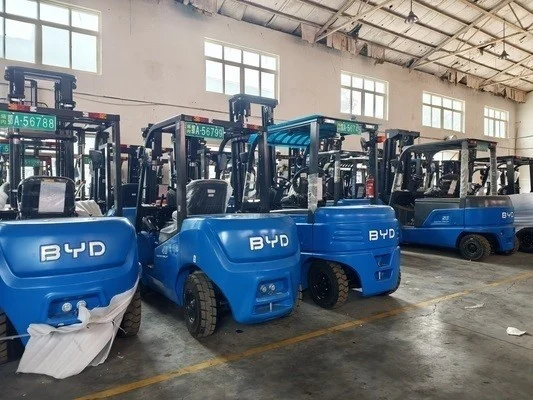
Load center is the horizontal distance from the fork face to the load’s center of gravity. Standard ratings often assume a 500 mm or 600 mm load center. If your pallet is deeper or the load is irregular, the actual load center may be greater, reducing the safe capacity. Attachments shift the load forward and add weight, further reducing capacity.
Use this process to verify capacity:
- Measure the load’s center of gravity from the fork face when the pallet sits against the backrest.
- Note any attachment’s load center shift and weight (from the attachment supplier).
- Request a residual capacity chart from the forklift supplier for your mast, attachment, and load center.
- Confirm that the residual capacity at the required lift height exceeds the heaviest load plus attachment weight.
In a hypothetical example, a 2,000 kg-rated forklift with a 600 mm load center might have a residual capacity of 1,700 kg at 4.5 m lift height with a sideshifter. If your loads are 1,800 kg, the forklift would be overloaded at that height. This is why the load center and mast height must be specified together, not separately.
Battery Options: Capacity, Charging, and Daily Duty
BYD lithium forklifts use iron-phosphate battery packs, but the specific capacity, voltage, and charging profile depend on the model and supplier configuration. Battery selection should match your shift pattern and charging infrastructure. Key questions:
- Energy demand: estimate daily run time and load weight; a heavier duty cycle consumes more energy.
- Charging window: opportunity charging during breaks may require a higher-capacity charger and compatible battery management system.
- Charging location: verify ventilation, temperature range, and electrical supply with the supplier.
- Battery management: confirm the BMS limits and recommended charging routine; these affect available capacity and battery life.
Do not assume a standard battery will cover all shifts. Ask the supplier to provide a duty-cycle assessment based on your load weight, lift height, and shift length. If the assessment is not available, plan a trial or request a performance guarantee in writing. Also clarify whether the battery is integrated or swappable; this affects charging logistics and uptime.
Putting It Together: A Specification Checklist
Use the table below to organize the information you need from your team and your supplier. It highlights typical risks, documents to request, and optional configurations. The “typical risk” column describes general concerns, not predictions for any specific BYD model.
| Parameter | Why It Matters | Supplier Documentation to Request | Optional or Confirmable Configuration |
|---|---|---|---|
| Mast type and lift height | Affects visibility, capacity at height, and overhead clearance | Capacity chart at specified lift height and load center | Triplex mast, free lift, integrated sideshifter |
| Load center and attachment | Reduces residual capacity; must be verified | Residual capacity calculation with attachment | Fork positioner, clamp, paper roll handler |
| Battery capacity and voltage | Determines run time and charging needs | Duty-cycle assessment, charging profile | Opportunity charging, battery swapping |
| Charging infrastructure | Affects uptime and electrical safety | Charger specifications and installation requirements | Onboard charger, external charger |
| Aisle and turning radius | Ensures maneuverability in tight spaces | Dimension drawing with turning radius | Steering mode options, if available |
When you contact a supplier, provide your load weight, load center, maximum lift height, aisle width, and shift pattern. Ask for a written configuration proposal that includes residual capacity at height, battery duty-cycle estimate, and charging requirements. This turns a general inquiry into a verifiable specification.
Frequently Asked Questions
Can I increase capacity by choosing a larger battery?
No. Battery capacity affects run time, not lifting capacity. Lifting capacity is determined by the mast, load center, and counterweight. A larger battery may add weight, but it does not change the rated capacity. Always rely on the capacity chart for your specific configuration.
How do I know if my load center is standard?
Standard load centers are typically 500 mm or 600 mm, but this varies by model. Measure your actual load’s center of gravity and compare it to the forklift’s data plate. If your load center is greater, request a residual capacity chart. Do not assume the standard rating applies.
What mast should I choose for loading trucks?
Trailer loading often requires free lift to raise forks without hitting the trailer roof. A duplex or triplex mast with sufficient free lift is usually needed. Verify the collapsed height and free lift with your supplier, and ensure the mast’s capacity at the required height meets your load.
Can I charge the battery during breaks?
Opportunity charging is possible with many lithium-ion systems, but it depends on the battery management system and charger. Confirm with the supplier whether your configuration supports opportunity charging and what charging routine is recommended. Improper charging can reduce battery life.