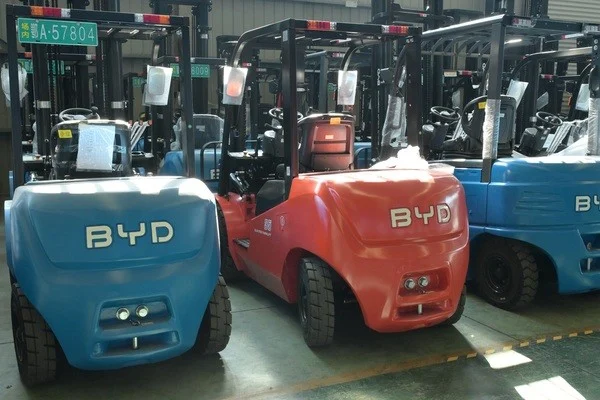
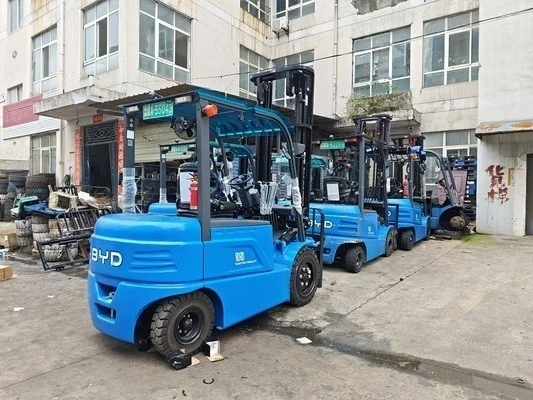
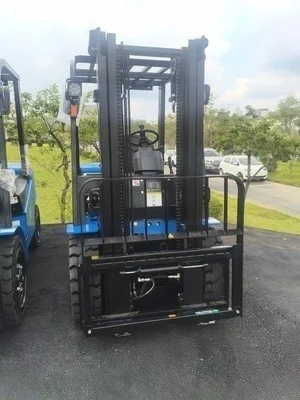
BYD lithium forklift: Operator Safety Features and Collision Mitigation Design High-Traffic Warehouse Settings
News 18/10/2026
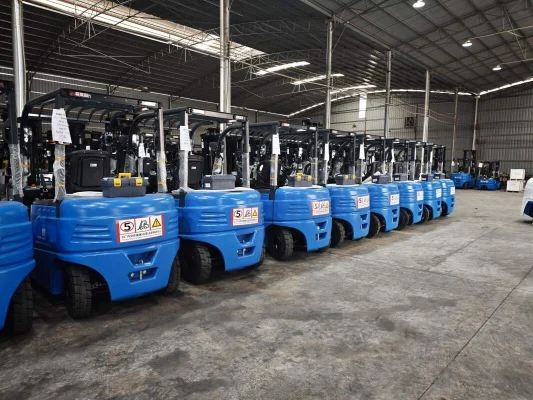
High-traffic warehouses handle constant foot and equipment movement, making operator and pedestrian safety a top priority. BYD lithium forklift models integrate dedicated safety and collision mitigation systems designed to reduce incident risk in dense, fast-moving storage and distribution environments. This guide covers core design features, key procurement checks, and configuration trade-offs relevant to these high-demand operations.
Core Safety Design Aligned With High-Traffic Warehouse Demands
Standard Collision Mitigation Systems
Most BYD lithium forklift models come with proximity sensors that detect obstacles near the vehicle’s front and rear paths. The system triggers audible and visual alerts first, then applies gradual speed reduction or full braking when obstacles sit within pre-set close-range zones. This design addresses the common risk of accidental collisions with stored pallets, racking, or pedestrians moving between aisles.
Operator Visibility Enhancements
Wide-view mast designs and high-mounted, anti-glare displays improve operator awareness of surrounding areas. Some models integrate 360-degree camera systems as optional upgrades, which help eliminate blind spots common when navigating narrow aisles packed with moving inventory and personnel. All visibility-related configurations vary by model, so buyers must confirm specific camera availability and mounting positions with local BYD distributors.
Procurement Check Points Relevant To High-Traffic Warehouse Operations
The table below outlines core safety configurations, their relevance to high-traffic settings, required checks, and known limitations:
| Configuration Type | Why High-Traffic Warehouses Prioritize It | Required Procurement Check | Known Configuration Limitations |
|---|---|---|---|
| Basic Proximity Sensors (Standard) | Reduces accidental collision with moving obstacles | Confirm detection range and trigger sensitivity adjustment options | Sensor performance can drop in dusty or wet environments; regular cleaning required |
| 360-Degree Surround Camera (Optional) | Eliminates blind spots during frequent direction changes | Confirm display resolution and low-light performance | Adds upfront cost; requires periodic screen cleaning to maintain visibility |
| Automatic Seat Parking Brakes (Standard) | Prevents unintended movement on sloped warehouse floors | Confirm brake engagement speed when operator leaves seat | Does not activate if operator leaves seat without shifting to neutral on some entry-level models |
| Pedestrian Priority Detection (Optional) | Prioritizes alerts when human workers enter travel paths | Confirm detection accuracy across different lighting and clothing types | May trigger false alerts near reflective racking surfaces; adjust sensitivity during on-site setup |
Beyond system checks, buyers also need to confirm battery placement impact on vehicle center of gravity. BYD lithium batteries often sit lower in the chassis than lead-acid alternatives, which can improve vehicle stability during loaded travel. However, stability ratings vary based on maximum load and lift height, so you must confirm rated stability matches your warehouse’s typical load and travel speed requirements.
Configuration Trade-Offs Matching Your Warehouse Layout
Different high-traffic warehouse layouts require different safety configurations, leading to clear trade-offs between cost and risk reduction. Narrow-aisle layouts, common in high-density distribution centers, gain maximum benefit from optional 360-degree cameras and advanced obstacle detection. These add upfront cost, but cut collision risk with racking that comes from frequent tight turns. Open floor plans with mixed pedestrian and equipment movement benefit more from optional pedestrian detection systems, which prioritize alerts over generic obstacle warnings. Entry-level BYD lithium forklift models offer standard basic collision mitigation, which works well for low-to-medium density warehouses with lower hourly traffic volumes. This option keeps upfront investment lower, while still meeting basic safety requirements.
Another key trade-off involves operator cabin designs. Fully enclosed cabins offer better protection against falling debris, but can restrict outward visibility in some setups. Open cabin designs improve visibility, but offer less protection to operators during unexpected incidents. Confirm which cabin option matches your warehouse’s specific safety regulations before finalizing purchase.
Frequently Asked Questions
Do all BYD lithium forklift models include collision mitigation?
Basic collision mitigation, including proximity sensors and automatic braking triggers, comes standard on most current BYD lithium forklift models. Advanced features like pedestrian detection or 360-degree cameras count as optional upgrades, so confirm included features with your supplier before placing an order.
Can collision mitigation systems work in cold storage high-traffic warehouses?
Cold storage operations require specialized temperature-rated components across all electronic systems, including safety sensors. BYD offers cold storage-adapted forklift models, but you must confirm sensor and battery temperature ratings match your facility’s operating temperature range before installation. Standard non-cold-rated models can experience sensor failure or reduced detection accuracy at consistently low temperatures.
Do BYD lithium forklift safety systems require regular maintenance?
All safety components require periodic inspection and calibration to maintain reliable operation. Proximity sensors and cameras can accumulate dust, debris or moisture from regular warehouse use, which reduces performance. Follow the manufacturer’s recommended maintenance schedule, and test system trigger response after any accidental impact to the vehicle’s body or sensor mounts.
Are BYD lithium forklift safety features compatible with connected warehouse management systems?
Some newer BYD lithium forklift models support integration with connected warehouse management systems, which can log safety events like near-collisions to support operational analysis. Compatibility varies by model and WMS platform, so confirm integration capabilities with both BYD and your WMS provider before finalizing your order.
Before purchasing a BYD lithium forklift suited to your high-traffic warehouse, compile key site data including aisle width, typical daily traffic volume, maximum load size, and any site-specific safety regulations. Share this data with your local BYD distributor to confirm selected model configurations match your operational needs, and complete on-site testing of safety system response before accepting final delivery.