Cold Storage Forklift Specification Guide: Matching Four-Wheel Counterbalance Electric Forklift Capacity and Lift Height to Sub-Zero Duty Cycles
News 30/10/2026
A cold storage forklift must be specified around the temperature regime it actually works in, not around a general-purpose truck with a heater added. With four-wheel counterbalance electric forklifts, the decisive questions are whether the truck stays inside the freezer or crosses temperature zones many times per shift, what load it must lift at what height and load center, and whether the battery and charger are rated to operate and recharge at the temperatures on site. This guide walks through those decisions in the order a buyer should make them, and flags the data you should obtain from the supplier before committing.
Start With the Duty Cycle, Not the Truck
Two warehouses with the same racking can need very different machines. Before comparing specifications, write down the operating pattern.
Continuous in-freezer work versus frequent zone crossing
A truck that spends an entire shift below freezing faces steady cold: hydraulic oil viscosity, seal flexibility, display readability, and battery behavior all settle at the low end. A truck that moves between a freezer, a chilled dock, and an ambient staging area faces repeated thermal cycling, which drives condensation on frames, masts, electrical enclosures, and the operator compartment. Condensation then freezes on surfaces, creating ice on steps, handles, and floors. The two patterns call different configurations into play, and a specification that suits one may be a poor fit for the other.
Shift length, throughput, and charging windows
Record how many hours per shift the truck is actually moving, how many pallets per hour must be turned, and when charging can occur. In freezer operations, charging windows often fall outside the freezer itself, so the distance and time to a charging area matter. If opportunity charging is planned, confirm that the battery and charger combination is approved for the temperatures and charging profile involved.
Racking, aisles, and pallet formats
Measure aisle widths, rack beam heights, and the pallet footprint and load shape. A four-wheel counterbalance electric forklift is a common general-purpose choice in cold stores, but it is not the right answer when aisles are very narrow or when lift heights and residual capacity push beyond what the chassis can safely handle. In those cases, be honest about the boundary and consider whether a different truck class is warranted before proceeding.
Temperature Ratings: What to Verify
Temperature capability is not a single number. Ask about each of the following, and ask in writing.
- Operating temperature range of the complete truck, including the mast, hydraulics, and electrical system.
- Battery operating range and any low-temperature capacity derating the supplier applies.
- Charging temperature range and whether charging is permitted inside the cold room or must occur in a warmer area.
- Storage temperature range when the truck is parked overnight in an unheated space.
- Battery management system (BMS) limits that may reduce available power or block charging at low temperatures.
- Cold-weather package contents: battery heating, enclosure heating, heated or treated glazing, sealed connectors, and any condensation management.
Where the supplier cannot provide a documented figure, treat the item as unverified. Do not assume that a truck rated to a certain ambient temperature will deliver full rated load or full shift runtime at that temperature. Ask how capacity and runtime are affected at the lowest temperature you expect, and under what test conditions any figures were obtained.
Capacity, Load Center, and Lift Height in Freezer Conditions
Rated capacity is stated at a specific load center, usually a standard distance from the fork face. Add an attachment, a longer fork, or a load whose center of gravity sits farther out, and the safe residual capacity falls. The same applies as lift height increases. Cold storage often combines high racking with heavy pallets, so this is where specifications are most often overstated.
Build a capacity check step by step
- State the maximum pallet weight, including packaging and any ice or frost accumulation.
- State the load center the pallet actually presents, measured from the fork face.
- State the maximum lift height at which that load must be handled, and the height at which it is transported.
- List any attachment: sideshifter, positioner, clamp, or other device, and its weight and effect on load center.
- Ask the supplier to confirm residual capacity at that combination of load center and height, citing the truck’s capacity chart.
- Check mast height when lowered and when raised against door openings and rack clearances.
Never accept a headline capacity figure as proof that a given pallet can be lifted to a given height. The capacity chart, not the brochure headline, governs the answer.
Cold-Room Configuration Details That Affect Uptime
Beyond temperature ratings and capacity, several configuration choices determine whether the truck remains usable and safe in sub-zero work.
Hydraulics, lubrication, and seals
Ask which hydraulic oil grade and lubricants the manufacturer specifies at your lowest operating temperature, and whether the standard fill is suitable or a cold-climate fill is required. Confirm that seals and hoses are rated to the same range. Using an oil that becomes too viscous can slow lift and tilt response and increase strain on components.
Condensation, ice, and washdown
In food, seafood, and meat operations, cleaning and hygiene requirements interact with cold and moisture. Ask about enclosure sealing, connector protection, display and control protection, and any corrosion treatment on frames and fasteners. Confirm which cleaning methods the truck tolerates and which it does not. Do not assume that a truck suited to a dry freezer is also suited to regular washdown.
Operator compartment and visibility
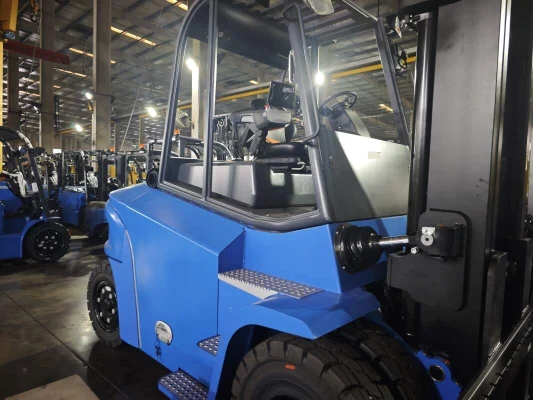
Frosted glazing, fogging, and low light are practical hazards. Ask about heated or treated glass, lighting packages, mirror options, and non-slip surfaces on steps and handholds. Check that the operator can see the fork tips and the load at working height while wearing cold-weather clothing.
Floors, tires, and braking
Freezer floors can be slick with frost or moisture. Discuss tire type and compound with the supplier relative to your floor surface and any ramps, and confirm braking performance expectations on wet or icy concrete. Where ramps or dock levelers are used, include grade and surface condition in the specification discussion.
Specification Checklist and Supplier Questions
The table below groups the points that most often cause problems, together with the evidence to request. Treat every item as something to confirm rather than assume.
| Item | Why it matters in cold storage | What to request |
|---|---|---|
| Operating temperature range | Determines whether the truck may work in the freezer at all | Documented range, plus any derating at low temperature |
| Battery and charging temperatures | Charging may be blocked or restricted when cold | Battery operating, charging, and storage ranges; BMS limits |
| Residual capacity at height | Heavy pallets at high racks reduce safe load | Capacity chart showing load center and height combinations |
| Attachment effect | Attachments reduce capacity and shift load center | Capacity impact statement from the supplier |
| Hydraulic oil and lubricants | Viscosity affects response and component strain | Specified grades at your lowest temperature |
| Condensation and sealing | Ice and moisture affect electrics and safety | Enclosure and connector protection details; cleaning limits |
| Aisle and turning dimensions | Confirms the truck fits the building | Turning radius, dimensions, and mast heights |
| Operator visibility and surfaces | Fogging and ice create handling risk | Glazing, lighting, and non-slip options |
Before requesting a quotation, assemble a short data pack: lowest and highest operating temperatures, time spent in each zone per shift, maximum pallet weight and load center, maximum lift height, aisle widths, floor surface and any ramps, cleaning regime, and charging location and windows. Then ask the supplier to confirm, item by item, which features are standard, which are optional, and which depend on factory confirmation. This site supplies BYD four-wheel counterbalance electric forklifts, including lithium battery configurations; share your actual duty cycle, load, and lift height so the selection and configuration can be checked against your conditions rather than a generic brochure.
Frequently Asked Questions
Can a standard four-wheel counterbalance electric forklift work inside a freezer?
Only if the truck, battery, and charger are rated to the temperatures involved and the configuration suits the condensation and ice conditions. Ask the supplier to confirm operating, charging, and storage temperature ranges in writing. A truck without documented cold-climate suitability should not be assumed to be adequate.
Does cold reduce how much the truck can lift?
Capacity is governed by load center, lift height, and attachments, and those limits apply regardless of temperature. Low temperature can separately affect battery output and hydraulic response. Confirm residual capacity from the capacity chart at your load center and height, and ask how low temperature affects available power and runtime.
Should the battery be charged inside the cold room?
That depends on the battery and charger ratings, which vary by configuration. Charging in a cold space may be restricted or slower, and some systems require a warmer charging area. Ask the supplier to specify the permitted charging temperature range and any BMS restrictions before planning your charging layout.
What is the biggest specification mistake in cold storage purchases?
Specifying from a headline capacity figure and a nominal temperature rating. The safer approach is to match the capacity chart to the real load center and lift height, and to verify every temperature-related limit, including charging and storage, with documented supplier data.