Electric Forklift Battery Acceptance Testing: Which Discharge and Insulation Checks Should Buyers Witness on a Four-Wheel Counterbalance Truck
News 13/11/2026
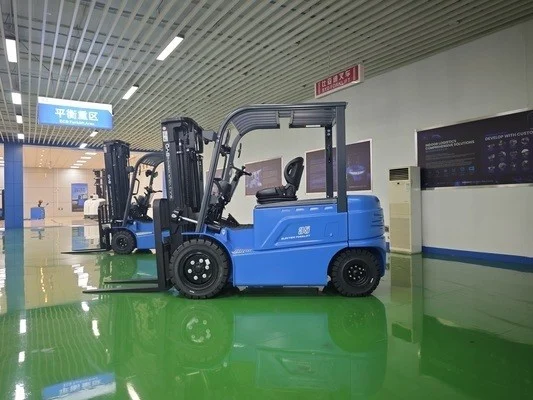
When a four-wheel counterbalance electric forklift arrives with its battery, the acceptance test is your best chance to confirm that the electric forklift battery matches the agreed specification before payment and warranty terms are fixed. Buyers should witness two core checks: a controlled discharge test that shows usable capacity under a defined load, and an insulation resistance test that shows the pack and wiring are safe. Both need documented test conditions, calibrated instruments, and results recorded against the purchase order rather than a verbal assurance.
What the Battery Documentation Should Establish Before Testing
Acceptance testing starts with paperwork, because a discharge result means little without the baseline it is compared against. Ask the supplier to provide the battery model, nominal voltage, rated capacity in ampere-hours, cell chemistry, and the manufacturer’s stated test conditions. Confirm that these figures match the truck’s motor and controller requirements and the purchase contract.
Useful documents to request include the battery datasheet, the charger specification, the battery management system description, and any test report the battery manufacturer issued. Check that serial numbers on the pack, the charger, and the delivery note agree. If the truck is supplied as an integrated package, confirm the battery capacity and voltage stated in the quotation, since a smaller pack can otherwise be substituted without an obvious external difference.
Record the ambient temperature and the state of charge at arrival. Capacity figures are normally quoted at a defined temperature and discharge rate, so a test run in a cold warehouse is not directly comparable to a datasheet value. Note any transport damage, electrolyte leakage, or loose connections before energizing anything.
The Discharge Test: What to Measure and How to Judge It
A discharge test demonstrates how much energy the pack delivers under a controlled load. The exact procedure should follow the battery manufacturer’s instructions and the agreed acceptance criteria. Where no contractual criterion exists, agree in writing before delivery on the load current, cutoff voltage, temperature range, and the minimum acceptable delivered capacity as a percentage of rated capacity.
Typical elements buyers should see witnessed and recorded:
- Instrumentation: a calibrated load bank or discharge unit, a calibrated DC voltmeter and ammeter, and a temperature measurement at the pack. Ask to see calibration certificates and their validity dates.
- Starting conditions: a fully charged pack, stabilized temperature, and a recorded initial voltage.
- Load profile: a constant current or a defined duty profile agreed in advance, with the current value written down.
- Cutoff point: the voltage at which the test stops, taken from the manufacturer’s data rather than chosen arbitrarily on site.
- Recorded output: elapsed time, current, voltage at intervals, ampere-hours delivered, and watt-hours if the instrument provides them.
Compare the delivered capacity with the rated capacity at the same discharge rate and temperature. A result below the agreed threshold is a legitimate reason to withhold acceptance pending explanation. Do not accept a capacity figure calculated from a different discharge rate without converting it, and do not treat a brief high-current burst as a capacity test.
During the test, watch the individual cell or module voltages if the battery management system exposes them. A pack that delivers acceptable total capacity while one cell group falls far below the others deserves a question, because imbalance affects long-term usable life. Record any alarms, derating, or shutdown events and ask what triggered them.
Insulation Resistance and Electrical Safety Checks
Insulation resistance testing checks the isolation between the live DC circuit and the chassis or earth reference. Poor isolation can indicate cable damage, moisture ingress, contamination, or a manufacturing defect, and it is a safety issue on any electric forklift battery installation.
The test method and pass threshold should come from the truck and battery manufacturers, not from a number chosen during the visit. Ask the supplier to state the test voltage, the points measured, the minimum acceptable resistance, and whether the battery management system or any electronics must be disconnected during the measurement. Measuring at the wrong point or with the wrong instrument setting can produce a misleading reading or damage components.
Witness and record the following:
- Insulation resistance between the positive terminal and chassis, and between the negative terminal and chassis, using the agreed method.
- Continuity and torque of the main power connections, plus a visual check of cable routing, strain relief, and connector condition.
- Charger earth connection and the condition of the charging plug and socket.
- Operation of the emergency disconnect and any battery isolation device.
A passing insulation result does not replace a functional check of the truck. Confirm that the display, battery management system communication, and charger handshake behave as described, and that no fault codes appear during a short operating cycle.
FAQ: Practical Questions Buyers Ask
Can the discharge test be shortened?
A shortened test gives a partial indication at best. If time on site is limited, agree a defined partial test with the supplier and record that it is not a full capacity verification. A full test at the rated discharge rate typically takes hours, so plan the visit accordingly.
Who should supply the test equipment?
Either party can, but the buyer should confirm that instruments are calibrated and that the test method is agreed in advance. If the supplier performs the test, ask to see the raw readings rather than only a summary sheet.
What if the battery passes discharge but fails insulation?
Treat the insulation result as a safety finding and do not put the truck into service until the cause is identified and corrected. Ask the supplier to document the fault, the corrective action, and the retest result.
Should the acceptance criteria be in the purchase order?
Yes. Capacity tolerance, test conditions, insulation threshold, documentation, and the remedy if results fall short belong in the contract. Verbal criteria are difficult to enforce after delivery. When specifying a four-wheel counterbalance electric forklift, share your load weight, lift height, shift pattern, floor conditions, and charging arrangements so the battery configuration can be matched to the duty and the acceptance test can be written against it.