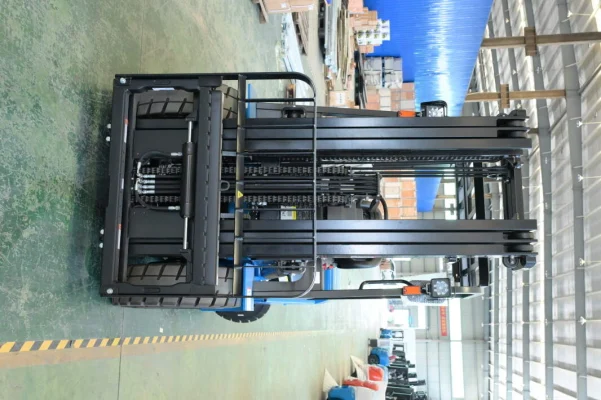
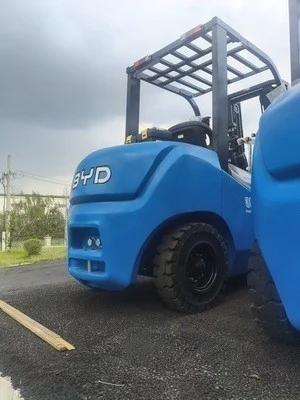
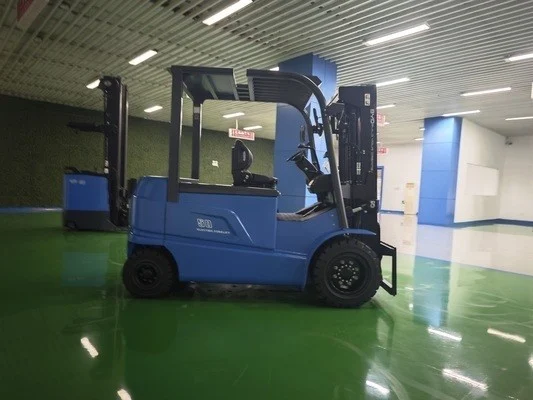
Core Evaluation Factors: BYD ECB forklift in Heavy Industrial Warehouse Operations
News 04/10/2026
Heavy industrial warehouses handle high daily load volumes, constant equipment use and demanding operational conditions. Choosing the right forklift directly impacts workflow efficiency, worker safety and long-term operational costs. BYD’s ECB series electric forklifts gain attention from warehouse operators seeking lithium-ion powered alternatives to traditional internal combustion models. This comparison-focused guide outlines core evaluation factors to help you gauge this equipment’s suitability to your warehouse space and needs.
Load Capacity and Lift Height Compatibility
Standard BYD ECB Series Capacity Ranges
BYD produces ECB forklift models covering multiple capacity brackets, starting at 1.5 tons up to 8 tons, covering heavy duty configurations. Lift heights range from 3 meters up to 6 meters for most standard warehouse setups, with custom options available to suit high-bay storage configurations. When evaluating, match maximum rated capacity to your heaviest common load, not just average daily loads. Many operations encounter occasional oversized loads that push equipment beyond its rated limit, leading to premature wear and safety risks.
Comparison to Competing Forklift Classes
Internal combustion (IC) forklifts often offer higher top capacities than entry-level BYD ECB models, but mid-range ECB units match or exceed capacity ratings of most common IC forklifts used in general heavy warehouses. Compared to other lithium-ion electric forklifts in the same price bracket, BYD ECB models hold comparable capacity ratings with smaller battery footprint, leaving more maneuvering space in narrow aisles.
Power System Performance and Durability
All BYD ECB forklifts use the company’s in-house lithium iron phosphate (LiFePO4) battery technology, a key differentiator from older lead-acid electric forklifts. This section breaks down core performance points to evaluate.
Battery Life and Charging Characteristics
LiFePO4 batteries used in BYD ECB units support opportunity charging during work breaks, eliminates full scheduled charge cycles common with lead-acid models. BYD states these batteries retain 80% original capacity after 2,000 full charge cycles, which translates to multiple years of daily use in most heavy warehouse operations. Unlike lead-acid batteries, LiFePO4 units do not require regular maintenance such as water top-offs, reducing routine labor associated with equipment upkeep.
Performance Under Continuous Operation
Heavy warehouse operations often run 2 to 3 shifts per day. BYD ECB forklifts maintain consistent torque output through full battery discharge cycles, unlike some competing electric models that lose power as battery level drops. In multi-shift operations, you can swap batteries quickly if on-site charging infrastructure cannot keep up with demand, though opportunity charging eliminates need for swaps in most single-shift and many double-shift setups. One key limitation: extreme temperatures below -10°C or above 45°C can reduce battery run time and overall performance, so operations in unconditioned warehouses with extreme temperature exposure must include this factor in your planning.
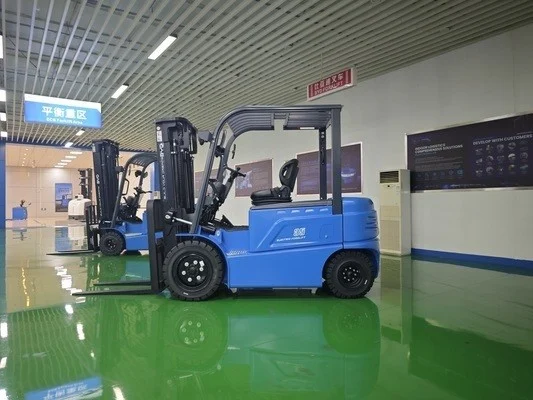
Maneuverability and Space Requirements
Heavy industrial warehouses often balance large storage areas with narrow aisles between storage racks. BYD ECB forklifts come in multiple chassis sizes, so you must match turning radius and overall dimensions to your warehouse layout.
Turning Radius Comparison
Standard counterbalance BYD ECB forklifts have turning radii similar to same-capacity IC models, making them suitable to standard 3.5 meter or wider aisles. Narrow aisle configuration options exist to suit smaller warehouse footprints, but these options reduce maximum load capacity compared to standard chassis models. Compared to reach trucks, ECB counterbalance models offer better stability when handling uneven outdoor surfaces between warehouse bays and loading docks, an advantage to operations that move loads between indoor storage and outdoor yards.
Total Cost of Ownership Comparison
Initial purchase price of BYD ECB forklifts runs higher than same-capacity lead-acid electric models and IC forklifts, but long-term costs often balance out. Let’s break down key cost factors:
- Fuel/energy costs: Electric operation reduces energy costs per hour compared to diesel or propane IC models. LiFePO4 batteries also have higher energy efficiency than lead-acid alternatives.
- Maintenance costs: ECB forklifts have far fewer moving parts than IC models, eliminating oil changes, filter replacements, spark plug service and emission system checks. Most operators report 30% to 40% lower annual maintenance costs compared to similar capacity IC units, though exact figures vary based on use intensity.
- Replacement costs: Battery replacement represents the largest single long-term cost for electric forklifts. BYD’s LiFePO4 batteries typically last 2 to 3 times longer than lead-acid batteries, delaying large replacement expenses many years.
One key cost consideration: you need compatible on-site charging infrastructure supporting BYD ECB forklifts. If your facility lacks sufficient power capacity handling multiple charging units, you will need to invest in electrical system upgrades before deployment, adding to initial project costs.
Key Limitations to Assess
BYD ECB forklifts do not fit every heavy warehouse operation. Common limitations include:
- Extremely high capacity needs: Operations requiring loads over 8 tons will not find suitable ECB models in BYD’s current product line.
- Uncontrolled extreme temperature environments: As noted earlier, extreme hot or cold reduces battery performance and can shorten battery lifespan.
- Water exposure: ECB models have standard IP ratings suitable to most indoor warehouse use, but they are not designed to constant exposure to water or wet environments such as cold storage facilities with high humidity or regular washdowns.
Assumed Application Scenario: A 50,000 square foot heavy parts warehouse runs two 8-hour shifts daily, handles average loads between 2 and 5 tons, has conditioned indoor space and 3.8 meter wide aisles. This environment matches well with BYD ECB 2.5 to 5 ton models, as opportunity charging during shift breaks supports full day operation without battery swaps, lower maintenance costs reduce weekly upkeep labor, and stable torque improves loading dock efficiency. In contrast, an unconditioned outdoor storage yard handling 10 ton loads in northern climates with sub-zero winter temperatures will not see suitable performance from BYD ECB models.
Practical Selection Guidance
Follow these steps when evaluating BYD ECB forklift in your operation:
- Map your maximum daily load weight and required lift height, and confirm these values fall within ECB model ratings matching your chosen configuration.
- Measure your aisle widths and turning clearance, and compare against published chassis dimensions and turning radius matching the ECB model you consider.
- Check your facility’s existing electrical capacity to confirm it can support the number of charging units you need.
- Test a rental unit 1 to 2 weeks under your actual operational conditions to verify performance before making a large purchase.
Frequently Asked Questions
Are BYD ECB forklifts suitable to outdoor use?
BYD ECB forklifts handle occasional outdoor use such as moving loads between warehouse bays and loading docks across paved surfaces. They do not support constant full-time outdoor use exposure to harsh weather, water or extreme terrain.
How does BYD ECB forklift performance compare to internal combustion forklifts?
Within their rated capacity and environmental limits, BYD ECB forklifts deliver comparable torque and lifting speed to IC forklifts. They produce no on-site emissions, operate at lower noise levels and have lower long-term operating costs. IC models still outperform ECB units in extremely high capacity applications and harsh unconditioned environments.
Do BYD ECB forklifts require specialized maintenance?
Most routine maintenance for BYD ECB forklifts focuses on brake checks, tire wear and hydraulic system inspections. You do not need specialized training to handle routine upkeep, though major battery or electrical system work requires access to certified BYD service technicians.
What warranty coverage comes with BYD ECB forklifts?
Standard warranty coverage varies by region, but most new BYD ECB forklifts include a 1 year or 2,000 hour full equipment warranty, and an extended 5 year or 10,000 hour warranty covering the LiFePO4 battery. Always confirm warranty terms with your local BYD dealer before purchase.
Final Evaluation Summary
BYD ECB forklifts offer strong value to heavy industrial warehouse operations that fit within the series’ capacity and environmental parameters. Their LiFePO4 battery technology reduces long-term operating costs and maintenance labor, while performance matches or exceeds comparable competing electric and IC models within rated limits. Operations with extreme temperature exposure, very high capacity needs or constant wet exposure should consider alternative equipment. Always test equipment under your actual operating conditions before committing to a large fleet purchase to confirm it meets your specific workflow needs.