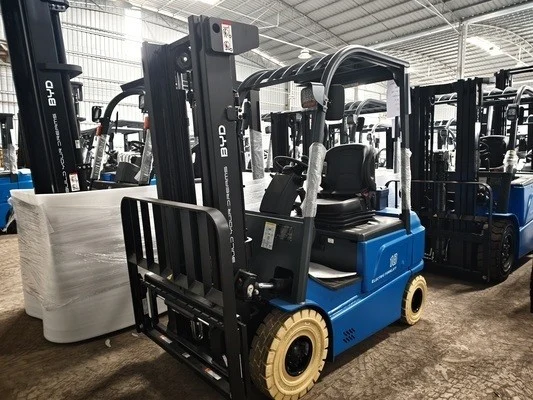
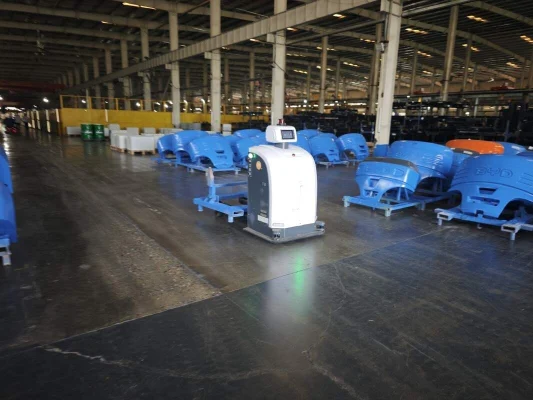
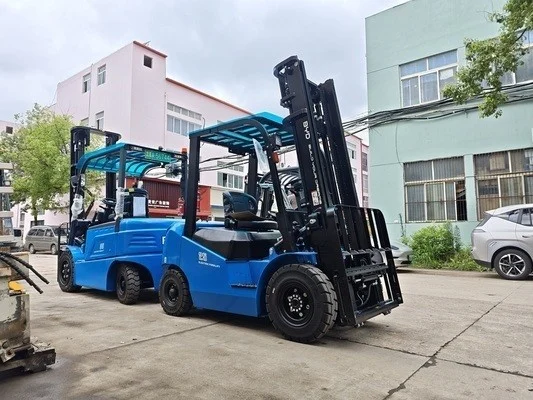
Electric Forklift Battery Replacement Planning: Lead-Acid to Lithium Conversion Checks on Four-Wheel Counterbalance Trucks
News 08/11/2026
Converting a four-wheel counterbalance electric forklift from lead-acid to lithium power is less a battery purchase than a system change. The battery, charger, compartment, counterweight, and battery management system (BMS) all interact, so the decision should start with the truck and the duty cycle, not the battery catalog. This guide sets out the checks that matter when planning an electric forklift battery replacement, with attention to the practical limits of a conversion.
Start With the Truck and the Duty Cycle
Four-wheel counterbalance electric forklifts are common general-purpose machines in factories, warehouses, and loading areas. Whether a lithium conversion makes sense depends on how the truck is actually used. Before contacting any supplier, record the following:
- Rated capacity and load center on the data plate, plus the weight of any attachment.
- Actual lift heights used and the heaviest loads handled at each height.
- Shift pattern: hours per shift, shifts per day, and whether the truck runs continuously or in bursts.
- Charging windows: when the truck is parked, and whether opportunity charging is possible.
- Ambient conditions: indoor temperature range, outdoor use, cold storage, washdown, or dusty environments.
- Floor and aisle conditions, including ramp grades and surface quality.
These facts determine the required battery voltage, capacity, and physical size, and they also reveal whether the existing charger and charging area can support a change.
Key Conversion Checks on a Four-Wheel Counterbalance Truck
Battery compartment, dimensions, and weight
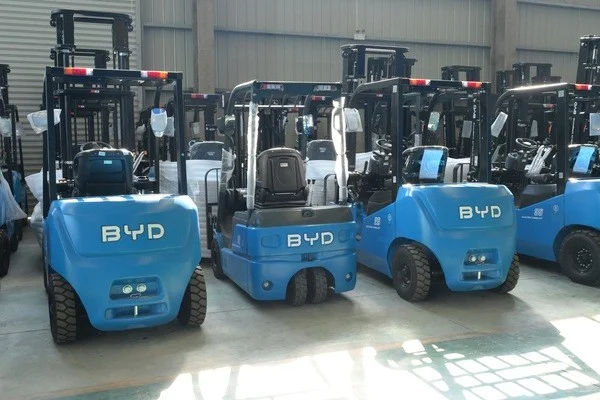
A lithium pack must fit the compartment and be secured against movement. Weight matters in both directions: the counterweight balance of the truck was designed around a lead-acid battery of a certain mass, and a lighter lithium pack can change stability. Ask the supplier to confirm the pack dimensions, mass, and any ballast or counterweight adjustment the truck requires. Do not assume a lighter battery is automatically acceptable; verify stability with the manufacturer.
Voltage, capacity, and BMS communication
Nominal voltage must match the truck’s system. Capacity should be sized against measured energy use per shift, not against the old lead-acid amp-hour rating alone, because usable capacity differs between chemistries. The BMS must be compatible with the truck’s controller and display, or the supplier must provide a defined interface. Confirm what happens when the BMS limits current or shuts down: does the truck derate safely, and is the operator warned?
Charging infrastructure
Lithium charging differs from lead-acid charging in profile and in the need for BMS-controlled charging. Check the charger’s compatibility with the pack, the available power supply at the charging location, charge time against your shift pattern, and whether opportunity charging is permitted by the battery supplier. Ventilation and hydrogen management requirements change with chemistry, but local codes and the site’s safety assessment still apply. Confirm the allowed charging temperature range with the supplier.
Temperature limits and environment
Lithium packs have operating, storage, and charging temperature limits that may differ from lead-acid behavior. If the truck works in cold stores, freezers, or outdoors, ask the supplier to state the verified temperature ranges and whether heating, insulation, or derated charging is required. Do not assume a standard pack suits a freezer application without written confirmation.
Regulatory, insurance, and documentation
Conversion affects the truck’s configuration, so check what the forklift manufacturer, insurer, and local inspector require. Request the battery’s test reports, transport and safety documentation, and any instructions on modifying the truck. Requirements vary by region and site; confirm them rather than relying on general statements.
Comparison at a glance
| Check | Why it matters | What to request | Typical limit or trade-off |
|---|---|---|---|
| Compartment fit and weight | Stability and safe mounting | Pack dimensions, mass, mounting drawing | May need ballast or counterweight review |
| Voltage and capacity | Performance and runtime | Measured energy use per shift, discharge curve | Usable capacity differs from lead-acid rating |
| BMS interface | Safe derating and warnings | Controller compatibility statement | May require interface hardware |
| Charger | Charge time and safety | Charger compatibility, power supply needs | Existing charger may not be suitable |
| Temperature range | Cold store or outdoor use | Verified operating, storage, charging limits | Heating or derating may be required |
| Documentation | Inspection and insurance | Test reports, safety data, modification guidance | Local rules vary |
Planning Steps and Questions to Ask Before You Commit
A workable conversion plan moves from data collection to written confirmation. A sensible sequence:
- Log two to four weeks of actual truck use: hours, loads, lift heights, and energy consumed.
- Confirm the truck’s rated capacity, load center, and attachment effects with the forklift manufacturer or dealer.
- Ask the battery supplier to confirm pack dimensions, mass, voltage, capacity, and BMS compatibility in writing.
- Review the charging location: power supply, charger compatibility, ventilation, and charging temperature limits.
- Check inspection, insurance, and site safety requirements before ordering.
- Plan operator training on new charging routines, state-of-charge indicators, and BMS warnings.
Useful questions to put to any supplier include: What verified temperature ranges apply to operation, storage, and charging? What ballast or counterweight change does the truck need? How does the BMS communicate with the controller, and how does the truck behave at low state of charge? What documentation comes with the pack? What charger models are approved? If a supplier cannot answer these in writing, treat the conversion as unverified.
If your operation uses four-wheel counterbalance electric forklifts and you are weighing a lithium conversion, share your load data, lift heights, shift pattern, and charging conditions so the selection and configuration can be checked against your actual work rather than a generic specification.
Frequently Asked Questions
Can any four-wheel counterbalance truck be converted to lithium?
Not automatically. Compatibility depends on compartment dimensions, voltage, controller and BMS interface, and stability after the weight change. The truck manufacturer and battery supplier should confirm suitability in writing.
Will a lithium battery last a full shift?
That depends on the pack capacity, the truck’s energy consumption, and the duty cycle. Size the pack from measured energy use and confirm the expected runtime with the supplier; no general figure applies to every site.
Can I keep my existing lead-acid charger?
Only if the charger is approved for the lithium pack and its charging profile. Many lead-acid chargers are not suitable, so confirm charger compatibility and the required power supply before planning the installation.
What changes in a cold-store application?
Cold conditions affect usable capacity, charging, and possibly the need for heating or insulation. Ask the supplier to state verified operating, storage, and charging temperature limits and any required configuration changes.