How Many Types of Forklift Are There: Which Four-Wheel Counterbalance Electric Configuration Fits Your Load, Lift Height, and Shift Pattern
News 03/11/2026
Forklifts come in many forms, and the count changes depending on how you classify them: by power source, by mast design, by operator position, or by the job the machine performs. The more useful question is not the total number but which configuration matches your load, lift height, and shift pattern. This article narrows that question to the four-wheel counterbalance electric forklift, the general-purpose configuration many warehouses and loading docks rely on, and explains the variables that decide whether it fits a given operation.
Why the Type Count Depends on Your Classification Method
Any answer to “how many types of forklift are there” depends on the sorting rule. A power-source split yields electric, diesel, gasoline, and LP-gas machines. A design split yields counterbalance, reach, pallet, and order-picking equipment. A duty split yields warehouse, rough-terrain, and specialty units. Because the categories overlap, lists often disagree, so treat any single number with caution.
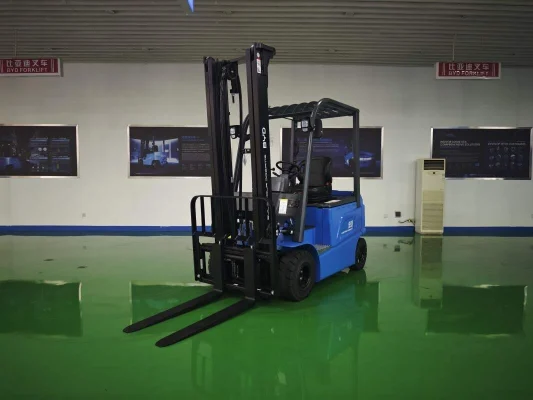
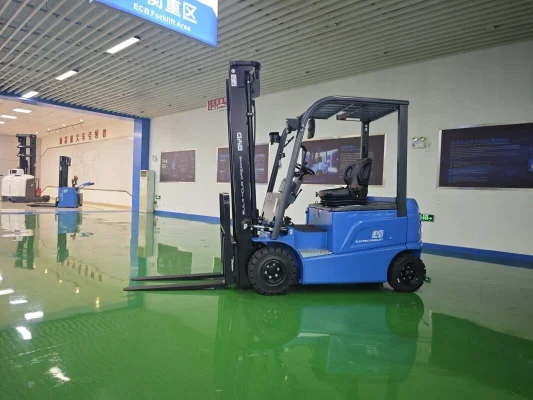
Practical buyers usually care about one branch of that tree: the counterbalance electric family. Within it, the four-wheel version is the common choice when a machine must lift loads from the floor, travel with them, and stack them at height without outriggers or a stabilizing base. Three-wheel units turn tighter but trade away some stability at height; reach trucks work narrow aisles but are not general loading-dock machines. This article focuses on the four-wheel counterbalance electric configuration and the conditions that make it a sensible fit.
The Four Selection Variables That Decide the Configuration
Configuration is not a matter of preference. It follows from four measurable conditions. Gather these before comparing models, because each one constrains the others.
Load Weight and Load Center
Rated capacity is stated at a specific load center, usually 500 mm or 600 mm from the fork face. A load whose center sits farther out reduces the safe capacity, so a machine rated at a given weight may not handle that same weight when the pallet is deep or the load is offset. Confirm the actual load weight, the pallet depth, and the load center you will work with. Do not assume the nameplate figure applies to every load.
Lift Height and Mast Choice
Required lift height determines mast type and affects residual capacity. Higher lifts generally reduce the weight a machine can handle safely, and the manufacturer’s capacity chart shows how much. You need the highest shelf or rack beam, the free-lift requirement if you work inside trailers or containers, and any overhead obstructions such as sprinklers or door tracks.
Aisle Width and Ground Conditions
Measure the narrowest aisle, the door openings, and the turning space at the end of each run. Four-wheel counterbalance machines need more room to turn than three-wheel units, so confirm the dimensions with the actual model rather than a generic assumption. Floor condition, inclines, dock plates, and outdoor surfaces also matter; ramps and uneven ground change both traction and safe operating practice.
Shift Pattern and Charging Window
Shift length, the number of shifts per day, and the time available to charge or change batteries shape the power decision. A single-shift operation with a long overnight window has different needs from a three-shift operation with little idle time. Ask what charging infrastructure is available, whether opportunity charging is realistic, and how battery changes would be handled if needed. These answers belong in the specification conversation, not after delivery.
How These Variables Interact in Practice
The four conditions are linked. A heavier load at height reduces the usable capacity, which may push you toward a larger machine, which in turn needs more aisle space. A narrow aisle may rule out the four-wheel configuration altogether. Long shifts may favor a larger battery or a different charging plan, which affects the space and electrical capacity you need at the charging point.
Consider a hypothetical application: a distribution center unloading pallets from trailers and putting them away at 6 m in aisles roughly 3.5 m wide, running two shifts. The team would need to confirm load weight and center, check the capacity chart at 6 m, verify the model’s actual turning dimensions against the aisle, and plan a charging or battery-change routine that covers both shifts. None of those numbers can be assumed; each comes from the load data and the manufacturer’s technical documentation.
Configuration Checks Before You Request a Quote
A clear specification shortens the selection process and reduces the risk of a machine that cannot do the job. The table below lists what to collect and why it matters.
| Item to confirm | Why it matters |
|---|---|
| Maximum load weight and load center | Determines rated capacity at your actual load position |
| Highest lift height and free-lift need | Sets mast type and residual capacity at height |
| Narrowest aisle and turning space | Confirms the model fits your layout |
| Floor, ramp, and outdoor conditions | Affects traction, tire choice, and safe practice |
| Shifts per day and charging window | Shapes battery and charging decisions |
| Attachments and special handling | Changes capacity and may require a different model |
Common mistakes include quoting capacity without the load center, ignoring residual capacity at full lift height, and measuring aisle width without accounting for the load overhang. Another frequent error is planning charging around a single-shift habit when the operation actually runs longer. Correcting these points early avoids surprises later.
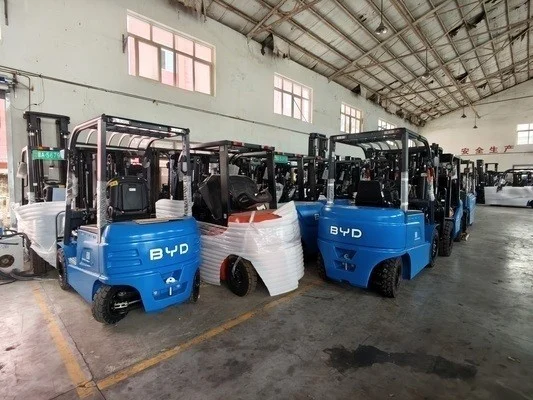
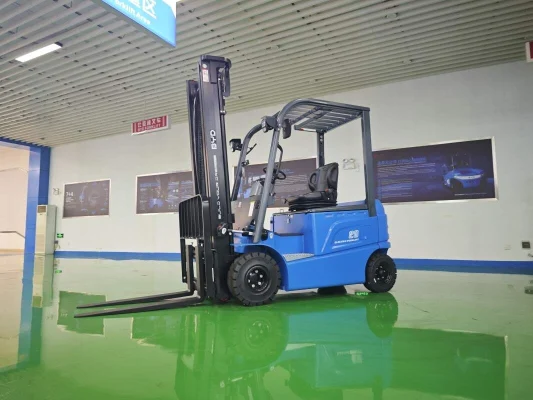
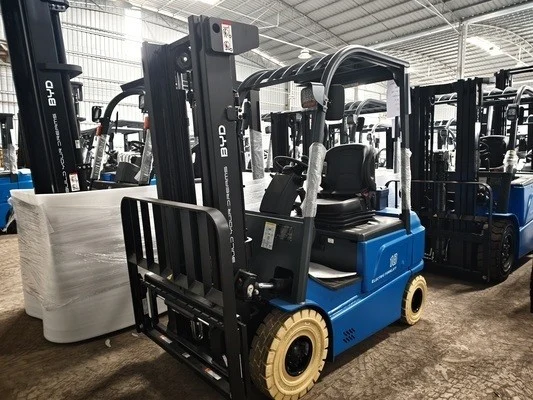
When you have these figures, share them with the supplier so the recommended configuration rests on your real conditions rather than a generic catalog entry. Our range covers BYD four-wheel counterbalance electric forklifts, including lithium-battery models; selection and configuration depend on the load, lift height, aisle, and shift details you provide. Specifications, options, and availability should be confirmed against current manufacturer documentation.
Frequently Asked Questions
Is a four-wheel counterbalance electric forklift suitable outdoors?
It can be used on paved outdoor surfaces and dock areas, but weather, surface condition, and slope affect safe operation. Confirm tire type and any manufacturer guidance on outdoor use, and do not assume indoor-rated performance carries over to wet or uneven ground.
Can I use the rated capacity at any lift height?
No. Rated capacity is tied to a stated load center, and usable capacity typically falls as lift height increases. Check the capacity chart at your maximum lift height and actual load center before committing to a model.
How do I decide between a four-wheel and a three-wheel counterbalance machine?
Three-wheel units turn in tighter spaces, while four-wheel machines generally offer more stability with heavier loads and higher lifts. The deciding factors are aisle width, load weight, and lift height; verify turning dimensions and capacity data rather than relying on general statements.
What charging information should I prepare?
Note shifts per day, hours of continuous use, the time available to charge, and the electrical capacity at the charging point. These details let the supplier recommend a battery and charging approach that matches your schedule instead of guessing.