Breaking Down What Types of Forklifts Are There and Their Core Application Limitations Across Industrial Settings
News 05/10/2026
Choosing the right forklift directly impacts work site safety, productivity and operational cost. This guide breaks down all common forklift categories, outlines their ideal applications and highlights core limitations users must know before selection.
Common Counterbalance Forklifts
Core Design & Ideal Applications
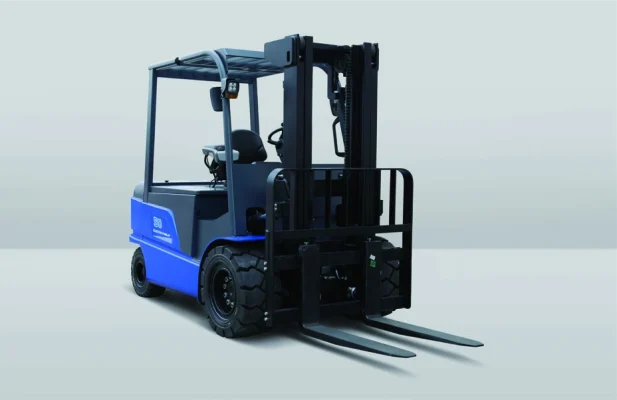
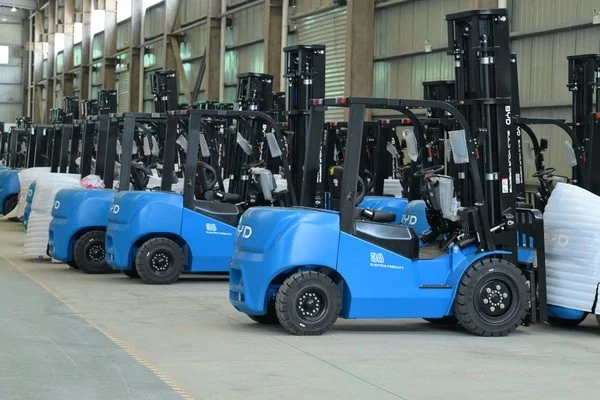
Counterbalance forklifts are the most widely used option across warehouses, manufacturing yards and retail distribution centers. Their design places a weighted counterbalance at the rear of the unit, offsetting the weight of loads carried at the front via forks. This design does not require additional supporting outriggers, letting the unit maneuver directly into loading docks and tight storage rows. Counterbalance models work with both indoor and outdoor applications when fitted with appropriate tire types.
Key Application Limitations
Counterbalance units require significant clear space to turn, so they do not work well in extremely narrow aisle warehouses. Their counterbalance weight adds overall bulk, limiting access to small enclosed work spaces. Standard counterbalance models also cannot safely handle extremely long loads, such as full lumber bundles, without special adaptations. Outdoor use with standard pneumatic tires requires relatively flat, paved ground; uneven or muddy terrain increases tip-over risk.
Narrow Aisle Forklifts (Reach Trucks & Order Pickers)
Core Design & Ideal Applications
Narrow aisle forklifts are built specifically to serve high density storage warehouses. Two primary subcategories exist: reach trucks and order pickers. Reach trucks extend mast and forks to reach loads stored on high racking, making them perfectly match storage facilities aiming to maximize vertical storage space. Order pickers lift the operator alongside the load, letting workers pick individual items directly from storage racks, supporting e-commerce and retail order fulfillment operations. Both types fit into aisles as narrow as 8 feet, compared to 12+ feet counterbalance units require.
Key Application Limitations
Narrow aisle forklifts only work on flat, smooth indoor floors. They do not have design or tire capacity to operate across uneven outdoor ground. Their maximum load capacity typically tops out under 5,000 pounds, so they cannot handle heavy bulk loads common in manufacturing or construction sites. They also require specialized racking setups to function safely, so retrofitting an existing warehouse with narrow aisle units adds significant upfront cost.
Rough Terrain Forklifts
Core Design & Ideal Applications
Rough terrain forklifts are built to operate across outdoor unimproved work sites, including construction yards, lumber yards, agricultural operations and remote job sites. They feature large, aggressive tread pneumatic tires, high ground clearance and powerful diesel or gas engines, letting them navigate uneven, muddy, sloped or gravel-covered ground. Most models also have higher ground clearance to clear obstacles common on construction sites.
Key Application Limitations
Rough terrain forklifts are too large and aggressive to use indoors; their heavy weight and thick tread tires damage finished warehouse floors. They also consume more fuel than smaller indoor models, making operating costs much higher during regular indoor work. Their large turning radius makes them a poor fit inside tight indoor aisles or confined work spaces. Maximum lift height is typically lower than narrow aisle models, so they are not ideal suited to high rack storage.
Pallet Jacks
Core Design & Ideal Applications
Pallet jacks (also called pallet trucks) are the simplest low-capacity material handling option. Manual pallet jacks rely on operator physical power to move loads, while electric pallet jacks use powered motors to drive movement. Both are ideal to support short distance load transport, loading and unloading delivery trucks, and moving pallets around retail stock rooms or small warehouses. They have extremely compact design, fitting into tight spaces other forklifts cannot access.
Key Application Limitations
Pallet jacks cannot lift loads to significant heights, so they cannot place or retrieve loads from storage racks. Their maximum load capacity typically tops out at 5,000 pounds with electric models and 3,000 pounds with manual models, so they cannot handle heavy bulk loads. Manual models require significant physical effort from operators, increasing risk of worker strain during long shifts. Electric models require regular battery charging, limiting uninterrupted run time without scheduled breaks.
Telehandlers
Core Design & Ideal Applications
Telehandlers (also called telescopic handlers) feature an extendable boom that can fit multiple attachments, including forks, buckets and lifting hooks. They are common across construction sites, agricultural farms and large industrial job sites, where they need to lift loads to high places or reach areas inaccessible to standard forklifts. They can place building materials on upper levels of construction projects, lift large hay bales on farms and move heavy bulk materials across uneven job sites.
Key Application Limitations
Telehandlers have large overall size, so they cannot maneuver in tight indoor spaces or narrow aisles. Lifting capacity drops significantly as the boom extends outward, so operators must strictly follow load chart limits to avoid tip-overs. They are not designed to support continuous high-volume load handling in warehouses, so operational efficiency is much lower than purpose-built warehouse forklifts that match this use case.
Frequently Asked Questions
Which forklift type works best in small warehouse settings?
Inside small warehouses with narrow aisles, narrow aisle reach trucks or electric pallet jacks work best, depending on your load size and storage height. If you only move pallets at ground level, electric pallet jacks offer lower cost and greater maneuverability. If you use high vertical racking, reach trucks fit into narrow spaces while offering enough lift height needed to match storage needs.
Can any forklift type work across both indoor and outdoor environments?
Only counterbalance forklifts with dual-purpose tires can safely operate across both settings, even then they require relatively flat outdoor ground. Other forklift types, including narrow aisle units and pallet jacks, lack design features needed to handle uneven outdoor terrain, so use outside recommended environments increases safety risks.
What safety considerations matter when selecting a forklift?
Always match load capacity to your heaviest regular load, confirm clear turning space matches your work site layout, and check that tire and ground clearance fit your work surface. Never exceed a unit’s rated load capacity, as this is the leading cause of forklift tip-over incidents.
Do electric forklifts have unique limitations compared to internal combustion models?
Electric forklifts require regular battery charging or battery swaps, so they need dedicated charging space on site. They also have lower overall capacity in most cases, and cannot operate in extremely cold temperatures without special cold-weather battery configurations. Internal combustion models produce emissions, so they cannot safely operate inside enclosed indoor spaces without proper ventilation.
Actionable Selection Guidance
When selecting a forklift suited to your operations, start by outlining three core factors: your work surface type (indoor smooth floor vs outdoor uneven terrain), maximum load weight you regularly handle, and the amount of maneuvering space available on site. Always test a unit within your actual work space before final purchase or rental to confirm it fits your specific needs. Prioritize safety over extra capacity, as overloading or misapplying a forklift creates unnecessary safety risks and reduces equipment service life. Taking time to match forklift type to your job site requirements ensures you get reliable performance and avoid costly safety or productivity issues down the line.