Sizing an Electric Forklift Battery Around Duty Cycle, Lift Height, and Attachment Load on Four-Wheel Counterbalance Trucks
News 22/10/2026
Selecting the correct capacity battery stands as the most critical step four-wheel counterbalance electric forklift owners and operators take before putting equipment into daily use. Four-wheel counterbalance electric forklift battery sizing directly impacts operational uptime, battery lifespan, overall equipment performance and long-term ownership costs. Getting sizing wrong leads to unexpected mid-shift shutdowns, premature battery degradation, and unnecessary added weight that erodes equipment efficiency. This guide covers core influencing factors, a clear step-by-step calculation process, and answers common questions to help you arrive at the correct battery capacity aligned with your unique operational needs.
Core Factors Influencing Battery Capacity Requirements
Duty Cycle
Duty cycle describes how much work your forklift completes each shift. Operations with continuous movement, multiple load movements per hour, and multi-shift work require higher battery capacity. Operations with intermittent use, such as occasional loading and unloading at a small retail warehouse, can work with lower capacity options. Many small facilities that use their forklift less than four hours total each day, with long gaps between load movements, fall into this category. You do not need extra capacity to cover energy draw you will never actually use. Four-wheel counterbalance electric forklifts rely on consistent battery output to maintain stable lifting and travel performance. Undersized batteries drain too quickly during high-intensity shifts, leading to unexpected downtime mid-operation.
Lift Height
Higher maximum lift heights increase energy draw on your battery. Every time you lift a load to elevated storage positions, your forklift uses more energy than it does moving loads along ground level. Energy use scales with lift height because the forklift’s hydraulic system must work against gravity to raise both load and carriage to elevated positions. The higher you lift, the more energy each lift cycle consumes, even when the load weight stays the same. Operations that regularly lift loads above 5 meters require additional battery capacity to compensate increased energy use across a full shift. Even with moderate duty cycles, consistent high lifting can drain an incorrectly sized battery faster than expected.
Attachment Load
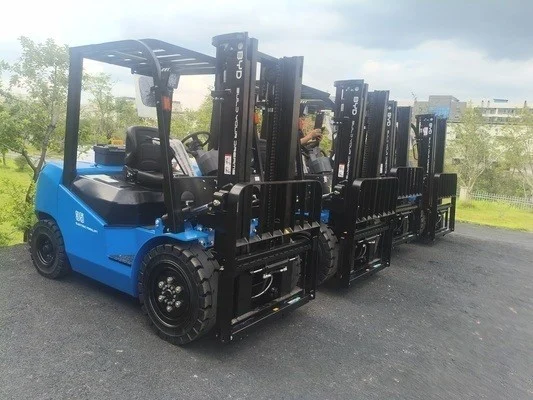
Any attachment mounted to your forklift adds extra weight the system must move. Side shifters, fork positioners, and other common accessories add consistent dead weight that draws additional energy throughout every shift. This extra energy draw happens during every travel cycle and every lift, not just when the attachment is actively adjusted. Many operations overlook this added weight during initial sizing, leading to unnecessary capacity shortages later. If you attach any heavy-duty tooling to your four-wheel counterbalance electric forklift, you must include this extra weight when calculating required battery capacity. Failing to include attachment weight leads to overestimating remaining capacity and unexpected shutdowns.
Step-by-Step Sizing Process
Follow this structured process to narrow down the correct battery capacity your four-wheel counterbalance electric forklift needs. Every site has unique operational conditions, so generic off-the-shelf battery sizes may not match your actual energy consumption needs. This process walks you through each adjustment needed to account for your specific working conditions:
- Map your daily operational requirements: Document total number of load movements per shift, average distance traveled per load, maximum lift height used regularly, and total weight of all permanent attachments. Note how many shifts the forklift completes each day, including any opportunity charging access available at your site.
- Calculate base energy consumption: Start with base capacity matching your forklift rated maximum load. Add 10-20% additional capacity to cover increased consumption from continuous operation.
- Adjust capacity based on lift height: If maximum regular lift height exceeds 4 meters, add another 5-15% capacity to offset higher energy use per lift.
- Add extra capacity to cover attachment weight: Add 1-2% extra capacity per every 100 kilograms of attachment weight.
- Confirm against charging infrastructure: If you use opportunity charging during break periods, you can reduce required total capacity slightly. If you only complete one full charge per shift, you need enough capacity to cover 110% of your calculated total consumption to avoid deep discharges that damage lithium battery cells.
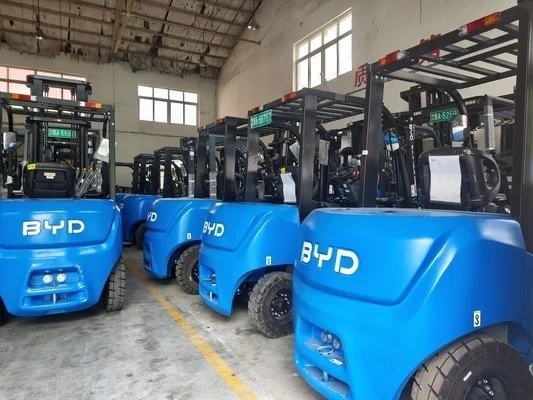
BYD lithium-ion batteries built into four-wheel counterbalance electric forklifts deliver consistent output across longer shifts compared to older lead acid alternatives. Lithium-ion chemistry offers deeper discharge capabilities and more consistent voltage output than traditional lead acid batteries, but even high-quality lithium cells suffer damage when pushed beyond their designed capacity limits on a regular basis. Correct sizing still remains critical to maximize cell lifespan and avoid unplanned downtime. Undersizing any lithium battery increases the frequency of deep discharges, which reduces long-term cell performance over time.
Frequently Asked Questions
Does higher capacity battery improve my forklift performance?
Higher capacity beyond your operational needs adds unnecessary extra weight to your forklift, which can reduce maneuverability and increase tire wear. Only add capacity needed to cover your actual daily operations; oversized batteries bring no meaningful benefit to most work sites.
Can I use a smaller battery if I opportunity charge my forklift?
Opportunity charging during breaks can offset some energy consumption, allowing you to select a slightly smaller battery than you would need with single full daily charges. Always confirm your total daily energy consumption before adjusting size; many sites underestimate how much energy their operations use, leading to unexpected late-shift drain.
How does attachment weight change battery size requirements?
Every extra kilogram your forklift must move draws extra energy during travel and lifting. Heavier attachments add consistent energy draw across every movement, so you must include their total weight when calculating required battery capacity. Even lightweight attachments add enough extra energy use to create issues with incorrectly sized batteries over full shifts.
To get accurate sizing recommendations matching your specific operational conditions, share your daily workload, load rating, and maximum lift height needs with our team, we can help you identify the correct lithium battery configuration your BYD four-wheel counterbalance electric forklift needs.