Electric Forklift Battery Weight: How It Affects Stability and Rated Capacity on Four-Wheel Counterbalance Trucks
News 21/10/2026
Electric forklift battery weight plays a critical role in overall performance of four-wheel counterbalance electric forklifts. This core component contributes directly to the truck’s balance system, which dictates operational safety and maximum safe load capacity. Buyers often focus only on energy capacity or battery life when evaluating electric forklifts, but weight is just as critical to long term safe operation. Many buyers new to electric forklifts overlook battery weight specifications, leading to unexpected safety issues or reduced capacity after delivery. This guide breaks down the core connections between battery weight, stability and rated capacity to help you understand key specifications when evaluating equipment.
Core Relationship Between Battery Weight and Counterbalance Design
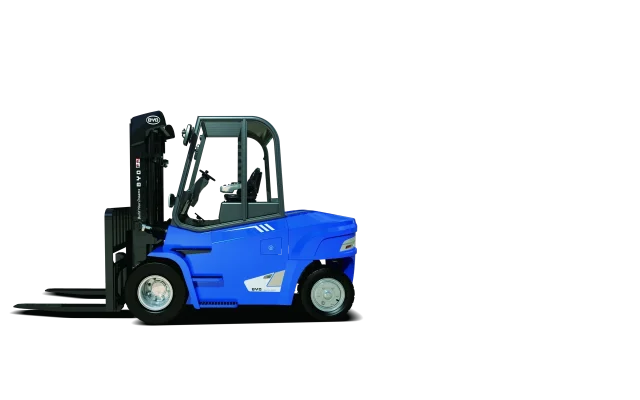
Four-wheel counterbalance electric forklifts get their name from the rear balancing system that offsets load weight carried on front forks. This balance prevents the truck from tipping forward when lifting heavy loads. Internal combustion models rely on heavy cast iron blocks mounted at the rear as dedicated counterweight. Electric models integrate battery mass into this balancing system, cutting requirement of extra dedicated counterweight components and keeping overall machine dimensions compact.
Why Battery Acts As Part of the Counterweight System
Integrating battery mass into the counterbalance system cuts unnecessary component weight and simplifies overall truck design. Different battery chemistries deliver very different weight figures: traditional lead-acid batteries often weigh twice as much as lithium iron phosphate batteries with the same energy output. Manufacturers adjust overall counterbalance design to match the specific weight of the installed battery type. BYD designs its entire line of four-wheel counterbalance electric forklifts around its own integrated lithium batteries, so all balance calculations align with the battery’s fixed weight.
Key Impacts on Stability and Rated Capacity
Any deviation from the manufacturer’s specified battery weight changes the truck’s overall center of gravity, which creates measurable changes to both stability and safe maximum load. Below we break down the two core impacts:
Impact On Operational Stability
Stability refers to the truck’s ability to resist tipping during operation, split into two categories: longitudinal (forward/backward) and lateral (side-to-side). Battery weight directly impacts the location of the truck’s combined center of gravity, which is the foundation of stability.
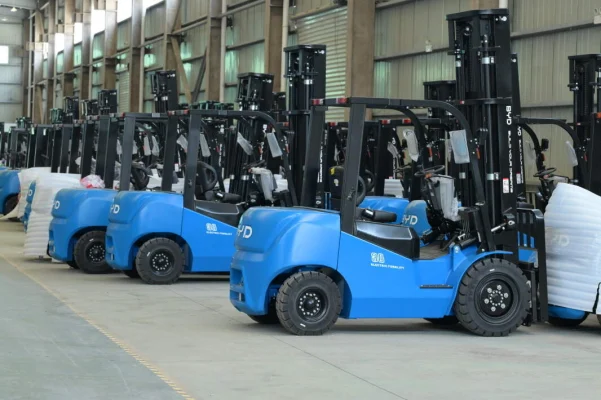
- Insufficient battery weight: Shifts center of gravity forward when forks carry a full load. This increases risk of forward tipping, especially when lifting loads to maximum height or traveling on uneven ground.
- Excess battery weight: Shifts center of gravity rearward. This reduces forward tipping risk but increases backward tipping risk when forks are unloaded, and adds unnecessary overall weight that reduces maneuverability and increases tire wear.
Sharp turns, heavy loads and sloped ground all amplify stability issues caused by incorrect battery weight. Maintaining battery weight matching the manufacturer’s specification is the first step to safe operation.
Impact On Rated Load Capacity
Rated load capacity is the maximum safe load a forklift can carry at a standard load center, set based on the truck’s original balanced design. Any change to battery weight outside the approved specification invalidates this rating. Take this case: a lighter than specified battery means the maximum safe load drops, even if the lift hydraulics can physically handle the load mass. Overloading beyond the adjusted safe limit creates severe safety hazards.
Reputable manufacturers calibrate every four-wheel counterbalance electric forklift around the specific weight of its matched battery. BYD’s lithium-powered models get full calibration during production, so rated capacity matches published specifications when the truck uses its original integrated battery.
Frequently Asked Questions
Does a lighter lithium battery reduce forklift stability?
This outcome depends entirely on the manufacturer’s original design. When BYD engineers develop four-wheel counterbalance electric forklifts with lithium batteries, they adjust the entire counterbalance system to account for the battery’s lower weight. The finished production truck meets all required stability standards and does not carry extra safety risk. Stability issues only arise when you replace an original battery with an aftermarket unit that has incorrect weight, not when the truck leaves the factory with a matched lithium battery.
Can I add extra weight to the battery compartment to increase load capacity?
Modifying your forklift by adding unapproved extra weight alters the original engineered balance. This voids most manufacturer warranties and creates unforeseen safety hazards, including increased tip-over risk across multiple operating conditions. Never add unapproved weight to any production four-wheel counterbalance electric forklift. Work with your supplier to source a truck engineered to match your required load capacity from the start.
How do I confirm the correct battery weight my forklift needs?
Correct battery weight is an engineered specification set exclusively by the forklift manufacturer. You can find this information in your original operator manual, or share your truck model number with your supplier to get the exact specification. If you are purchasing a new BYD four-wheel counterbalance electric forklift, our team matches the correct battery and balance system to your required load and application needs upfront.
If you have specific questions about battery specifications your planned purchase requires, share your application details, load requirements and work environment with our team to get personalized guidance.