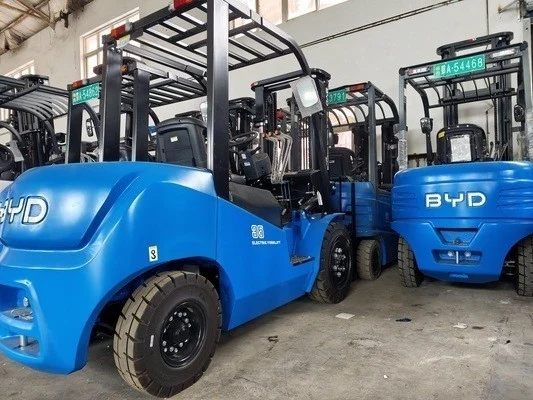
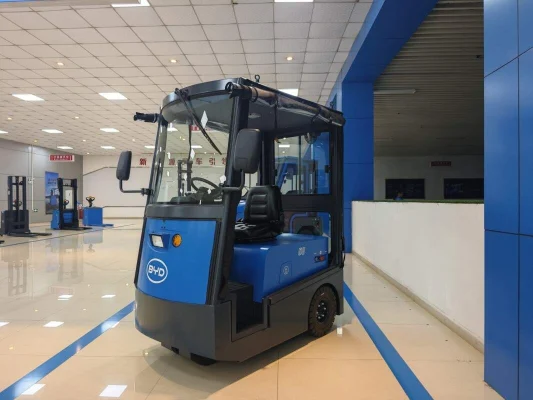
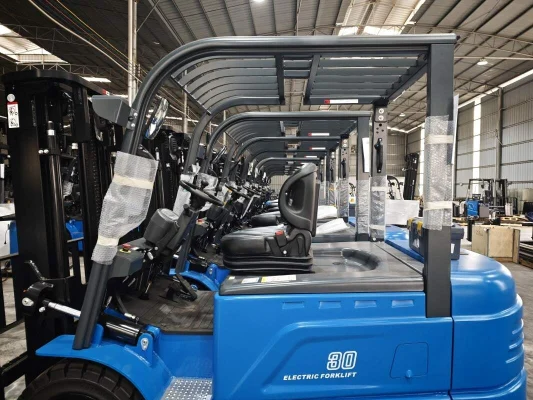
Electric Forklift for Sale Near Me: Matching Counterbalance Load Capacity and Battery Configuration to Your Actual Duty Cycle
News 13/11/2026
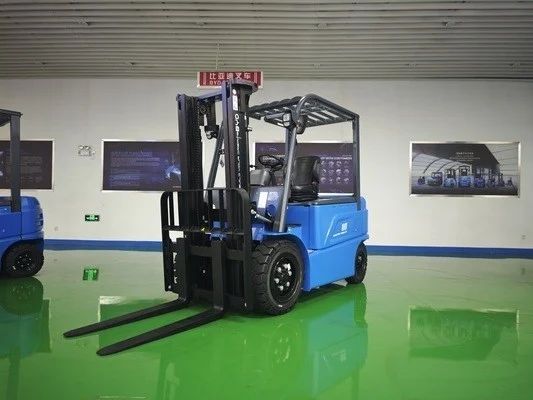
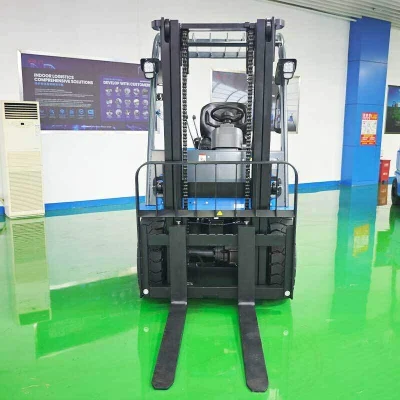
Searching “electric forklift for sale near me” usually means you need a four-wheel counterbalance electric forklift that fits a specific job—not just any truck on a nearby lot. The right match depends on your actual duty cycle: how much you lift, how high, how often, and how your shifts align with charging. This guide walks through the selection factors that matter most, with a focus on four-wheel counterbalance electric models, including lithium-ion configurations. It avoids invented specifications; instead, it shows what to verify with a local dealer and your own operation data.
Start With the Job, Not the Truck
Before comparing models, document the work the forklift will do. A clear duty-cycle profile prevents overbuying capacity or choosing a battery that cannot keep up. Gather these inputs:
- Load weight and attachment: Record the heaviest routine load and any clamps, forks, or other attachments. Attachments shift the load center and can reduce net capacity.
- Lift height and load center: Note the highest shelf or rack beam and the horizontal distance from the fork face to the load center. Capacity ratings depend on both.
- Travel distance and aisle width: Measure typical travel paths and the narrowest aisle. Four-wheel counterbalance trucks need adequate turning space; confirm dimensions with the dealer.
- Shift pattern and intensity: Count hours per shift, lifts per hour, and breaks. This drives battery size and charging strategy.
- Floor and ramp conditions: Identify slopes, dock plates, floor surfaces, and any wet or contaminated areas. Traction and braking requirements follow.
- Charging infrastructure: Check available power, space, and time windows for charging or battery exchange.
These details let you compare quoted capacities on equal terms and avoid a truck that is technically rated for the load but unsuited to the cycle.
Load Capacity: Reading the Data Plate Correctly
Every counterbalance forklift has a capacity rating that assumes a specific load center and lift height. The rated capacity on the data plate is not a single number that applies to all conditions. As lift height increases or load center moves outward, remaining capacity typically decreases. When evaluating a truck, ask the dealer to show the capacity chart and confirm the net capacity at your actual lift height and load center, with any attachment installed.
Common mistakes include:
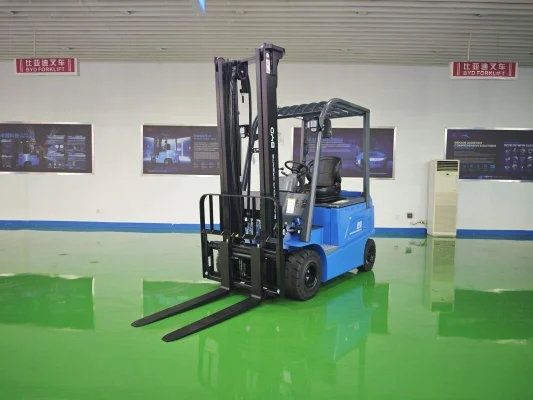
- Using the maximum capacity without checking the load center.
- Ignoring the weight of attachments such as side shifters or clamps.
- Assuming a higher lift height does not affect capacity.
- Overlooking the weight of pallets, packaging, and load imbalance.
For a four-wheel counterbalance electric forklift, the longer wheelbase and counterweight usually support higher residual capacities than three-wheel models, but the only reliable figure comes from the manufacturer’s capacity chart for the specific model and configuration. Request that chart in writing.
Battery Configuration and Duty Cycle
Battery choice affects uptime, charging logistics, and long-term operating cost. Lithium-ion batteries are common in new electric forklifts, but the right configuration depends on your shifts and available charging time. Key considerations:
- Energy demand: Estimate total run time and lift cycles per shift. The dealer can translate this into an approximate battery capacity (kWh) based on the truck’s consumption, but verify with a duty-cycle calculation rather than a rule of thumb.
- Charging window: Opportunity charging during breaks can work if the battery and charger support it. Confirm the manufacturer’s recommended charging profile and any limitations.
- Battery exchange: If multiple shifts run without charging breaks, a spare battery and exchange plan may be needed. Check whether the truck is designed for easy exchange.
- Temperature: Charging and discharging performance vary with temperature. If your operation includes cold storage or outdoor docks, ask the dealer to confirm the battery’s operating and charging temperature limits and any available cold-weather packages.
- Battery management system (BMS): The BMS protects the battery and may limit power or charging under certain conditions. Understand how it affects available performance at your typical loads.
Do not accept generic runtime claims. Request a duty-cycle assessment based on your data, and confirm the charging equipment requirements.
Specification Checklist and Supplier Questions
Use the table below to organize your comparison. The “Typical industry concern” column reflects common issues, but your operation may differ. The “What to verify” column lists items to confirm with the supplier; treat any specification not supported by documentation as unverified.
| Parameter / configuration | Why it matters | What to verify with supplier | Standard or optional |
|---|---|---|---|
| Rated capacity at load center and lift height | Ensures safe handling of actual loads | Capacity chart for your load center and max lift height; net capacity with attachment | Model-specific; request documentation |
| Battery type and capacity (kWh) | Matches energy demand to shift length | Duty-cycle calculation; recommended depth of discharge; charging time | Lithium-ion typically standard; capacity varies |
| Charging profile and charger compatibility | Affects uptime and battery life | Onboard or external charger; opportunity charging limits; input power requirements | Often optional; confirm |
| Operating temperature range | Performance and safety in cold or hot environments | Battery and truck temperature limits; cold-weather package availability | Check model-specific data |
| Turning radius and aisle width | Maneuverability in tight spaces | Dimensions; recommended aisle width for your rack layout | Model-specific |
| Attachments (side shift, clamp, etc.) | Affects capacity and load handling | Net capacity with attachment; hydraulic requirements | Optional; dealer-installed |
Ask the dealer these questions:
- Can you provide the capacity chart for the exact model and configuration quoted?
- What battery capacity do you recommend based on our duty-cycle data, and what assumptions did you use?
- What charging infrastructure is required, and can we use existing chargers?
- What are the battery’s operating and charging temperature limits?
- What maintenance and warranty terms apply to the battery and truck?
- Can you arrange a site assessment to confirm aisle and floor conditions?
If you are considering a specific four-wheel counterbalance electric forklift, share your load, lift height, shift pattern, and charging constraints with the dealer so they can propose a configuration that fits. Avoid relying on a generic quote that does not reflect your actual cycle.
Frequently Asked Questions
How do I know if a four-wheel counterbalance electric forklift is right for my warehouse?
It is often a good fit when you need to lift loads to rack heights and have enough aisle width for the truck’s turning radius. Check the capacity at your required lift height and load center, and confirm the aisle dimensions with the dealer. If your aisles are very narrow or you need very high lifts, a different truck type may be more suitable; a four-wheel counterbalance model has physical limits.
Can I use opportunity charging with a lithium-ion battery?
Many lithium-ion batteries support opportunity charging, but the manufacturer’s charging profile and BMS limits determine what is acceptable. Confirm with the supplier whether partial charging during breaks fits their recommendations and how it affects battery life. Do not assume all lithium-ion batteries behave the same.
What information should I provide to get an accurate quote?
Provide maximum load weight, load center, highest lift height, aisle width, shift hours, lifts per hour, floor and ramp conditions, and available charging time and power. Also note any attachments. This lets the dealer recommend a capacity and battery configuration that matches your duty cycle.
How does cold storage affect battery choice?
Cold temperatures can reduce available battery capacity and affect charging. Ask the dealer for the battery’s operating and charging temperature limits and whether a cold-weather package is available. For continuous cold-storage work, confirm that the truck’s components and lubricants are rated for those temperatures. Do not rely on general claims; request model-specific data.