Electric Forklift UK Procurement: Cross-Checking Mast Height and Overhead Door Clearance Before Ordering a Four-Wheel Counterbalance Unit
News 09/11/2026
An electric forklift UK procurement review often stalls on one detail: the mast must pass under every door the truck will use, and it must still reach the required lift height once inside. These two numbers pull against each other. A taller mast lifts higher but needs more headroom, and a lower collapsed height may limit free lift or maximum lift. Before you confirm a purchase order, treat mast height and door clearance as a matched pair of specifications rather than two separate line items.
Why Mast Height and Door Clearance Must Be Checked Together
Mast dimensions are usually quoted in three states: lowered or collapsed height, extended height, and sometimes free lift. Door clearance is a fixed building measurement. The truck must fit through the opening with the mast fully lowered, and any overhead guard, load backrest or optional attachment must also clear the frame.
Two practical traps appear during procurement:
- Measuring the door, not the opening. Roller shutters, lintels, fire doors and cable trays reduce the true clear height. Measure the lowest obstruction across the full width of the doorway.
- Ignoring the approach. A truck can clear a doorway but still strike a low beam, pipe or mezzanine edge on the route to it. The clearance check applies to the whole travel path, not only the entrance.
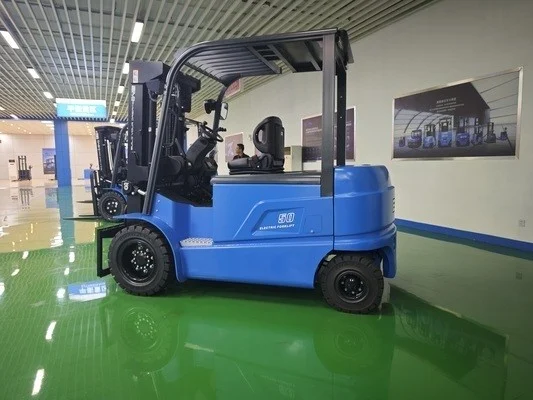
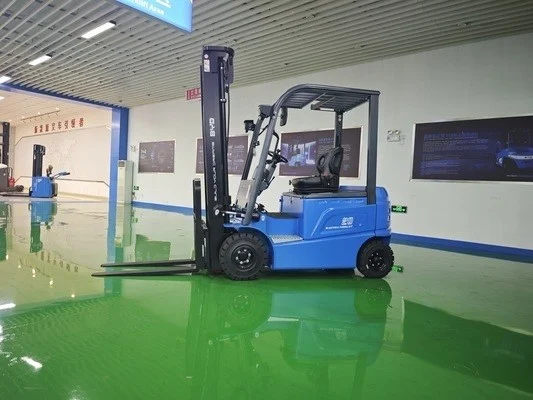
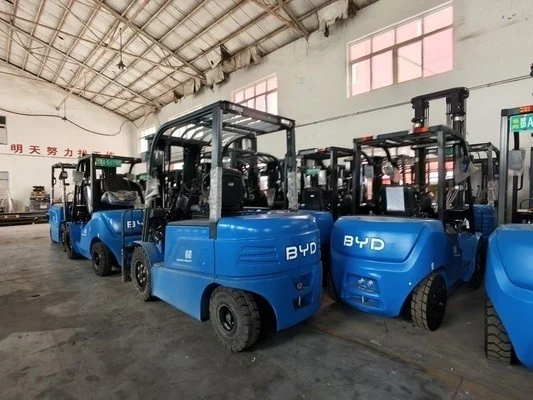
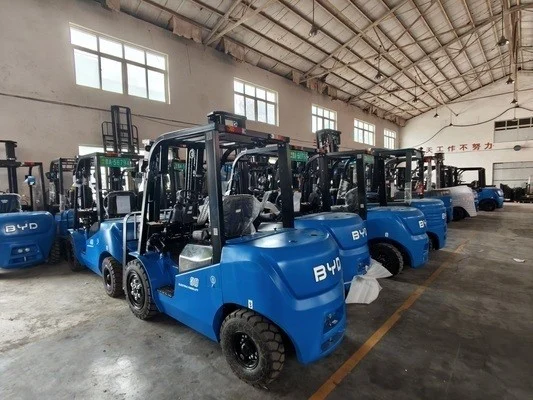
On a four-wheel counterbalance electric forklift, the mast sits at the front and the overhead guard protects the operator. Both contribute to the height envelope. A specification sheet gives nominal figures; the actual clearance depends on tyres, suspension state and any fitted options.
Information to Gather Before You Request a Quotation
A supplier cannot confirm a suitable configuration without site facts. Collect these before approaching any dealer, including this site’s four-wheel counterbalance electric forklift range.
Building and route measurements
- Clear height at every doorway, including the lowest point of the opening.
- Clear height under mezzanines, pipework, sprinkler heads, lighting and roller doors along the full route.
- Door width and aisle width at entrances, corners and racking.
- Floor condition, slopes and any ramps, since gradients affect safe operation.
Load and lift requirements
- Maximum load weight, plus the weight of any attachment.
- Required lift height to the fork surface, not just the rack beam height.
- Load centre distance, which determines the rated capacity at height.
- Whether loads are handled at height while travelling, or only when stationary.
Operating context
- Shift pattern and daily run time, which inform battery capacity and charging arrangements.
- Indoor, outdoor or mixed use, and any exposure to rain or dust.
- Charging location and available power supply.
Write these figures down with the date and who took the measurement. Verbal estimates are a common source of ordering errors.
Cross-Checking the Specification Against the Site
Once you have site data, compare it with the manufacturer’s technical documentation. Do not accept a sales summary alone; ask to see the relevant specification pages.
| Check | What to confirm | Common error |
|---|---|---|
| Collapsed mast height | Lowered height with the specified fork carriage and any attachment | Using the base model figure when an attachment adds height |
| Doorway clearance | Lowest obstruction across the full opening | Measuring only the door frame, not the shutter box |
| Overhead guard | Overall height of the truck as configured | Assuming the guard is lower than the mast |
| Lift height | Rated lift against required height at the stated load centre | Confusing maximum lift with rated capacity at that height |
| Route obstructions | Every low point on the travel path | Checking only the main entrance |
Allow a working margin between the truck’s height and the lowest obstruction. The exact margin should follow the manufacturer’s guidance and your site risk assessment; this article does not set a universal figure. A truck that only just fits leaves no room for floor unevenness, tyre wear or minor load shifts.
If the collapsed height cannot clear a doorway, options may include a different mast profile, a lower-profile overhead guard where the manufacturer offers one, or a change to the route or building. Each option has trade-offs in lift height, capacity or cost, and should be confirmed against the actual specification rather than assumed.
Acceptance Checks and Questions to Settle Before Ordering
Before signing, confirm the configuration in writing and plan how you will verify it on delivery.
- Ask the supplier to state the collapsed height, overall height and lift height of the exact configuration quoted, referencing the technical datasheet.
- Confirm which tyres and attachments are included, since these affect dimensions and capacity.
- Agree a handover check that measures the delivered truck against your doorway and route figures.
- Clarify battery type, charger specification and charging location requirements.
- Confirm warranty terms, service arrangements and spare parts support in the UK.
- Ask what documentation accompanies the truck, such as a declaration of conformity and operator manual.
Keep the site measurements and the quoted specification together in the procurement file. If a future building change alters clearance, you will have a record of the assumptions the order was based on.
Frequently Asked Questions
Is collapsed mast height the same as the truck’s overall height?
Not necessarily. The overhead guard, load backrest or an attachment can be the tallest point. Check the overall height of the configured truck, not just the mast.
Can a mast be shortened to fit a low doorway?
Mast profiles are engineered products, and changing one is not a simple adjustment. Ask the manufacturer whether an alternative mast or lower guard is available, and confirm the effect on lift height and rated capacity.
What if the doorway is fine but the route is not?
The truck must clear every point on its travel path. Map the route and measure low beams, pipes and doorways before ordering, or plan a different route.
Does lift height affect capacity?
Rated capacity depends on load centre and lift height. A load that is within capacity at low height may exceed it at full lift. Confirm the capacity rating at your required height and load centre.