Evaluating Load Stability and Safety Performance Across Different Forklifts Type
News 14/10/2026
Material handling operations depend on consistent load control and operator safety. Different forklift designs prioritize different capabilities, so understanding how each type performs in terms of load stability and safety helps operations leaders avoid costly tip-overs, load drops and workplace injuries. This guide breaks down key performance differences across common categories, outlines practical selection guidance and addresses common questions surrounding this topic.
Key Factors Impacting Load Stability Across Different Forklift Designs
Load stability relies on how well a forklift maintains its center of gravity during operation. Several core design choices shape this outcome regardless of overall category.
Chassis and Weight Distribution
Every forklift places its weight across the chassis to offset the weight of carried loads. Counterbalance models place additional weight toward the rear to counter forward loads. Compact pallet jacks locate all weight close to the ground, which supports good stability at low lift heights. Rough terrain forklifts feature wider wheel bases to widen the stability triangle and improve performance on uneven ground.
Lift Mast Design
Mast design also directly impacts overall stability. Two-stage masts offer greater rigidity than three-stage masts, because fewer moving sections reduce flex at full lift height. Three-stage masts enable higher lift heights within compact storage spaces, but introduce slight flex that reduces maximum load stability at full extension. Reach masts add another moving component that shifts the load forward, requiring stricter weight limits at extended reach positions.
Safety Performance Comparisons Common Forklift Categories
Each common forklift type comes with inherent stability traits and safety characteristics that match specific use cases. Below we outline core performance attributes of the most widely used models:
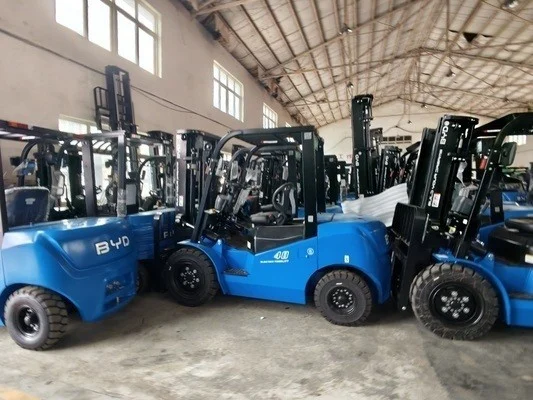
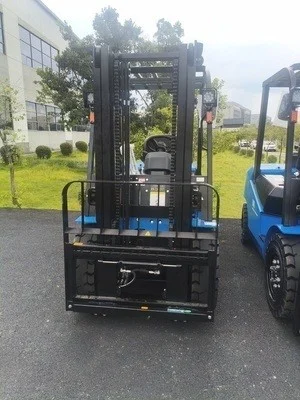
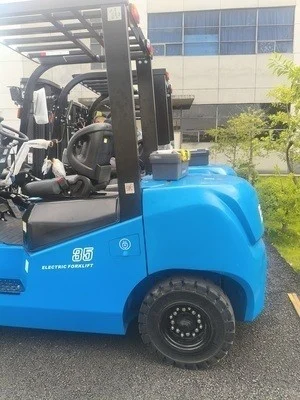
Counterbalance forklifts: This category includes both indoor electric and outdoor internal combustion models. The rear-weighted chassis creates a wide stable base that handles heavy loads well. These models perform reliably on slightly uneven surfaces and deliver consistent safety when loading and unloading trucks.
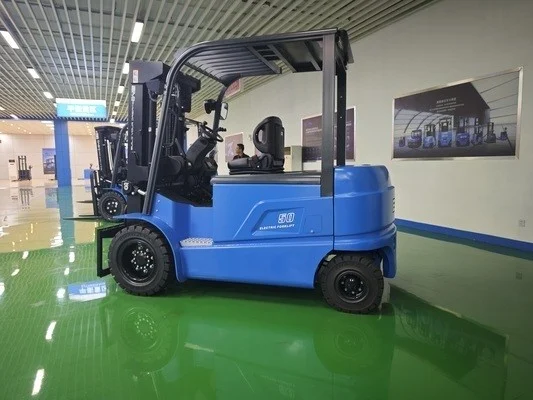
Reach forklifts: Engineered to work within narrow aisle high-bay warehouses, these models feature extending masts that reach into racking positions. Stability decreases as mast height and reach extension increase, so operators must strictly follow published load limits at specific heights. They work best on smooth flat indoor surfaces, and struggle with uneven ground.
Pallet jacks: Walk-behind and ride-on pallet jacks handle low-lift transport of palletized loads. All operations occur close to the ground, so inherent stability remains high. Safety risks typically come from improper load sizing rather than design-related instability. They do not lift loads to significant heights, so they cannot support stacking or racking operations.
Side loaders: These models carry long loads such as lumber or pipe along the side of the chassis. This design keeps the center of gravity low and stable when moving long items that would otherwise block operator visibility or create imbalance on standard counterbalance models. Stability drops when lifting heavy long loads to full height, so speed and maneuvering restrictions apply.
Practical Selection Guidance Based On Application Needs
Choosing the right forklift requires matching design strengths to your specific operational requirements. Follow these actionable steps narrow your options:
First, document core operational conditions. Note whether work occurs primarily indoor or outdoor, what average surface conditions look like and what maximum lift height you need. Outdoor work on uneven or unpaved surfaces requires a wider wheel base and low center of gravity, pointing toward counterbalance rough terrain models. Indoor narrow aisle high racking needs the extended reach capabilities reach forklifts provide.
Second, map your typical load sizes and weights. Long awkward loads such as steel beams or lumber work best with side loaders, which maintain better stability than standard counterbalance models carrying the same load. Small palletized loads moving short distances across the warehouse fit well with pallet jacks, which offer high inherent stability at lower acquisition and operating costs.
Third, test stability under your maximum expected load conditions. Before finalizing purchase or rental, test the forklift carrying your maximum rated load at your maximum required lift height. This lets you observe any mast flex or balance shifts that impact safe operation in your specific workspace.
Common Limitations You Must Consider
Even well-designed forklifts carry inherent limitations that impact safe operation. You must consider these limitations during daily use to avoid safety incidents:
All reach forklifts lose stability as mast extension and lift height increase. You cannot carry maximum rated loads at maximum lift height on most models, so always check the manufacturer’s load chart before operating. Counterbalance forklifts can struggle in narrow aisles, because their longer chassis requires more turning space. Attempting to maneuver in tight spaces increases risk of striking racking or losing load control.
Pallet jacks can only lift loads a few inches off the ground, so they cannot support any stacking operations. Rough terrain forklifts tend to have higher overall chassis heights that reduce maneuverability inside enclosed warehouse spaces. Ignoring these inherent limitations creates unnecessary safety risks that easy planning can avoid.
Frequently Asked Questions
Which forklift type offers the best overall load stability?
No single type delivers top performance across all scenarios. Counterbalance forklifts deliver the highest stability when working with heavy loads on uneven outdoor surfaces. Reach forklifts balance strong stability and high lift height capabilities matching indoor warehouse needs.
How does rated load capacity connect to load stability?
Load capacity ratings reflect a manufacturer’s calculation of the maximum safe weight a given forklift can handle under specified operating conditions. Exceeding your rated capacity shifts the overall center of gravity beyond safe limits and dramatically increases risk of tip-over accidents. Always follow published capacity guidelines listed on your forklift’s load chart.
Do electric forklifts have worse stability than internal combustion models?
Stability depends on overall chassis design, not power source. Many electric forklifts place heavy battery packs low within the chassis, which actually lowers the overall center of gravity and improves stability compared to similar sized internal combustion models. Internal combustion models gain weight from their engine and fuel tank, which can also support good stability depending on placement.