Four-Wheel Counterbalance Electric Forklift: Key Questions About Overhead Guard and Operator Compartment Design on a 2.5 Ton Electric Forklift
News 11/11/2026
A 2.5 ton electric forklift is a common working weight class in warehousing, loading docks, and light manufacturing. Buyers comparing four-wheel counterbalance electric forklifts often focus on load capacity and battery type, then treat the overhead guard and operator compartment as details. In practice, these two areas shape daily comfort, visibility, and safe operation as much as the drivetrain does. This comparison looks at the main design questions buyers should raise, the trade-offs behind common configurations, and the conditions where one approach suits a task better than another.
Why the Overhead Guard and Operator Compartment Deserve a Closer Look
The overhead guard is the structure above the operator. It protects against falling objects when the forklift handles stacked or elevated loads. The operator compartment covers everything the driver touches and sees: seat, steering, hydraulic controls, display, floor space, and entry steps. Neither area changes the rated load on its own, but both affect how safely and efficiently a shift runs.
Two 2.5 ton electric forklifts with similar capacity can feel very different after eight hours. A guard with closely spaced bars protects more but blocks upward visibility. A compartment with generous legroom may reduce space available elsewhere. These are genuine trade-offs, not defects, so the right answer depends on the task.
Readers comparing models should treat these features as selection criteria with their own logic, separate from battery voltage or lift height. The sections below compare common design choices along shared dimensions: protection, visibility, ergonomics, and maintenance access.
Overhead Guard Designs: Protection Versus Visibility
Overhead guard construction varies in bar spacing, material, and mounting. Each choice shifts the balance between falling-object protection and the operator’s view of the load.
Common guard configurations
- Closely spaced bars: better shielding against small falling items; more visual obstruction when looking up at high racks.
- Wider bar spacing: clearer upward view; less protection against small debris, so site rules may require additional measures.
- Integrated guard and mast mounting: a rigid structure tied into the chassis; can improve stiffness but complicates certain service tasks.
- Removable or hinged sections: useful where battery access or maintenance requires clearance; adds components that need inspection.
No configuration wins universally. A warehouse handling palletized goods at moderate heights may value visibility. A yard handling loose or stacked material may prioritize shielding. Buyers should check whether local regulations or site safety policies set minimum guard requirements, and confirm the guard rating with the manufacturer’s technical documentation rather than assuming a value.
Questions to ask about the guard
- What falling-object protection does the guard provide, and under what test or standard is it rated?
- How much does the guard obstruct the view when the mast is raised?
- Does the guard interfere with battery removal or routine service?
- Are there sharp edges, loose fasteners, or gaps that could trap debris?
If documentation does not state a rating, treat the guard as unverified and request clarification. Do not assume that a heavier-looking guard offers more protection.
Operator Compartment Choices: Ergonomics, Access, and Control Layout
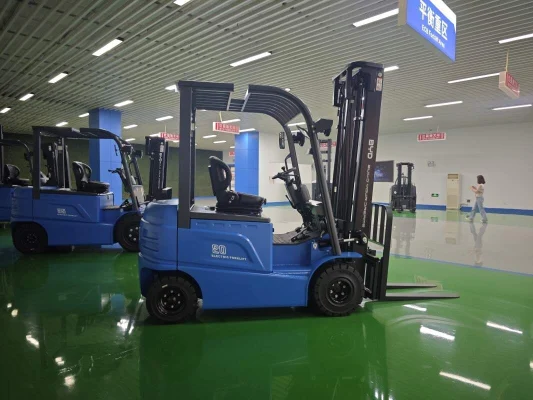
The compartment determines how tiring a shift feels and how quickly an operator can enter, exit, and react. On a 2.5 ton electric forklift, compartment design also interacts with battery placement, since many lithium models locate the battery under or behind the operator area.
Seat and control arrangement
Seat suspension, adjustability, and control placement are the most direct comfort factors. A suspended seat with fore-aft adjustment suits operators of different sizes and reduces vibration on uneven floors. Joystick or lever hydraulic controls should fall naturally to hand without forcing the operator to lean. Display placement matters too: a screen that requires looking down or twisting distracts from the travel path.
Compare models by sitting in them if possible. A compartment that looks spacious on a specification sheet may place the steering wheel too far from the seat or crowd the knees against the dashboard.
Entry, exit, and floor space
Frequent mounting and dismounting is common in loading and order-handling work. Wide, clearly marked steps and a grab handle reduce strain and the risk of slips. Flat, unobstructed floor space helps the operator reposition feet during long shifts. In cramped aisles, a compact compartment may be preferable even if it offers less legroom.
Visibility from the driving position
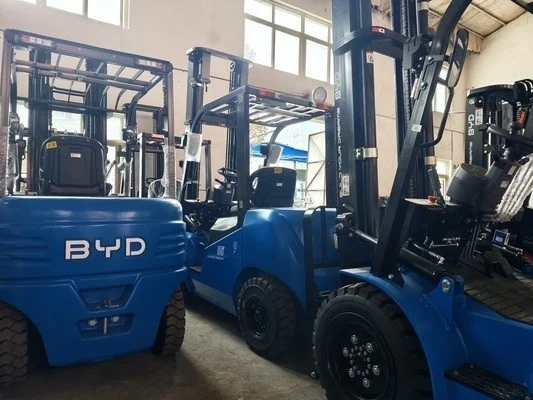
Good visibility depends on the combined effect of mast, guard, and compartment layout. Ask how the dashboard height, hood profile, and guard bars affect the view of fork tips and the load. A low dashboard can improve forward visibility but may reduce space for controls and displays.
Noise, heat, and weather exposure
Electric drivetrains generally produce less noise and local exhaust than combustion models, but hydraulic and motor noise still matter. In cold stores or outdoor docks, enclosure options and heating or ventilation may be relevant. These are configuration questions to confirm with the supplier, not assumptions to make from a generic description.
Matching Guard and Compartment Design to Real Working Conditions
The following hypothetical scenarios show how the same 2.5 ton electric forklift class can call for different guard and compartment priorities. They are illustrations, not reports of tested installations.
| Working condition | Guard priority | Compartment priority | Trade-off to watch |
|---|---|---|---|
| Indoor pallet handling at moderate heights | Clear upward view | Comfortable seat, easy entry | Less shielding against small falling items |
| Loading and unloading trucks | Protection near stacked freight | Quick entry and exit, good fork-tip view | Guard bars may block some upward sightlines |
| Outdoor yard with uneven ground | Rigid, well-mounted guard | Suspended seat, secure steps | Added structure and suspension may raise cost |
| Cold-store or damp environment | Corrosion-resistant finish | Enclosure and condensation control | Options affect price and service needs |
Use the table as a starting point, then verify each item against the manufacturer’s technical data. Pay particular attention to:
- Load and lift height: higher lifts and heavier loads change visibility needs and the risk from falling objects.
- Aisle width and floor condition: narrow aisles reward compact compartments; uneven floors reward suspension.
- Shift length: long shifts make seat and control ergonomics more important.
- Battery and charging routine: confirm that guard and compartment design allow the battery exchange or charging access the operation requires.
Where site rules require specific falling-object protection, confirm compliance before purchase. A design that suits one site may not meet another site’s policy.
Frequently Asked Questions
Does the overhead guard affect the rated capacity of a 2.5 ton electric forklift?
The rated capacity is set by the manufacturer and depends mainly on load center and lift height, not on the guard alone. However, any added attachment or structural change can affect stability and must be confirmed with the manufacturer. Do not assume that a guard upgrade leaves the rating unchanged.
Is more bar coverage on the guard always safer?
More coverage can improve protection against small falling objects, but it also reduces upward visibility, which matters when placing loads at height. The right balance depends on the loads handled and the site’s safety requirements. Ask the supplier how the guard is rated and how it affects the view from the seat.
Can the operator compartment be adjusted after purchase?
Some elements, such as seat position and certain controls, may be adjustable within the delivered configuration. Structural changes are a different matter and should be discussed with the manufacturer. Confirm which adjustments are supported before ordering.
What should I check during a demonstration?
Sit in the seat, adjust it, and check that controls fall naturally to hand. Look up through the guard at a raised mast and assess the view of the fork tips. Test entry and exit, and confirm that steps and grab handles feel secure. Note any blind spots or awkward reaches and raise them with the supplier.
Buyers ready to narrow the choice should gather actual load weights, lift heights, aisle dimensions, floor conditions, shift patterns, and charging arrangements, then ask the supplier to confirm which four-wheel counterbalance electric forklift configurations meet those conditions. Design details such as guard rating and compartment layout should be verified in writing rather than inferred from photographs.