Four-Wheel Counterbalance Electric Forklift Charging Strategy: Opportunity Charging vs. Full-Shift Battery Swaps
News 07/11/2026
Charging decisions on a four-wheel counterbalance electric forklift rarely get the attention that load capacity or lift height receive, yet they determine whether the truck is available when the next shift starts. Two common approaches sit at opposite ends of the planning spectrum: opportunity charging, where the battery receives short boosts during breaks and idle windows, and full-shift battery swaps, where a depleted pack is exchanged so the truck keeps working. Neither is universally better. The right choice depends on duty cycle, charger placement, battery chemistry, available floor space and how tightly the operation schedules its vehicles. This comparison sets out the same decision dimensions across both strategies so you can judge which fits a given site.
How Each Strategy Works in Daily Operation
Opportunity charging
The truck plugs in whenever it is idle: during operator breaks, meal periods, loading delays or shift handovers. The battery stays partly charged rather than being run down to a low state of charge. Lithium-ion packs generally suit this pattern because they do not require the long absorption or equalization phases associated with flooded lead-acid batteries, and most lithium systems allow partial charging without a scheduled full cycle. Flooded lead-acid batteries are less compatible with frequent partial charging unless the charger and battery are specified accordingly, and they typically need a complete charge plus cooling time before the next heavy duty period.
Full-shift battery swaps
One battery powers the truck through a shift while a second pack charges off-board. At changeover, the depleted pack is removed and the charged one installed. This approach is most familiar with lead-acid fleets operating multi-shift schedules, where a battery change is a routine part of the shift handover. It requires a change area, lifting or transfer equipment appropriate to the battery weight, trained personnel and a set of spare packs. Battery swapping also depends on the truck design: some models support side extraction or roll-out battery compartments, while others make the task slower and more awkward.
Comparing the Two Approaches on Decision Factors
The table below compares the strategies on factors that usually drive the choice. It describes general characteristics, not measured results from any particular site.
| Factor | Opportunity charging | Full-shift battery swaps |
|---|---|---|
| Typical battery fit | Lithium-ion packs designed to accept partial charging | Lead-acid or lithium packs, provided spares and handling equipment exist |
| Charger and infrastructure | One or more chargers close to work areas; charging points need suitable power supply | Charging area plus battery change station and spare pack storage |
| Floor space | Modest, but charging positions must not block aisles | Larger dedicated area for packs, charging and handling |
| Labor and training | Operators plug in during breaks; discipline matters | Trained staff and a defined change procedure |
| Schedule flexibility | Works well when idle windows are predictable and long enough to add useful charge | Works well when shifts are long and continuous, with little idle time |
| Main risks | Missed charging windows, charger congestion, partial-charge habits that conflict with battery instructions | Handling damage during swaps, spare pack availability, changeover delays |
Site conditions that shift the balance
- Duty cycle: A truck that runs near continuously with few pauses leaves little room to add charge. A truck with regular breaks and variable demand may recover enough energy to finish the shift.
- Number of shifts: Single-shift operations often have overnight charging available, which reduces the appeal of swapping. Multi-shift operations must plan how each shift receives a usable pack.
- Charging power and location: Opportunity charging only works if chargers sit where the truck actually pauses. Long trips to a remote charger consume the time the strategy depends on.
- Battery instructions: The battery and charger manufacturer’s guidance governs acceptable charging patterns. Do not assume a pack tolerates frequent partial charging without checking its documentation.
- Floor and handling constraints: Battery swaps need clear space, suitable lifting equipment and a safe route. Congested warehouses may struggle to provide this.
Common mistakes to avoid
With opportunity charging, the frequent error is treating plug-in as optional; if operators skip breaks or chargers are occupied, the truck arrives at the next shift with less energy than planned. Another mistake is mixing battery types on the same charger without confirming compatibility. With swapping, the usual problems are insufficient spare packs, an unclear change procedure and battery compartments that were never designed for quick removal. In both cases, assuming rather than verifying the battery’s charging specification creates avoidable risk.
Applying the Comparison to a Real Selection
Start with the duty cycle measured in hours of actual travel and lifting, not simply the length of the shift. Then list the idle windows available and check whether chargers can be placed near them. If the truck runs long stretches without pause and the site can support a safe change area with spare packs, swapping deserves serious consideration. If pauses are frequent and lithium packs are specified, opportunity charging may remove the need to handle batteries at all.
For a four-wheel counterbalance electric forklift purchase, confirm these points with the supplier before committing: the battery chemistry and its documented charging profile, the charger rating and connector type, whether the battery compartment supports the intended handling method, and the site power capacity at each proposed charging position. Ask how the warranty treats partial charging or battery swaps, since terms vary. Where documentation is silent, request the relevant data rather than inferring it.
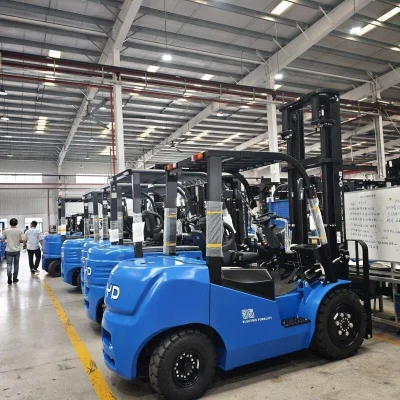
A practical next step is to share your actual operating pattern, required load and lift height with the supplier so the truck, battery and charging arrangement are specified together. Our range covers four-wheel counterbalance electric forklifts with lithium batteries; configuration details and charging guidance should be confirmed against the current technical documentation supplied with the model you are considering.
Frequently Asked Questions
Can a lithium-ion pack be opportunity charged every day?
Many lithium systems are designed to accept partial charging, but the acceptable pattern is defined by the battery manufacturer. Check the pack’s documentation and the charger settings rather than relying on general assumptions.
Is battery swapping only relevant to lead-acid batteries?
No. Lithium packs can also be swapped, but the case is usually stronger where shifts are long and continuous. The decision depends on spare pack cost, handling equipment and whether the truck design allows efficient removal.
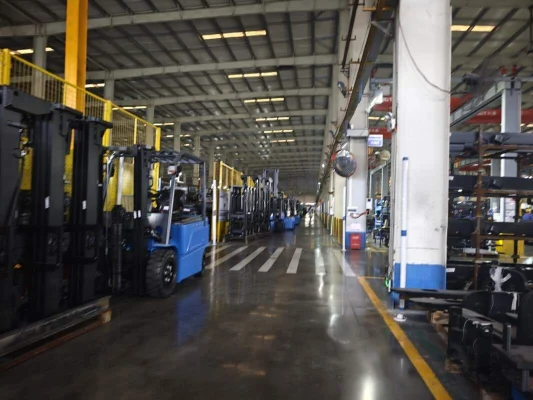
What information should I gather before choosing a strategy?
Record actual operating hours, idle windows, number of shifts, charger locations, available power and floor space. Then confirm the battery’s charging specification and any warranty conditions with the supplier.
Does one strategy always cost less to operate?
No reliable general answer exists without site-specific data on energy use, labor, equipment and battery life. Compare quotations and documented specifications instead of assuming a fixed saving.