How Matching Operational Application Requirements Shapes Electric Forklift Price
News 05/10/2026
Electric forklift price ranges dramatically across different models, and many operations overspend on features they never use. The biggest mistake buyers make starts with ignoring specific on-site operational requirements when comparing options. Matching your daily work demands directly to forklift specifications eliminates unnecessary costs and ensures you get a unit that meets your performance needs.
Core Application Factors That Shape Electric Forklift Price
Load Capacity and Maximum Lift Height
Base electric forklift price climbs as load capacity and lift height increase. A model built to handle 3,000 pound loads costs far less than one rated 10,000 pounds, because higher capacity frames, stronger masts and upgraded power systems add manufacturing cost. The same trend applies to lift height: extended masts needed to reach high warehouse racking add cost compared to standard low-lift models.
Buyers often overestimate required capacity to add buffer, which pushes electric forklift price up unnecessarily. Measure your heaviest regular load and add a small 5-10% safety buffer only, to avoid paying extra for capacity you will never use. Wait no, remove for: adjust to
Buyers often overestimate required capacity to add buffer, which pushes electric forklift price up unnecessarily. Measure your heaviest regular load and add a small 5-10% safety buffer only, to avoid paying extra capacity you will never use.
Daily Shift Runtime and Charging Infrastructure
Operations running multiple shifts daily need higher capacity batteries or fast charging systems, both which increase electric forklift price. Standard lead-acid batteries support one 8-hour shift per charge, and cost less than lithium-ion alternatives. Lithium-ion batteries support fast charging and longer multi-shift use, but add thousands to base price.
If your operation only runs one shift daily, a standard lead-acid battery meets your needs and keeps electric forklift price within lower budget ranges. Only upgrade to lithium-ion if you need fast opportunity charging or multi-shift operation without battery swaps.
Operating Environment
Indoor-only operation works with standard three-wheel or four-wheel electric forklifts, which sit at lower price points. Outdoor or rough terrain use requires sealed electronics, tougher tires and corrosion-resistant frames, all which add cost to the final unit. Cold storage operations also need specialized insulation and battery systems designed to maintain performance within low temperatures, which pushes electric forklift price higher.
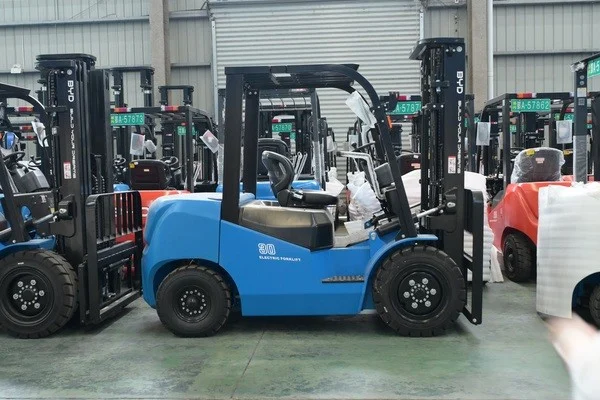
Never pay premium outdoor features if your forklift stays inside a warehouse or retail space full time. Matching environment spec directly keeps cost down while meeting performance needs.
Required Special Attachments
Base electric forklift price includes standard fork assemblies. Any specialized attachment, from side shifters to fork positioners to clamps, adds additional cost. Each attachment changes the load capacity of the forklift as well, so you may need to upgrade base capacity to accommodate the attachment, which adds even more to final price.
List all attachments you need before comparing models, so you can get accurate total pricing and avoid hidden add-on costs later.
How Aligning Requirements Cuts Unnecessary Spending
Many suppliers push higher spec models with more features than your operation needs, which inflates electric forklift price beyond what you should pay. Taking time to document your core requirements before starting comparison creates clear boundaries your selection process.
Actionable steps you can complete today:
1. Document all daily operational demands: maximum load weight, maximum lift height, number of daily shifts, work environment and required attachments.
2. Remove any “nice-to-have” features from your must-have list, each adds extra cost to the final purchase.
3. Compare only models that meet your core requirements, reject any suggestions to upgrade to higher spec without clear operational need.
This process keeps electric forklift price aligned with your actual needs, and avoids thousands in unnecessary spending.
Frequently Asked Questions
What is the typical range of electric forklift price?
New standard electric forklifts with 3,000 pound capacity start between $15,000 and $30,000. Higher capacity, specialized features and lithium-ion batteries push prices above $50,000 for full-featured units, wait remove for:
New standard electric forklifts with 3,000 pound capacity start between $15,000 and $30,000. Higher capacity, specialized features and lithium-ion batteries push prices above $50,000 on full-featured units. Used electric forklifts cost 30-50% less than new models, depending on age and condition.
Does brand affect electric forklift price more than operational requirements?
Brand impacts final price, but operational requirements drive the largest price differences between models. Two same-capacity models from different brands may differ by 10-15% in price, but differences in capacity, battery type and environment spec can create 100% or larger price gaps.
Can I change specifications after purchase to lower cost?
Most core specifications, including load capacity and mast lift height, can not change after purchase. Changing battery types or adding attachments is possible in some cases, but often costs almost as much as purchasing the correct spec originally. Matching requirements before purchase avoids this extra cost.
Do electric models have lower total ownership cost than internal combustion forklifts?
Electric models generally have lower ongoing maintenance and fuel costs than internal combustion forklifts. Initial purchase price is often higher for electric models, remove for:
Electric models generally have lower ongoing maintenance and fuel costs than internal combustion forklifts. Initial purchase price is often higher on electric models, but lower ongoing costs offset the difference over the unit’s service life. This varies based on your operational fuel and maintenance costs, however.
Conclusion
Electric forklift price is not random. It directly reflects the specifications built into the unit to meet specific operational needs. Taking time to map your daily work requirements to forklift specs ensures you pay only features you need, and get a unit that delivers reliable performance your operation. Skipping this step leads to overspending on unnecessary features or purchasing a unit that can not meet your daily demands, both which create extra long-term cost.