Customized Electric Forklift Configurations Supporting Food Industry Mixed Batch Logistics Operations
News 20/10/2026
Mixed batch logistics operations in food industry require flexible, safe material handling equipment that meets both operational efficiency and food safety regulatory requirements. Customized electric forklift configurations address unique challenges this sector faces, from varying pallet sizes to frequent sanitization requirements. Below we break down suitable equipment types, key custom configurations, pre-purchase checks, and common questions operators face.
Key Electric Forklift Types Matching Food Industry Mixed Batch Logistics Needs
Food industry mixed batch logistics typically combines multiple tasks: loading and unloading delivery vehicles, moving pallets between storage zones, picking multiple SKUs for order fulfillment, and transferring goods across temperature zones. Different forklift types fit different subsets of these tasks, with clear applicability and limitations:
- Counterbalance electric forklifts: These work well for outdoor loading docks and mixed terrain operations common in food processing and distribution facilities. They handle a wide range of load weights and accommodate most standard and non-standard pallet sizes used mixed batch operations. Their primary limitation: they require wider working aisles than reach trucks, so they are not ideal for high-density storage in narrow aisle warehouses.
- Stand-on reach trucks: These fit narrow aisle high-bay storage facilities, which many food distribution centers use to maximize storage space. They deliver fast maneuverability for frequent mixed batch picking, and their compact design works well facilities with limited space. Limitations: they do not handle heavy outdoor use or uneven ground, so they are best used exclusively inside storage areas.
- Electric pallet jacks: These are ideal for horizontal transfer of mixed batches between staging areas, loading docks, and storage zones. They have lower upfront cost and require less training operators. Their core limitation: they offer very limited lifting height, so they cannot serve high rack storage needs.
Critical Custom Configurations Food Industry Mixed Batch Logistics Demand
Not all electric forklifts meet food industry operational and safety requirements. The following custom configurations address the most common pain points this sector faces:
Washdown-Ready Construction and Sealing
Most food facilities require regular cleaning with high-pressure water and sanitizing agents to meet food safety rules. Standard forklifts have unsealed electronics and exposed crevices that trap debris and allow water damage, leading to corrosion and bacterial contamination risks.
Buyers should: Ask suppliers to share IP rating details for all electronic components, confirm material compatibility with the specific sanitizing agents your facility uses, and inspect all joint areas for gaps that trap food particles.
Limitations: Full washdown configurations add significant upfront cost, so they are only needed facilities that handle open food products or require daily high-pressure cleaning. Dry storage facilities handling only fully sealed pre-packaged goods can skip this configuration to reduce cost.
Adjustable Load Handling for Mixed Pallet Sizes
Mixed batch operations often handle a wide range of pallet dimensions and weight distributions, from small half-pallets of specialty goods to full pallets of bulk ingredients. Generic fixed-width forks cannot accommodate this variation, leading to unstable loads and increased safety risks.
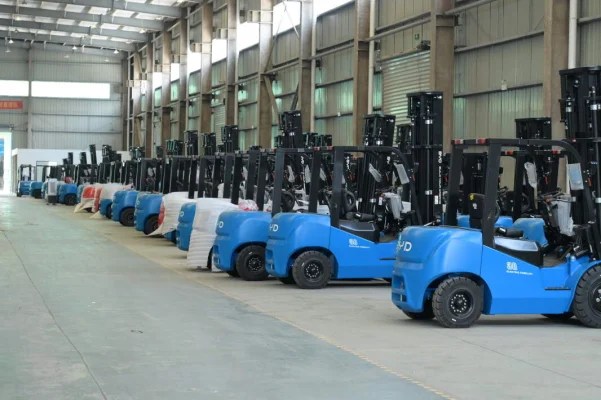
Buyers should: Test adjustable fork widths with your largest and smallest actual pallet sizes, confirm residual load capacity when forks are set to your maximum width, and verify that any custom attachments (like clamp attachments for non-palletized goods) work with your common load weights.
Limitations: Extended adjustable fork ranges can reduce maximum load capacity at full lifting height, so you only need to specify a range that covers your actual SKU mix, not the widest possible range.
Hygienic Design Features
Food safety regulations require minimizing contamination risks from equipment. Standard forklift designs have open mast channels, overlapping joints, and porous surfaces that trap food debris and bacteria, which can lead to product recalls or regulatory penalties.
Buyers should: Request design documentation showing closed-profile mast instead of open channels, confirm all lubricants used on exposed components meet food-grade safety standards, and inspect welds and seams to ensure they are smooth and free gaps that trap debris.
Limitations: Hygienic designs require more frequent inspection of seals to maintain integrity, adding a small amount regular maintenance time to your service schedule.
Temperature and Energy Management Configurations
Many food industry mixed batch operations cross multiple temperature zones, moving goods from cold storage to dry storage to loading docks. Standard battery systems lose performance in low temperatures, and temperature swings can cause condensation that damages electronics.
Buyers should: Confirm your battery management system (BMS) is calibrated to work across the full range of temperatures your operation encounters, check if opportunity charging is compatible with your selected battery type to support multi-shift operations, and confirm battery enclosure sealing if your facility uses washdown.
Limitations: Temperature-calibrated BMS and low-temperature battery configurations add upfront cost, so you only need this customization if your operation regularly enters cold storage zones.
| Configuration Type | Core Industry Risk Addressed | Required Verification Item | Availability |
|---|---|---|---|
| Full washdown electronic sealing | Corrosion from sanitizers + bacterial contamination | Confirm IP rating meets your cleaning requirements | Optional, requires factory confirmation |
| Extended range adjustable fork widths | Inability to accommodate mixed pallet sizes | Test fit with your facility’s actual pallet range | Standard base adjustment is included, extended ranges optional |
| Food-grade lubrication | Contamination risk to open or unpackaged food products | Provide certification documents for lubricant safety | Optional |
| Temperature-calibrated BMS | Battery performance loss across cross-zone operations | Confirm BMS operating range matches your facility’s temperature extremes | Optional, requires factory confirmation |
| Closed-profile mast and smooth welds | Bacteria buildup in hidden crevices | Inspect joint gaps and mast design | Optional |
Pre-Purchase Checklist Food Logistics Operators Use
Before you order a customized electric forklift, complete these steps to confirm the configuration matches your needs:
- Document all your operational parameters first: Map aisle widths, temperature ranges across all work zones, your full range of pallet sizes, and maximum load weights you regularly handle. This helps you avoid paying unnecessary custom features you will never use.
- Confirm regulatory alignment: Ask suppliers to provide written documentation supporting all food safety and hygienic design claims, and verify configurations meet local regulatory requirements applicable your operation.
- Conduct a site trial if possible: Test a demonstration unit matching your requested configuration in your facility, checking maneuverability in narrow aisles, load stability with your heaviest mixed load, and clear visibility during operation.
- Clarify maintenance requirements: Ask about recommended service intervals for specialized components like seals and food-grade lubricants, and confirm replacement parts are available your local region.
- Document all custom requirements in your contract: Ensure every agreed customization is written into your purchase order and sales contract, to avoid miscommunication during manufacturing.
Frequently Asked Questions
Can standard electric forklifts work food industry mixed batch operations?
Standard electric forklifts work only low-risk food operations, such as dry warehouses storing fully sealed non-perishable goods that require no regular sanitization or washdown. Operations handling open food products, perishables, or requiring frequent cleaning need custom hygienic configurations to meet safety requirements.
Do all customized electric forklifts work cold storage zones within food logistics?
No. Standard and even basic hygienic configurations lack sealed components, temperature-calibrated battery systems, and low-temperature compatible hydraulic fluid. You must request specific modifications matching your cold zone’s lowest operating temperature if your mixed batch operations cross temperature zones.
What adds the most cost customized electric forklift configurations food industry?
Full washdown sealing and low-temperature battery systems typically add the highest upfront cost, compared to smaller modifications like food-grade lubrication. You can reduce overall expenditure by selecting only customizations that match your actual operational needs, rather than purchasing every available optional feature.
Can I modify a standard electric forklift after purchase meet food industry requirements?
Retroactive modifications carry high contamination and corrosion risk, because sealing and hygienic design features require full integration during initial manufacturing. Retrofitting often leaves hidden gaps that trap bacteria or cause corrosion over time, so it is better order custom configurations directly from the original manufacturer.
Mixed batch logistics in food industry have unique needs that generic electric forklift configurations rarely address. Prioritizing customizations aligned your specific facility layout, regulatory requirements, and SKU mix helps boost long-term operational efficiency while maintaining compliance food safety standards. Always confirm all custom capabilities directly from your supplier before finalizing your order.