How Regional Distribution Terms And Local Supply Chain Structures Shape BYD Forklift Price During Industrial Equipment Sourcing
News 10/10/2026
BYD’s global electric forklift market share grows each year, as more operations shift to zero-emission material handling equipment. Many industrial sourcing teams focus only on base model cost when comparing options, but overlook regional distribution and local supply chain factors that heavily shape final BYD forklift price. This guide breaks down key factors, helps buyers identify hidden cost drivers, and outlines actionable steps toward more accurate budgeting.
Core Regional Distribution Factors That Impact BYD Forklift Price
Import Duties and Trade Compliance Costs
BYD operates assembly facilities across multiple global regions to meet local trade rules. Units built outside your operating region incur cross-border import duties and customs processing fees that add directly to final price. These fees vary widely based on bilateral trade agreements between production and destination locations. Regional assembly eliminates these extra costs, which lowers overall landed cost significantly.
Distributor Margin Structures
Authorized BYD distributors face different overhead costs across regions. Mature markets with high labor and real estate costs carry higher overhead, which gets passed to buyers through higher base prices. Emerging markets often use lower margins to build market share, leading to more competitive base pricing on identical models. Distributor network density also impacts margins; networks with more local locations spread overhead across more sales, keeping margins stable without large price increases.
Local Incentives On Electric Equipment
Many regional governments offer rebates or tax credits to operations that purchase zero-emission material handling equipment. These incentives directly reduce net price buyers pay. Incentive rules vary widely across locations, so identical BYD forklift models can carry very different net prices across adjacent regions. Buyers must confirm incentive eligibility under local programs before comparing quotes.
Local Supply Chain Structures That Shift Final Pricing
Local Component Sourcing Mandates
Many regions implement rules that require a minimum percentage of vehicle components sourced from local suppliers to meet market access rules. BYD adapts supply chains to meet these rules. Local components often carry different cost structures than imported components, which changes overall production cost passed directly to buyers. In some cases, local components reduce production cost; in others, they increase it, depending on local material and labor pricing.
Inventory Holding and Delivery Costs
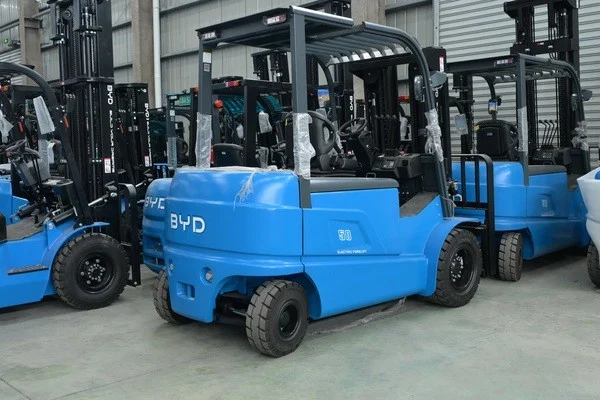
Dense regional distribution networks keep popular BYD forklift models in stock close to major population and industrial centers. In-stock units avoid rush shipping fees and long lead times. Buyers in these regions pay less in delivery and storage fees, which reduces total landed cost compared to regions with limited local inventory. Remote locations with no local inventory often see extra fees added to quoted price to cover long-distance transport.
Included Aftermarket Support Network Costs
Most quoted BYD forklift prices include some level of bundled aftermarket support. Regions with established local support networks can offer lower cost service plans included in base price. Regions without established networks require extra fees to cover technician travel and emergency parts shipping, which increases total price. Buyers should always confirm support coverage matches local network capabilities before accepting a quote.
Hypothetical Sourcing Scenarios
Two common sourcing scenarios show how supply chain and distribution factors change final price:
First, a 10,000 square foot manufacturing operation in the US Midwest sources a 5-ton electric BYD forklift. BYD operates North American assembly facilities, and a regional distribution center sits within 200 miles of the operation. Local component sourcing meets USMCA trade rules, so no import duties apply. Local delivery costs are low, and the operation qualifies under a state-level electric industrial equipment incentive. Final net price lands at a competitive level aligned with market averages.
Second, a similar small manufacturing operation in a remote Southeast Asian market sources the same 5-ton model. The market has no local BYD assembly, so all units ship from production facilities in China. A 15% import duty applies, no local electric equipment incentives exist, and the closest distribution center sits 1,000 miles away. Extra shipping and storage fees add to base cost, so final price ends up substantially higher than the regional assembled unit in the first example.
Actionable Sourcing Steps To Secure Competitive BYD Forklift Price
Verify Regional Assembly Status Before Requesting Quotes
Reach out to potential suppliers early to confirm whether your requested model comes from local assembly or global import. Local assembled units almost always carry lower total landed cost, so prioritize these models when possible.
Map Local Incentive Eligibility
Check local environmental and industrial development programs to confirm your BYD forklift qualifies under any existing rebate or tax credit programs. This reduces your net outlay even if the base quote looks higher than competing options.
Highlight Proximity To Local Infrastructure During Negotiation
If your operation sits close to a BYD distribution center or assembly facility, highlight this during negotiation. Local proximity reduces delivery and storage overhead, so many distributors will adjust pricing to reflect these savings.
Clarify Included Aftermarket Coverage
Confirm whether quoted aftermarket coverage matches local network capabilities. Avoid extra payments on coverage you cannot access locally, and ensure all mandatory service requirements get clearly outlined before you sign any purchasing agreement.
Frequently Asked Questions
Does battery type affect BYD forklift price more than distribution factors?
Battery technology creates base price differences between different BYD forklift models, but regional distribution and supply chain factors often create larger price gaps between identical models sold in different locations. Many buyers miss these gaps when comparing base quotes across markets.
Can buyers import BYD forklifts directly to avoid distributor markup?
Direct import eliminates distributor margin, but exposes buyers to higher duty costs, compliance fees, shipping costs, and no access to local warranty or aftermarket support. Total landed cost often ends up higher than purchasing through an authorized local distributor.
Do all BYD forklift models see the same price shift from supply chain factors?
High-volume popular models see larger price reductions from local assembly and inventory storage, because fixed costs get spread across more units. Low-volume specialty models see smaller reductions, because most production still occurs at centralized global facilities.
How often do regional supply chain changes alter BYD forklift price?
Price shifts occur when trade policies change, new regional assembly facilities open, or local distribution networks expand. These changes happen every 1-3 years in most growing markets, so buyers should confirm current pricing with local authorized suppliers before finalizing any purchasing plans.
BYD electric forklifts deliver strong value across a wide range of material handling applications, but final price depends heavily on regional distribution terms and local supply chain structures. Buyers who account for these factors beyond base model price can make more informed purchasing decisions and secure better total value.